
English


T: +86-572-6200777
Mr. Xin: +86-17357227212
Mr. Xin: +86-17357227212
Mr.Li: +86-13706256441
Building 31, Tianneng Chain Innovation Industrial Park, Meishan Town, Changxing County, Huzhou City, Zhejiang Province

Views: 0 Author: Site Editor Publish Time: 2026-03-04 Origin: Site


In the world of high-efficiency air filtration, HEPA filter paper plays a central role. Whether used in air purifiers, HVAC systems, cleanroom filtration units, vacuum cleaners, or industrial dust collection equipment, the performance of the final filter depends heavily on the quality and specifications of the filter media itself. As a manufacturer working closely with filtration material solutions, we understand that buyers are not just looking for “HEPA” as a label—they need clarity on technical parameters, efficiency grades, and how to select the right media for specific applications.
In this guide, we will break down the key specifications of HEPA filter paper, explain common efficiency classifications, and share practical buying tips that help ensure both performance and cost control.
HEPA (High Efficiency Particulate Air) filter paper is a specialized filtration media designed to capture extremely fine airborne particles. It is typically composed of:
Glass microfiber
Synthetic fibers or composite blends
Wet-laid or melt-blown microstructures
The fiber matrix forms a dense yet permeable network that captures particles through multiple mechanisms, including interception, diffusion, and inertial impaction. Unlike ordinary filter paper, HEPA filter paper is engineered specifically for fine particulate filtration, often targeting particles around 0.3 microns.
However, not all HEPA filter papers are the same. Their performance varies depending on fiber diameter, thickness, basis weight, pressure drop, and structural stability.
When evaluating HEPA filter paper, it is essential to look beyond the simple “HEPA” label. Several technical specifications determine how the filter media will perform in real-world applications. These parameters directly influence filtration efficiency, airflow resistance, durability, service life, and compatibility with downstream equipment such as air purifiers, HVAC systems, vacuum cleaners, and industrial filtration units.
A clear understanding of these specifications helps buyers avoid mismatched materials, unnecessary costs, and performance issues after production.
Filtration efficiency refers to the percentage of particles captured at a specified particle size, most commonly 0.3 microns, which is considered the most penetrating particle size (MPPS) for HEPA filters.
Below is a simplified overview of common efficiency grades:
Efficiency Grade | Typical Efficiency | Application Scope |
H10 | ≥85% | Pre-HEPA filtration |
H11 | ≥95% | General air purifiers |
H12 | ≥99.5% | Higher-end residential units |
H13 | ≥99.95% | Medical and cleanroom use |
H14 | ≥99.995% | Critical contamination control |
Choosing the correct efficiency grade is crucial. Over-specification, such as selecting H14 when H11 is sufficient, can increase production costs and airflow resistance. On the other hand, under-specification may result in performance that does not meet regulatory or customer expectations.
Efficiency should always align with:
Target market positioning
Applicable standards and certifications
System airflow capacity
End-user environment
Pressure drop measures how much resistance the HEPA filter paper creates against airflow. It is usually tested at a specified airflow velocity and reported in Pascals (Pa).
Low pressure drop offers several advantages:
Improved airflow performance
Lower energy consumption
Reduced fan motor load
Quieter operation
However, there is always a balance to maintain. Higher filtration efficiency often results in increased airflow resistance because denser fiber structures capture more particles.
Key considerations include:
High efficiency often increases resistance
Optimized fiber structure can reduce pressure drop without sacrificing performance
Proper pleat design can help offset resistance
Selecting HEPA filter paper with appropriate airflow resistance ensures stable long-term operation and helps maintain system energy efficiency.
Basis weight, measured in grams per square meter (g/m²), indicates the mass of filter paper per unit area. It plays a major role in mechanical strength and structural durability.
Higher basis weight typically provides:
Improved durability
Better structural stability
Stronger pleating retention
Enhanced resistance to deformation
This is especially important in applications where filter media undergoes mechanical pleating, folding, or vibration.
However, excessive basis weight may:
Increase material cost
Raise airflow resistance
Add unnecessary structural thickness
Therefore, basis weight should match the mechanical and performance requirements of the final product.
Thickness influences both filtration efficiency and dust holding capacity. Thicker media often provides:
Greater particle capture depth
Higher dust loading capacity
Longer operational lifespan
However, thickness must remain compatible with:
Filter frame dimensions
Pleating machinery
Sealing systems
Equally important is fiber diameter and distribution. HEPA filter paper typically uses ultra-fine glass microfibers or composite structures to create a uniform filtration matrix.
Microfiber structures provide:
Enhanced fine particle capture
Controlled airflow resistance
Balanced structural integrity
Uniform fiber distribution ensures consistent performance across the entire roll, which is essential for stable batch production.
Dust holding capacity refers to the amount of particulate matter the HEPA filter paper can retain before airflow becomes significantly restricted.
Higher dust holding capacity offers:
Extended service life
Longer replacement intervals
Improved user satisfaction
Reduced maintenance frequency
In applications such as industrial air filtration or heavy-duty air purifiers, dust loading performance becomes a major consideration. Media that clogs quickly can increase operational costs and reduce customer satisfaction.
Dust holding capacity depends on:
Fiber structure depth
Media thickness
Porosity design
Surface treatment technology
Balancing high dust capacity with stable airflow resistance is key to long-term performance.
Each specification does not operate independently. Instead, HEPA filter paper performance is the result of an integrated balance between:
Filtration efficiency
Pressure drop
Mechanical strength
Dust holding capability
Structural stability
For example:
Increasing fiber density may improve efficiency but raise resistance.
Increasing thickness may enhance dust capacity but affect pleating flexibility.
Reducing basis weight may lower cost but reduce durability.
Therefore, technical evaluation should consider overall system design rather than focusing on a single parameter.
When sourcing HEPA filter paper, clear communication of technical requirements helps prevent production challenges later. Buyers should request:
Efficiency test reports
Pressure drop data
Mechanical strength specifications
Consistency validation across batches
Understanding these key technical specifications allows manufacturers to select HEPA filter paper that aligns with their product positioning, regulatory standards, and operational performance goals.
By carefully balancing efficiency, airflow resistance, durability, and dust capacity, companies can ensure stable filtration performance while maintaining cost control and long-term reliability.
HEPA classifications follow international standards such as EN1822 or similar testing protocols. The most common grades in commercial applications include H11 to H14.
Grade | Efficiency | Typical Use |
H11 | ≥95% | Residential air purifiers |
H12 | ≥99.5% | Premium home systems |
H13 | ≥99.95% | Hospitals, laboratories |
H14 | ≥99.995% | Cleanrooms |
Choosing the correct grade depends on:
Regulatory requirements
Target customer expectations
Airflow design constraints
Product market positioning
Higher grade does not always mean better for every application. It must align with system design.
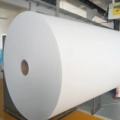
HEPA filter paper is widely used in:
Air purifiers
HVAC filtration systems
Medical cleanrooms
Industrial dust collectors
Automotive cabin filters
Vacuum cleaners
Each application has unique requirements regarding airflow, durability, and efficiency class.
For example:
Residential purifiers prioritize low pressure drop and balanced efficiency.
Medical environments prioritize high-grade filtration.
Industrial systems may focus on durability and dust loading capacity.
Selecting the right HEPA filter paper involves more than checking the efficiency label. Below are practical buying considerations.
Avoid unnecessary cost increases by selecting appropriate grades. Over-specifying H14 where H11 suffices may increase material and production cost.
Ask for initial pressure drop and airflow testing reports. Low resistance improves overall device performance.
Strong pleating performance is crucial for maintaining surface area and structural stability during long-term use.
Filtration performance must remain stable across production batches. Reliable manufacturers provide consistent fiber distribution and quality control.
HEPA filter paper should support:
Stable pleating
Frame bonding compatibility
Sealing integrity
Long-term structural durability
HEPA filter paper is the core component determining the performance of high-efficiency air filtration systems. Understanding key specifications such as filtration efficiency, pressure drop, basis weight, thickness, and dust holding capacity allows buyers to select materials that balance performance and cost.
Efficiency grades from H11 to H14 must align with application requirements rather than marketing expectations. Careful evaluation of airflow resistance, mechanical strength, and production consistency ensures long-term reliability.
At Mecon, we focus on producing stable, high-performance HEPA filter paper designed to meet diverse industrial and commercial needs. Our experience in filtration media manufacturing enables us to support customers with consistent quality and technical guidance. If you would like to explore our HEPA filter paper solutions in more detail, please visit www.meconm.com for further information.
1. What is the difference between H11 and H13 HEPA filter paper?
H11 offers ≥95% efficiency, while H13 provides ≥99.95% efficiency at 0.3 microns. Selection depends on application requirements.
2. Does higher efficiency always mean better performance?
Not necessarily. Higher efficiency may increase pressure drop. The correct grade should match system design and airflow capacity.
3. How does pressure drop affect HEPA filter performance?
Higher pressure drop increases fan energy consumption and may reduce airflow efficiency. Balanced resistance is critical.
4. What should I check before buying HEPA filter paper?
Review efficiency reports, pressure drop data, basis weight, mechanical strength, and batch consistency to ensure reliability.
