
English


T: +86-572-6200777
Mr. Xin: +86-17357227212
Mr. Xin: +86-17357227212
Mr.Li: +86-13706256441
Building 31, Tianneng Chain Innovation Industrial Park, Meishan Town, Changxing County, Huzhou City, Zhejiang Province

Views: 0 Author: Site Editor Publish Time: 2026-07-05 Origin: Site


High replacement costs and energy inefficiencies in multi-stage filtration systems often stem from misconfigured media staging. Facility managers frequently assume higher filtration grades yield better results at every stage. They install strict terminal-grade media too early in the airflow path. This fundamental error leads to rapid media blinding and premature system failure. We will evaluate the physical realities of using coarse filter paper versus dense media at the initial intake stage. You will learn how to properly design sequences and reduce maintenance headaches. Our goal is to help you optimize long-term operational costs while protecting sensitive downstream components.
Coarse filter paper is engineered specifically for high dust-holding capacity and low pressure drop, making it the mandatory first line of defense.
Deploying HEPA media at the pre-filtration stage causes rapid clogging, exponentially increasing energy costs and filter replacement frequency.
Proper staging using F6 filter paper or similar pre-filtration media extends the lifecycle of terminal HEPA filters by up to 400%.
System evaluation should prioritize dust-holding capacity and airflow resistance over sheer capture efficiency at the pre-filter stage.
Every effective air purification system relies on a progressive sequence of barriers. You cannot expect a single filter to handle all particulate sizes simultaneously. The primary success criterion for the first stage is bulk capture. This stage must intercept large particulate matter, typically PM10 and larger. Capturing these massive particles early protects sensitive downstream components. It prevents debris from fouling heat exchange coils, damaging fan blades, and destroying expensive final filters.
Multi-stage systems rely on foundational physics. Staged media progressively steps down particulate sizes. The first layer handles the heavy load of coarse dust, pollen, and debris. The middle layer intercepts finer particles. The final layer removes sub-micron contaminants. This staging prevents the system from creating an unmanageable pressure drop (ΔP). When you force air through staged filters, the resistance remains balanced. The fan motor does not have to work against a sudden, massive blockage.
Ignoring this sequence introduces severe financial risk into industrial air filtration setups. Some facility operators try to simplify maintenance by using a terminal filter as a primary defense. This practice functionally turns an expensive, highly engineered component into a disposable HEPA prefilter. It severely damages your return on investment. You spend premium budgets to capture macro-debris. A cheap, highly porous alternative could have handled that same debris easily.
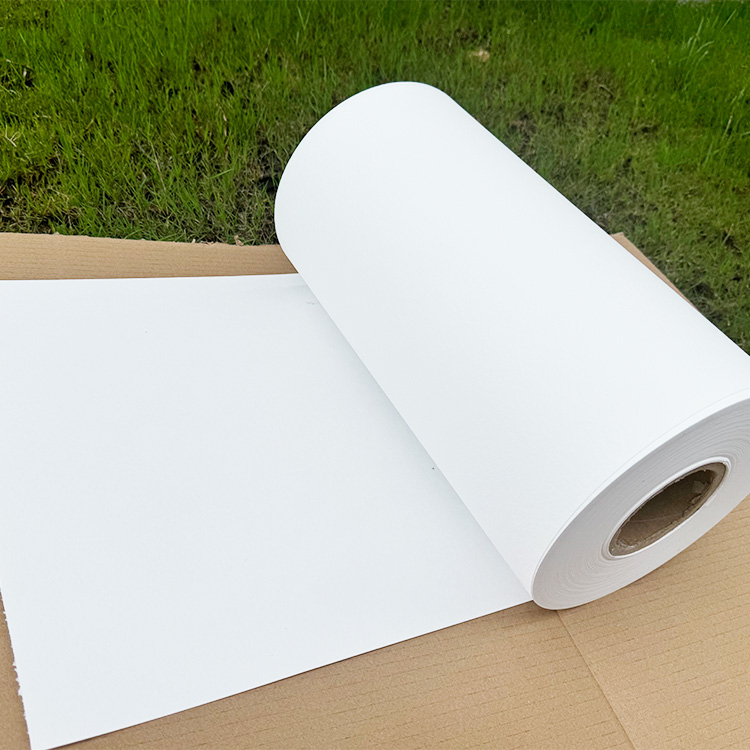
Manufacturers design primary stage media to endure harsh, heavily contaminated environments. The material composition differs entirely from terminal filters. You will typically find wood pulp, synthetic polymer blends, or coarse fiberglass. Engineers structure these materials for depth filtration rather than surface filtration. Depth filtration creates a tortuous path. Particles travel deep into the media matrix before they get trapped. This prevents the surface from sealing shut quickly.
Performance standards clearly define the capabilities of these materials. You will see ratings like ISO Coarse or MERV 8-11. For mid-level pre-filtration, F6 filter paper serves as an excellent benchmark. These grades target specific micron capture ranges. They efficiently stop particles between 3.0 and 10.0 microns. They let sub-micron particles pass through to the final stages. This intentional porosity is their greatest operational strength.
Airflow dynamics define the success of a coarse air filter. The open porous structure maintains high cubic feet per minute (CFM) velocities. It achieves this while accumulating large volumes of debris. The air easily navigates around trapped particles. The system does not suffer from sudden airflow starvation.
We must also look at the cost-to-lifespan ratio. These filters offer a very low unit cost. They provide high operational longevity in high-particulate environments. You can replace them frequently without breaking your maintenance budget. This cost efficiency allows you to change them out before they cause any harmful pressure spikes in the system.
Monitor initial pressure drop upon installation to establish a clear baseline.
Inspect the media weekly in environments featuring high dust loading.
Avoid washing and reusing paper-based media, as it destroys the fiber matrix.
High-Efficiency Particulate Air (HEPA) media performs a highly specialized job. It relies almost exclusively on surface filtration mechanics. Manufacturers construct this media using incredibly dense, sub-micron webs of borosilicate glass fibers. These webs capture particles down to 0.3 microns at 99.97% efficiency or higher. The fibers sit tightly packed together. They intercept tiny particles via diffusion and direct interception.
This density creates a severe vulnerability known as the "blinding" effect. When you expose this dense web to raw, unfiltered environmental air, failure happens quickly. Large dust particles instantly coat the outer surface. They seal the microscopic pores. Airflow stops almost completely. The filter does not load dust deeply; it simply builds a solid wall of dirt on its face.
This blinding effect causes extreme energy and system strain. HVAC units and industrial fan motors operate on specific pressure curves. Deploying HEPA media too early forces these units to overcome a sudden, massive static pressure increase. The fan motors draw more amperage. They run hotter. Eventually, they either trip thermal overloads or burn out completely. The energy consumed to force air through a blinded filter costs far more than proper replacement media.
To understand the mechanical differences, we must evaluate them across three critical performance metrics. We look at capacity, energy resistance, and maintenance requirements.
Coarse media excels at high depth-loading capabilities. It acts like a sponge, absorbing dirt throughout its entire thickness. HEPA media exhibits an extremely low capacity for macro-particulates. It acts like a fine sieve. A sieve clogs immediately when you pour mud into it. The capacity difference is staggering in real-world applications.
Coarse options start with minimal initial resistance. As they load with dirt, they follow a slow, predictable curve to their terminal pressure. Fan motors easily adjust to this gradual change. HEPA options start with high initial resistance. When exposed to raw air, they experience a vertical spike to terminal pressure. Your energy costs will skyrocket as the fans fight this immediate blockage.
Coarse filters require predictable, low-cost maintenance cycles. You plan to swap them out regularly. HEPA filters become unpredictable if used without upstream protection. They demand frequent, cost-prohibitive replacements. You will ruin your maintenance budget if you replace terminal filters weekly.
Performance Metric | Coarse Filter Media | HEPA Filter Media |
|---|---|---|
Filtration Mechanism | Depth Filtration | Surface Filtration |
Target Particulate Size | > 3.0 Microns | < 0.3 Microns |
Dust Holding Capacity | Exceptionally High | Extremely Low (for macro-dust) |
Initial Pressure Drop | Low (< 0.5 in. w.g.) | High (> 1.0 in. w.g.) |
Replacement Cost | Low (Frequent changes expected) | High (Designed for longevity) |
You cannot simply throw a cheap filter into a slot and expect perfect results. System design requires careful attention to physical dimensions and environmental variables.
Sizing and pleat depth matter significantly. You must match the surface area of the media to the target airflow velocity. If the velocity is too high, it will blow particles straight through the coarse fibers. Deeply pleated designs increase the surface area. This lowers the face velocity of the air hitting the paper. It allows the media to capture dirt efficiently without restricting overall airflow volume.
Bypass and leakage risks pose a massive threat to the system. You must maintain perfect gasket integrity. If a coarse filter fits loosely in its frame, air will take the path of least resistance. Macro-debris will bypass the initial stage completely. This bypassed dirt will crash directly into the final stage, prematurely destroying it. A compromised first stage renders the entire progressive sequence useless.
Moisture and environmental factors dictate your material choices. You must evaluate how humidity or oil mist affects your chosen media. Traditional paper matrices swell and collapse when exposed to heavy moisture. In wet environments, you must upgrade to specialized synthetic blends. Synthetics repel moisture while maintaining their structural integrity. They prevent pleat collapse under high dynamic pressure.
Ignoring damaged gaskets on filter housings.
Selecting media based purely on price rather than environmental humidity levels.
Failing to calibrate fan speeds to match the loaded pressure drop of the filters.
Selecting the correct pre-filtration media requires a logical, step-by-step approach. You must separate the filtration duties based on empirical data from your specific facility.
Baseline the Environment: Audit the incoming air. Identify the primary particulate type. Measure the size distribution and concentration. You need to know if you are fighting pollen, cement dust, or metal shavings.
Align with Terminal Requirements: Choose a preliminary grade that intercepts exactly what the terminal unit cannot handle. If your final unit clogs with visible dust, your initial stage is too porous. Step up to an F6 grade to catch that mid-range debris.
Evaluate Operational Expenses: Calculate the financial impact over twelve months. Compare the cost of replacing the first-stage unit four to six times per year against replacing a fouled terminal unit once. The math always heavily favors frequent, cheap replacements upfront.
You must actively monitor these metrics. Install differential pressure gauges across every filter bank. These gauges remove the guesswork. They tell you exactly when a layer has reached its maximum dust holding capacity. You replace the media based on data, not a visual guess.
The decision framework remains clear. Using coarse media at the intake stage is not a compromise. It is a strict mechanical necessity for system viability. You must always separate filtration duties. Use open, depth-loading materials for bulk capture. Reserve dense, sub-micron materials strictly for terminal purification. This staging protects your equipment, lowers your energy bills, and stabilizes your maintenance schedule.
Your next step is clear. Review your current pressure drop data and maintenance logs today. Look for rapid pressure spikes in your final stages. Identify misaligned staging sequences. Replace any overly dense intake filters with appropriate coarse alternatives immediately to restore optimal airflow.
A: No. Even lower-grade HEPA filters rely on dense surface filtration. They lack the depth-loading capacity required for bulk dust. They will blind quickly, causing severe pressure drops and forcing unnecessary fan motor strain. Always use designated coarse or medium-grade media for initial stages.
A: In typical industrial environments, you will replace coarse primary media 4 to 6 times per year. A properly protected final HEPA filter should last 2 to 4 years. The exact ratio depends on your local environmental dust loading and continuous operating hours.
A: When sized correctly, F6 media offers very low initial airflow resistance. It maintains high CFM. It will not damage fan motors unless you leave it installed long past its terminal pressure limit. Regular replacement prevents dangerous restriction.
A: Traditional paper relies on wood pulp fibers, which are highly effective in dry conditions but vulnerable to moisture. Synthetic media uses polymer fibers that resist water and oil mist. Synthetics prevent pleat collapse in humid or industrial machining environments.
