
English


T: +86-572-6200777
Mr. Xin: +86-17357227212
Mr. Xin: +86-17357227212
Mr.Li: +86-13706256441
Building 31, Tianneng Chain Innovation Industrial Park, Meishan Town, Changxing County, Huzhou City, Zhejiang Province

Views: 0 Author: Site Editor Publish Time: 2026-06-26 Origin: Site


In critical environments, the line between adequate contamination control and excessive operational overhead often comes down to filter media selection. Facilities depend heavily on precise air purification to protect sensitive processes. A minor miscalculation in specification can severely disrupt system balance. While both H13 and H14 classifications fall under the stringent EN 1822 standard for high-efficiency particulate air (HEPA) filtration, the physical properties of the glass fiber filter paper dictate vastly different performance realities. Understanding these material differences is crucial for effective cleanroom design. The distinct characteristics of each media directly influence airflow dynamics and structural limits. For facility engineers and filter manufacturers, choosing between H13 vs H14 glass fiber filter paper requires moving past basic efficiency claims. You must carefully evaluate pressure drop and overall system compatibility. This ensures optimal environmental control without compromising your existing air handling infrastructure.
The Efficiency Gap: H13 guarantees 99.95% efficiency at the Most Penetrating Particle Size (MPPS), while H14 guarantees 99.995%. This tenfold reduction in penetration is critical for specific use cases but overkill for others.
The Pressure Penalty: H14 filter paper is denser, inherently increasing airflow resistance (pressure drop). Upgrading requires verifying that existing HVAC or AHU blowers can handle the increased load without sacrificing air changes per hour (ACH).
Application Alignment: H13 is the gold standard for standard cleanrooms (ISO 6-8) and general medical settings. H14 is strictly necessary for microelectronics, pharmaceutical compounding (ISO 4-5), and infectious disease isolation.
Material Sourcing: Reliable HEPA media performance relies heavily on the structural uniformity and tensile strength of the glass fiber roll, impacting pleatability and long-term durability.
You cannot evaluate filter media properly without understanding the governing frameworks. The European standard EN 1822 serves as the global benchmark for high-efficiency filtration. It classifies filters based on their performance at the Most Penetrating Particle Size (MPPS).
The MPPS represents the particle size hardest to capture. For glass fiber media, this size typically falls between 0.1 and 0.2 microns. Particles larger or smaller than the MPPS are actually easier to trap. We use strict filtration efficiency metrics at this exact size to determine a filter's true capabilities.
The numerical difference between these two grades seems small. However, the real-world impact is substantial. Let us break down the exact performance parameters:
H13 filter paper: Offers ≥ 99.95% overall efficiency. This media allows a maximum of 50 particles per 100,000 to pass through.
H14 filter paper: Delivers ≥ 99.995% overall efficiency. It permits only 5 particles per 100,000 to pass through.
This tenfold reduction in particle penetration defines the boundary between standard high-efficiency environments and ultra-critical zones.
Filter Class (EN 1822) | Overall Efficiency (%) | Local Efficiency (%) | Penetration Rate |
|---|---|---|---|
E12 (EPA) | ≥ 99.5 | - | 500 per 100,000 |
H13 (HEPA) | ≥ 99.95 | ≥ 99.75 | 50 per 100,000 |
H14 (HEPA) | ≥ 99.995 | ≥ 99.975 | 5 per 100,000 |
U15 (ULPA) | ≥ 99.9995 | ≥ 99.9975 | 5 per 1,000,000 |
Marketing terminology often confuses procurement teams. Terms like "True HEPA" or "Medical Grade" frequently appear in consumer product brochures. These phrases hold absolutely no weight in commercial engineering. They lack standardized testing protocols. In B2B procurement, only documented EN 1822 test data matters. You should always demand verifiable PAO or DOP test certificates.
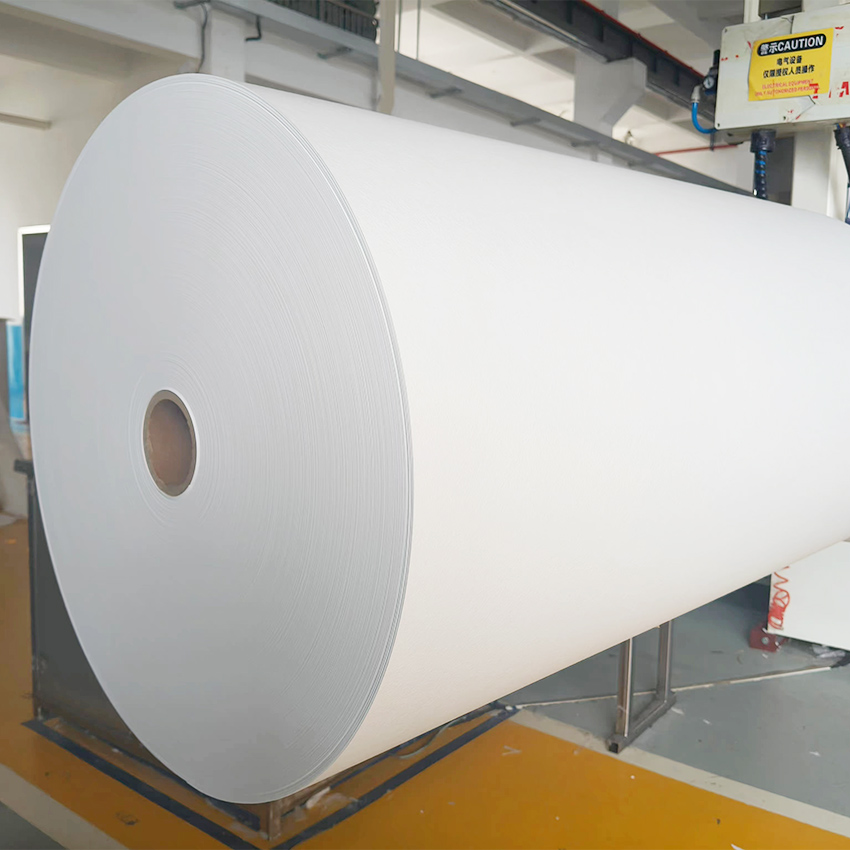
The gap in performance stems entirely from material physics. Manufacturers engineer these papers differently to achieve their specific ratings.
Both grades utilize sub-micron borosilicate glass fibers. These fibers are naturally inert and highly stable. However, H14 requires a significantly tighter matrix. Manufacturers pack the glass fibers more densely during the wet-laid production process. This intense density physically defines the material characteristics of the paper.
Reliable HEPA media captures particles using three distinct mechanical principles. They work simultaneously within the fiber web:
Interception: Particles follow the airstream but brush against a fiber and stick.
Inertial Impaction: Heavier particles cannot navigate the twisted air path. They crash directly into the fibers.
Diffusion: Tiny sub-micron particles bounce erratically due to Brownian motion. This erratic path causes them to hit fibers eventually.
H14’s extreme density maximizes this diffusion effect. The tightly packed fibers leave virtually no open pathways for ultra-fine particles to escape.
You cannot increase fiber density without restricting airflow. This creates a significant engineering challenge. At standard face velocities, H13 media exhibits a manageable initial resistance. Air passes through it relatively easily. H14 media presents a much higher resistance profile. The dense web acts as a physical barrier to the airstream. Pushing the same volume of air through H14 requires substantially more fan power.
The physical stiffness of denser H14 glass fiber rolls impacts factory production. Denser paper behaves more rigidly. It becomes brittle during the folding process. Aggressive pleating machines risk creating micro-tears in the delicate web. Even a microscopic tear compromises the entire filter assembly. Manufacturers often slow down their production lines for H14. They must ensure perfect pleat stability and structural integrity.
Engineers must align filter capabilities with actual environmental requirements. Over-specifying a filter often causes more harm than good.
You must remember an important rule. "More efficient" does not automatically mean "better." High efficiency becomes detrimental if it chokes your HVAC system. A starving system cannot maintain essential air circulation. You must balance particle capture rates against necessary airflow volume.
For the majority of commercial and healthcare applications, H13 filter paper remains the absolute gold standard. It provides exceptional purity without paralyzing fan systems. Typical applications include:
Standard hospital environments, including waiting areas and general patient wards.
Commercial HVAC systems in large office buildings.
High-end residential air purification units.
ISO Class 6 to 8 cleanrooms handling basic manufacturing.
Certain industries operate under zero-tolerance contamination limits. In these sectors, nothing less than H14 will suffice. Typical applications include:
Semiconductor and microelectronics manufacturing facilities.
Pharmaceutical production lines and aseptic compounding rooms (ISO Class 4 to 5).
Biosafety Level 3 and 4 (BSL-3/BSL-4) laboratories.
Specialized surgical operating theaters requiring ultra-clean laminar flow.
Application Decision Chart | |||
Facility Type | Required Cleanliness Limit | Recommended Media | Airflow Priority |
|---|---|---|---|
General Hospital Ward | ISO 8 / Standard Medical | H13 | High Volume / High ACH |
Microelectronics Assembly | ISO 5 | H14 | Laminar Flow Precision |
Commercial Office Space | Standard Indoor Air Quality | H13 | High Volume / High ACH |
BSL-4 Laboratory | Absolute Zero Contamination | H14 | Strict Containment |
Upgrading an existing facility requires careful mechanical consideration. You cannot treat high-efficiency filter media as a simple interchangeable part.
Many facility managers fall for the "drop-in" fallacy. They blindly swap out an H13 filter for an H14 filter. They do this without consulting an engineer. This introduces severe infrastructure risks. Your existing fan motor was likely calibrated for a specific pressure limit. If the blower cannot overcome the added resistance of the denser media, overall airflow plummets.
This drop in airflow reduces your Air Changes Per Hour (ACH). Ironically, installing a higher-efficiency filter can reduce overall room air quality. Stagnant air allows ambient contaminants to settle on surfaces. It also disrupts carefully planned room pressurization. A positive-pressure room might turn neutral, inviting external contaminants inside.
Media density directly impacts service life. Denser materials load faster. The tight matrix of H14 filter paper catches particles extremely quickly. Consequently, it reaches its terminal pressure drop much sooner than lighter media. You will likely face more frequent replacement cycles.
To extend lifespan, robust pre-filtration is mandatory. You must install high-quality pre-filters upstream. We recommend using F7, F9, or MERV 14 media. These catch larger dust particles before they blind the delicate borosilicate fibers. Proper pre-filtration protects your investment in high-efficiency end-stage media.
The reliability of your final product depends entirely on raw material quality. Evaluating suppliers rigorously ensures consistent performance.
You must demand strict structural uniformity across the entire glass fiber roll. This includes evaluating the basis weight, overall thickness, and internal binder distribution. Poor uniformity leads to localized weak points. A thin spot in the media creates a microscopic leak. This single leak will cause the entire assembled filter to fail downstream PAO testing. High-quality cleanroom filter media eliminates these inconsistencies through advanced manufacturing controls.
Batch testing provides insufficient proof for critical environments. You must demand individual roll test reports. Evaluate the PAO or DOP testing documentation carefully. Ensure the material fully complies with ISO 29463 and EN 1822 guidelines. Reputable suppliers maintain transparent traceability for every square meter they produce.
Request continuous quality monitoring reports.
Audit their wet-laid manufacturing process.
Verify their in-house testing equipment calibration.
Do not ignore mechanical resilience. You must evaluate the tensile strength of the paper in both machine and cross directions. The media undergoes significant physical stress. It must withstand aggressive handling during transport. It must survive high-speed rotary pleating machinery. Finally, it must endure high-velocity operational airflows without shedding. Weak fibers will break off. Fiber shedding releases glass particles directly into the cleanroom, defeating the system's core purpose.
Selecting the right filter media shapes the success of any contamination control strategy. H13 offers the optimal balance of high filtration efficiency and manageable airflow for roughly 80% of commercial applications. It protects standard environments reliably. Conversely, H14 should be reserved exclusively for strictly regulated, mission-critical environments. Its density demands robust air handling systems.
As a next step, we strongly encourage buyers to conduct a comprehensive HVAC system audit. Review your fan capacity curves and current pressure drop limits before specifying any denser media. Always request sample rolls and detailed test data from your HEPA media manufacturers to validate performance under your unique operational conditions.
A: Technically yes, but it will likely increase airflow resistance, potentially straining the blower motor and reducing overall air circulation. Always consult a mechanical engineer to verify if your existing fan can handle the increased static pressure without dropping the required air changes per hour.
A: Both are highly effective at capturing virus-carrying aerosols via diffusion. While H14 captures a mathematically higher percentage at the MPPS, H13 is highly sufficient for standard infection control. The primary difference lies in strict compliance for ultra-sterile environments like ISO 4 cleanrooms.
A: H14 generally requires more frequent replacement due to its tighter fiber matrix, which reaches terminal pressure drop faster under identical particulate loads. Proper upstream pre-filtration is essential to maximize the operational lifespan of either grade.
A: Briefly note that glass fiber filter paper offers superior efficiency stability and chemical/temperature resistance, making it the standard for critical cleanroom filter media compared to electret-charged synthetics that can lose efficiency over time.
