
English


T: +86-572-6200777
Mr. Xin: +86-17357227212
Mr. Xin: +86-17357227212
Mr.Li: +86-13706256441
Building 31, Tianneng Chain Innovation Industrial Park, Meishan Town, Changxing County, Huzhou City, Zhejiang Province

Views: 0 Author: Site Editor Publish Time: 2026-07-03 Origin: Site


Automotive paint booth managers face a constant, stressful dual mandate. You must achieve a flawless, zero-defect finish on every vehicle. Simultaneously, you must maintain strict environmental compliance to avoid heavy penalties. Balancing these two critical goals requires precise control over your booth environment. Unplanned booth downtime often ruins production schedules and severely impacts profitability. Furthermore, frustrating paint inclusions frequently trace back to sub-optimal exhaust filtration. When your exhaust system fails to capture airborne overspray, contaminated air wreaks havoc on wet paint surfaces.
To solve these ongoing operational issues, industry experts rely on F6-grade materials. F6 media perfectly balances consistent airflow rates with a massive dust-holding capacity. In this comprehensive guide, we will explore how facility managers can evaluate these specialized materials effectively. You will learn exactly how to specify the right filtration setup for your daily operations. By understanding these technical criteria, you can optimize booth performance and protect your bottom line effortlessly.
Classification: F6 filter media (under EN 779, or ePM10 equivalent under ISO 16890) provides >95% arrestance for liquid and solid overspray.
Structure: True F6 glass fiber utilizes a progressive density structure (typically green/white) to prevent premature surface blinding and extend maintenance cycles.
Compliance: Selecting the right media ensures adherence to EPA NESHAP (Subpart 6H) regulations regarding heavy metal and volatile emissions.
Paint booths rely on a carefully engineered airflow system. Fresh air enters through ceiling filters, flows over the vehicle, and exits through floor or wall exhausts. F6 media typically serves as the primary floor or exhaust filter. Its specific operational function involves capturing wet, sticky overspray. It traps these hazardous paint particles before they reach the exhaust stack or enter a recirculation system. Effective paint booth filtration prevents paint buildup on fan blades, ductwork, and delicate exhaust dampers.
A major business problem arises when facilities use low-quality coarse filter paper. Cheap filters blind over quickly. Blinding occurs when paint seals the top layer of the filter media. This surface sealing completely chokes the airflow. As a result, the booth experiences severe over-pressurization. High pressure pushes turbulent air around the cabin, kicking up trapped dirt and ruining the paint job. Conversely, if the filter tears under pressure, air bypasses the media entirely. Bypassing creates under-pressurization. The exhaust fan pulls dirty shop air through door seals, contaminating the clean environment.
To prevent these costly paint defects, managers must rethink their success criteria. You cannot judge a filter simply by its physical appearance. Instead, frame your metric focus around maintaining a stable pressure drop. A high-quality F6 filter media sustains a steady airflow across the entire spray cycle. It absorbs heavy paint loads internally without spiking airflow resistance. Stable pressure ensures predictable booth dynamics, giving painters the optimal environment for laying down flawless clearcoats.
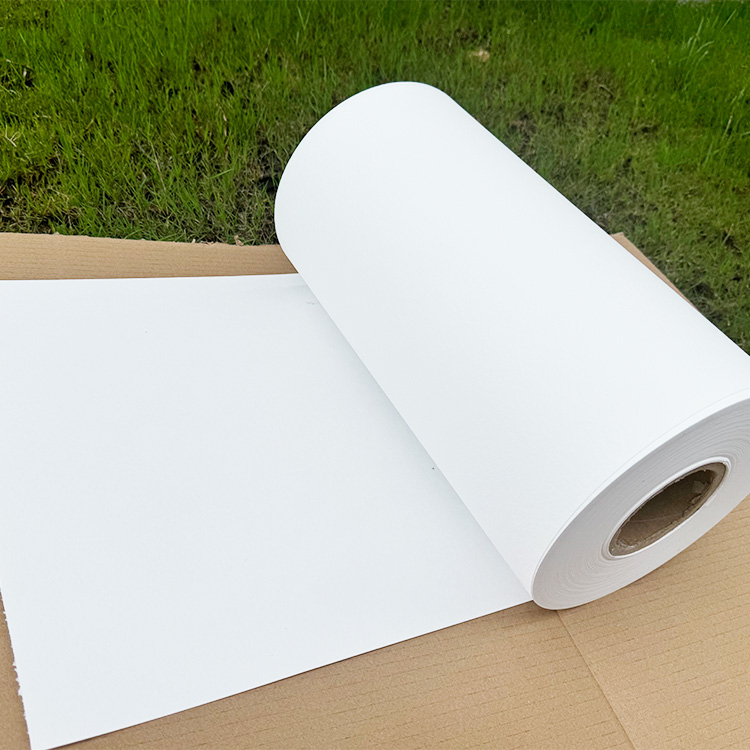
Facility managers frequently debate between traditional materials and advanced glass fiber options. Standard pleated kraft paper, often called baffle paper, remains a common choice. Kraft paper costs less initially. However, it relies entirely on surface loading. Paint hits the paper and stays on the outer edge. In direct comparison, F6 glass fiber filter paper holds up to five times more overspray weight per square meter. Glass fiber traps paint deep within its matrix. It avoids collapsing under heavy solvent loads, making it a far superior choice for high-production shops.
We must also contrast glass fiber with synthetic pocket filters. Many industrial HVAC systems use synthetic pockets successfully. However, a glass fiber air filter performs significantly better against wet, sticky urethane and heavy clearcoat overspray. Synthetic media compresses easily when soaked in liquid paint. This compression squeezes out trapped particles and chokes the airflow. Glass fiber possesses a rigid, non-compressible matrix. It maintains its structural integrity even when saturated with heavy enamels or waterborne paints.
To help simplify procurement decisions, review the following scenario matrix. It highlights which filter type best suits specific operational environments.
Operational Scenario | Recommended Filter Type | Suitability & Justification |
|---|---|---|
High-Volume Commercial Collision Centers | F6 Glass Fiber | Ideal. Handles continuous, heavy wet overspray. Provides maximum dust-holding capacity and prevents frequent booth downtime. |
Low-Volume / DIY Spray Booths | Traditional Kraft Paper | Acceptable starting point. Low initial cost fits tight budgets. However, operators should upgrade to glass fiber as paint volume increases. |
Dry Dust Collection / Sanding Bays | Synthetic Pocket Filters | Better suited for dry particulates. Synthetic materials handle dry sanding dust well but fail quickly when exposed to wet automotive paints. |
Choosing the right automotive spraying filter paper directly impacts your operational efficiency. Commercial centers processing multiple cars daily simply cannot afford the labor hours required to swap out cheap paper filters constantly. Transitioning to glass fiber streamlines maintenance and protects fan motors from unexpected paint buildup.
Procuring industrial filtration materials requires a careful review of technical specifications. Not all green-and-white fiberglass rolls perform identically. To ensure optimal booth dynamics, procurement teams must evaluate four specific criteria. Ignoring these metrics often leads to premature filter failure and compromised finish quality.
True F6 media relies on a highly engineered progressive density structure. The intake side, typically colored green, must be loosely woven. This open structure catches large, wet droplets of clearcoat and basecoat. As air moves deeper into the pad, the fiberglass strands become tighter. The exhaust side, usually colored white, must be densely woven. This tight backing traps microscopic, dry fine particles before they escape. If a manufacturer uses a uniform density throughout the pad, the filter will face premature surface blinding.
Dust-Holding Capacity serves as the ultimate indicator of filter longevity. Laboratories measure DHC in grams per square meter (g/m²). High-quality F6 media regularly achieves DHC ratings exceeding 3,500 g/m² for automotive paints. Higher DHC translates directly to fewer filter change-outs. Fewer change-outs mean significantly lower labor costs and maximized booth uptime. When reviewing supplier spec sheets, always demand verified DHC testing data for wet overspray conditions.
Every filter creates some resistance to airflow. Engineers measure this resistance, known as pressure drop, in Pascals (Pa). You need baseline expectations to configure your exhaust fans correctly.
Initial Pressure Drop: F6 fiberglass should register a low initial resistance, typically between 15 Pa and 30 Pa.
Final Pressure Drop: Manufacturers recommend replacing the media when resistance hits 100 Pa to 130 Pa. Pushing past this limit risks booth over-pressurization.
Paint booths contain highly flammable solvent vapors. Therefore, fire safety remains non-negotiable. Ensure the selected material meets recognized flammability standards. Look for certifications like DIN 53438 (Class F1) or UL 900. These ratings confirm the fiberglass will not sustain a flame or contribute to a fire if a spark enters the exhaust plenum. Using unrated, cheap fiberglass introduces massive combustion risks into your facility.
Environmental compliance dictates much of modern collision center management. The EPA heavily regulates airborne emissions from auto refinishing facilities. Ignorance of these laws carries severe financial penalties. F6 media plays a pivotal role in keeping your shop fully compliant.
The regulatory baseline for auto refinishing revolves around the EPA’s NESHAP Subpart HHHHHH (often called the 6H rule). This federal mandate targets hazardous air pollutants. It specifically regulates the emission of heavy metals found in automotive coatings, such as chromium, lead, manganese, nickel, and cadmium. To comply, shops must capture these hazardous particles before they vent into the outside atmosphere. Properly specified F6 fiberglass directly supports this compliance mandate by acting as a highly efficient physical barrier.
The EPA enforces strict efficiency mandates under the 6H rule. Paint booth exhaust filters must demonstrate a minimum arrestance efficiency of 98%. Legitimate F6 fiberglass easily meets, and often exceeds, this 98% arrestance requirement for liquid paint overspray. It effectively strips the hazardous droplets out of the airstream. This high capture rate ensures exhaust stacks blow clean air into the surrounding community, keeping neighborhood relations positive and avoiding regulatory complaints.
However, simply installing the filter is not enough. You must maintain proper documentation. Local environmental auditors will ask for proof of compliance during routine inspections. Advise your purchasing team to request independent test lab certificates from suppliers. Ask for reports following the ASHRAE 52.2 standard or equivalent EN/ISO testing protocols. Keeping these official certificates in your compliance binder proves your materials meet federal arrestance requirements. Relying on uncertified, generic fiberglass leaves your business completely vulnerable during environmental audits.
Procuring excellent media only solves half the problem. Poor installation and sloppy maintenance protocols can ruin the performance of even the best filters. Shop floor staff must understand the implementation realities to maximize filtration investments.
Installation orientation represents the most common operational failure in the shop. Technicians frequently install the media backward. You must ensure the green side faces the incoming airflow. The green side features the loose weave designed to swallow heavy wet paint. The white, dense side must face the exhaust fan. If installed backward, the dense white side blinds over immediately upon contact with wet clearcoat. This simple mistake instantly ruins the filter and causes severe booth pressurization issues.
Next, facilities must abandon outdated maintenance habits. Stop using "time-based" replacement schedules. Changing filters every Friday, regardless of paint volume, wastes perfectly good material or leaves blinded filters in place too long. Instead, implement "resistance-based" changes.
Install a draft gauge or digital manometer on the outside of the spray booth.
Calibrate the manometer to read the pressure differential across the exhaust filter bank.
Train painters to monitor the gauge daily.
Replace the fiberglass only when the gauge hits the manufacturer's recommended final pressure drop (typically 100-130 Pa).
Finally, managers must address handling risks during maintenance. Lower-quality fiberglass often sheds microscopic fibers. These loose fibers float into the booth environment, landing on wet paint and causing devastating surface defects. Furthermore, raw fiberglass causes significant skin irritation for maintenance workers. To mitigate these risks, recommend media featuring a bonded air-leaving surface. The bonded backing locks the fibers in place. Additionally, always require staff to wear appropriate PPE, including long sleeves, gloves, and dust masks, during the replacement process.
Specifying high-grade F6 glass fiber filter paper represents a critical investment in your operational success. It drastically improves overall booth performance, guarantees exceptional finish quality, and ensures stringent regulatory safety. Relying on cheap, inefficient paper filters ultimately costs more in reworked paint jobs, fan maintenance, and potential EPA fines.
When selecting your next batch of filters, apply strict shortlisting logic. Procurement teams must prioritize advanced progressive density structures, certified UL 900 fire ratings, and verifiable dust-holding capacity over simple bulk pricing. The cheapest roll often proves the most expensive to operate in a high-volume collision center.
Take immediate action to improve your facility today. First, audit your current booth pressure drops to identify underlying airflow issues. Next, equip your booths with reliable manometers to track filter life accurately. Finally, contact certified industrial filtration suppliers to request official spec sheets and sample rolls. Testing these materials in your own environment will prove their superior performance firsthand.
A: The colored, less dense side (typically green) must face the incoming airflow to capture large wet overspray droplets. The solid white, densely woven side must face the exhaust fan to trap microscopic dry particles and provide structural backing.
A: You should replace the media based on manometer readings, not calendar days. Change the filter when the pressure drop reaches 100-130 Pa. Depending on paint volume and booth usage, this typically occurs every two to four weeks.
A: No. F6 glass fiber is specifically designed for exhaust and overspray capture. Ceiling filters require finer synthetic media, like F5/M5, treated with a tackifier. Tackified synthetic filters prevent dry atmospheric dust from falling onto wet paint surfaces.
A: Yes, they are safe for DIY setups, provided two conditions are met. First, your exhaust fan must possess adequate static pressure ratings to handle the initial pressure drop. Second, you must wear appropriate PPE (gloves, mask, long sleeves) during installation to avoid skin irritation.
