
English


T: +86-572-6200777
Mr. Xin: +86-17357227212
Mr. Xin: +86-17357227212
Mr.Li: +86-13706256441
Building 31, Tianneng Chain Innovation Industrial Park, Meishan Town, Changxing County, Huzhou City, Zhejiang Province

Views: 0 Author: Site Editor Publish Time: 2026-06-28 Origin: Site


High energy consumption and frequent HVAC blower maintenance silently drain budgets in cleanrooms and commercial air filtration systems. Facility managers face constant pressure to optimize these critical infrastructures. Standard filter materials often force a painful compromise. You might achieve HEPA-level efficiency but suffer from high aerodynamic drag. This drag leads directly to increased energy draw and disruptive acoustic noise. Your blowers simply have to work harder. They struggle to push air through thick barriers.
Specifying low resistance HEPA media at the procurement stage solves this problem. It reduces energy demands significantly. You gain these benefits without sacrificing particulate capture. This guide provides a technical and commercial framework. You will learn how to evaluate materials accurately. We provide the tools to compare and shortlist options specifically for mini-pleat applications.
Energy vs. Efficiency: Prioritizing a low pressure drop directly reduces motor strain and energy costs, achieving ROI within the first maintenance cycle.
Material Trade-offs: Selecting between traditional air filter paper (microglass) and synthetics requires balancing aerodynamic performance against mechanical fragility during the pleating process.
Manufacturing Compatibility: Not all media can survive high-speed mini-pleating; tensile strength and stiffness are just as critical as filtration grade.
Verifiable Standards: Shortlist suppliers based on transparent EN 1822 or ISO 29463 test data, avoiding unverified "HEPA-like" claims.
Standard media causes high initial resistance across filtration systems. Air handling unit variable frequency drives must work much harder. They constantly ramp up to compensate for poor airflow. This extra effort increases energy expenditure significantly. Acoustic noise levels also rise. Blowers operate near maximum capacity just to maintain baseline air changes per hour.
Operational impacts become highly visible over time. You can measure these benefits directly. Consider these specific advantages when upgrading:
Lower energy consumption translates to substantial kWh savings over a 12-to-24-month lifecycle.
Filters gain an extended operational lifespan before reaching the final resistance threshold.
Reduced motor and fan wear directly mitigates expensive infrastructure downtime.
You must shift your procurement focus entirely. Do not just look at the price per square meter. Instead, evaluate the aerodynamic efficiency per square meter. A more efficient medium pays for itself rapidly. It achieves this through reduced operational friction and lower daily power consumption. Your maintenance teams will spend less time replacing overworked belts and bearings.
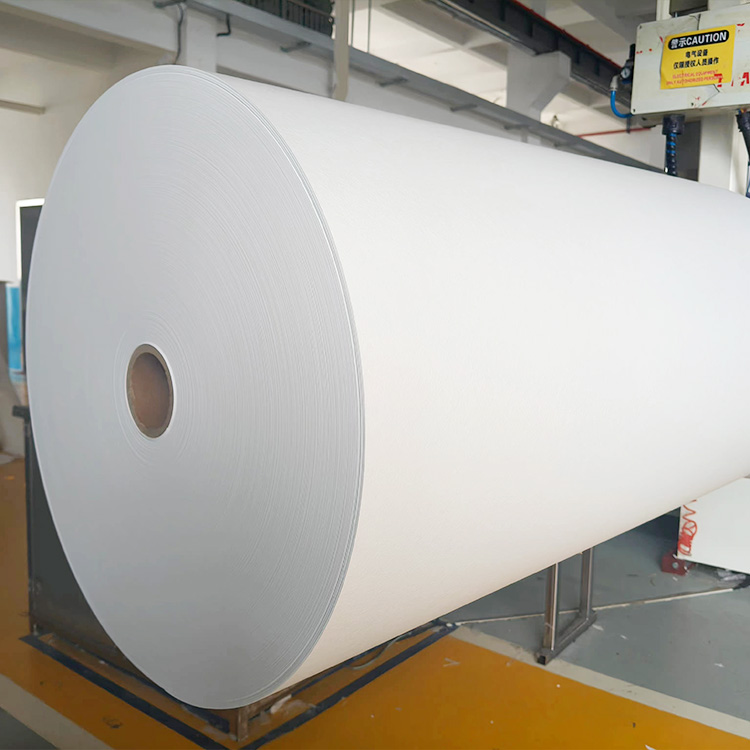
You have two primary material choices for these systems. Each offers distinct aerodynamic and mechanical properties. Understanding these differences prevents costly manufacturing mistakes.
Microglass remains the global industry standard. This material provides excellent depth filtration. It captures particles throughout its entire thickness. It delivers highly stable performance across various environments. It is generally cost-effective for large-scale deployments.
However, microglass can be mechanically fragile. Operators require precise tension control during manufacturing. Without this control, the material suffers invisible micro-tears. These tears ruin the filtration grade completely. HEPA glass fiber media works best for standard HVAC systems. It excels in cleanrooms and similar sterile environments. It also proves invaluable where chemical off-gassing remains a primary concern. Microglass does not outgas volatile organic compounds into clean environments.
Synthetic alternatives deliver incredibly high aerodynamic efficiency. They feature an extremely low pressure drop right out of the box. These materials utilize membrane filtration principles rather than depth filtration. Particles stop right at the surface.
They are highly durable. They will not tear easily during the pleating process. Furthermore, they resist moisture naturally. The main drawback involves higher upfront material costs. You might also encounter potential issues during PAO testing. Oil-based aerosols can degrade some synthetic membranes over time.
Synthetics are ideal for microelectronics manufacturing. Semiconductor fabs rely on them heavily. They suit any facility targeting ultra-low energy consumption goals.
Material Type | Primary Advantage | Main Drawback | Best Application Scenario |
|---|---|---|---|
Microglass | Cost-effective, stable depth filtration | Mechanically fragile during assembly | Standard cleanrooms, general HVAC |
PTFE / Synthetic | Extreme aerodynamic efficiency, durable | Higher cost, potential PAO degradation | Semiconductor fabs, microelectronics |
You must validate several technical specifications before purchasing bulk materials. Relying on basic grade labels invites failure. Dig into the technical data sheets thoroughly.
Always evaluate the exact initial resistance. Laboratories measure this metric in Pascals (Pa) at a target face velocity. A common standard test velocity is 5.33 cm/s. Compare efficiency grades strictly against this velocity marker.
Ensure your H14 filter paper meets the 99.995% MPPS threshold. MPPS stands for Most Penetrating Particle Size. The material must hit this mark securely. It must do so without exceeding your system resistance limits. High efficiency means absolutely nothing if air cannot flow.
Machine Direction (MD) and Cross Direction (CD) metrics hold immense importance. These numbers dictate manufacturing survivability. They determine how well your mini-pleat filter media withstands mechanical stress.
Rotary pleating machines exert significant pulling forces. Stronger materials prevent catastrophic web breaks during assembly. Weak media snaps under tension. This failure causes massive production delays and wastes costly materials.
Material thickness determines your maximum pleats per inch. Thinner materials allow higher pleat counts. Higher pleat counts increase the overall filtration surface area. This extra area lowers air velocity through the media itself.
However, the material must remain sufficiently stiff. Stiffness prevents pleat collapse under high airflow conditions. If pleats bend and touch, they block airflow entirely. This phenomenon is known as blinding. You must balance thinness against structural integrity carefully.
Even the best materials fail if assembly goes wrong. Manufacturing realities introduce several unique risks. You must prepare your production line for these specific variables.
High-performance materials are generally thinner than standard options. If the material lacks structural integrity, problems occur rapidly. It will tear on high-speed rotary pleaters.
Torn media increases scrap rates dramatically. It destroys product profitability. Test machine compatibility early in the process. Adjust roller tension settings before running full production batches. Slow down machine speeds during initial trials.
These compact filters rely heavily on hot melt separators. The separator maintains the critical distance between folds. The material surface must bond securely to this adhesive. It requires a continuous, unbroken bead.
It must do this without chemical degradation. The glue line must not block critical airflow paths. Poor adhesion causes structural filter failure in the field. The pleats simply blow out under operational pressure. Verify application temperatures match the material tolerances.
Microglass is highly susceptible to touch damage. Even a light brush from a finger can destroy the delicate fiber matrix. Damage often remains invisible until final testing.
Ensure your manufacturer has strict packaging protocols. Rolls should arrive suspended in sturdy crates. Assembly lines require comprehensive training. Workers must practice zero-touch handling of the media face. Good suppliers provide robust packaging solutions to mitigate all transport risks.
Risk Factor | Potential Consequence | Mitigation Strategy |
|---|---|---|
Low Tensile Strength | Web breaks on rotary pleater | Conduct pilot testing; verify MD/CD values |
Poor Glue Adhesion | Pleat collapse, blow-outs | Test hot melt viscosity and application temps |
Manual Handling | Micro-tears, failed efficiency tests | Implement strict zero-touch protocols |
Selecting the right vendor protects your facility. Use clear shortlisting logic. Demand absolute transparency from all potential partners.
Never accept internal marketing claims alone. Mandate independent batch test reports. These documents must show strict compliance. Look for EN 1822-1:2019 or ISO 29463 standard certifications.
Verifiable data guarantees real-world performance capabilities. It removes the guesswork from procurement. True quality manufacturers always provide third-party validation willingly.
Raw material performance differs greatly from assembled performance. Request specific data sets. Ask how the raw material performs once fully assembled into a final configuration.
Geometry severely affects the final aerodynamic resistance. V-bank configurations often alter pressure profiles entirely. Real case studies prove the material works in final product form. They show you the true operating parameters.
Always run a pilot pleating run. Use a master roll before committing to bulk tonnage. This test verifies tensile strength practically.
You can observe how the air filter paper interacts specifically with your machinery. Validation prevents massive financial losses from incompatible materials. Do not skip this critical final step.
Choosing the right material remains a delicate balancing act. You must weigh aerodynamic efficiency, mechanical durability, and material cost carefully. Finding the perfect intersection maximizes your operational success.
For most commercial applications, high-grade microglass offers the best overall balance. This holds true provided your manufacturing process can handle its inherent fragility. For specialized, high-durability needs, explore synthetic options instead.
Take these action-oriented next steps:
Request technical data sheets from your top three shortlisted vendors immediately.
Compare the initial resistance strictly at your required filtration grade and face velocity.
Order a master roll sample to conduct thorough pilot machine testing.
Audit your assembly line staff on strict zero-touch handling protocols.
A: While standard H14 media might exhibit resistance around 260-300 Pa (at 5.33 cm/s), high-performance low-resistance variants can drop this to 200-230 Pa, depending on the material formulation and thickness.
A: Yes. A lower initial pressure drop means the blower motor does not need to run at maximum RPM to overcome filter drag, directly reducing the decibel (dB) output of the air handling unit.
A: No. Mini-pleat filter media is specifically engineered to be thinner and stiffer to accommodate tight spacing and hot-melt separators. Deep-pleat media is too thick and will restrict airflow if compressed into a mini-pleat frame.
A: During the manufacturing of mini-pleat filters, the media is pulled through high-speed rollers. Low tensile strength results in micro-tears that compromise HEPA efficiency and lead to high scrap rates.
