
English


T: +86-572-6200777
Mr. Xin: +86-17357227212
Mr. Xin: +86-17357227212
Mr.Li: +86-13706256441
Building 31, Tianneng Chain Innovation Industrial Park, Meishan Town, Changxing County, Huzhou City, Zhejiang Province

Views: 0 Author: Site Editor Publish Time: 2026-06-25 Origin: Site


Cleanroom filtration failure carries severe consequences for high-stakes manufacturing environments. A single microscopic particle breach can devastate sensitive semiconductor yields. It can also entirely compromise sterile pharmaceutical compounding batches. These critical stakes make flawless air purity an absolute operational necessity. Facility managers often obsess over the final filter housing and framing construction. However, they frequently overlook the core variable driving actual particulate performance. The underlying filtration media itself ultimately dictates cleanroom success or failure.
Substandard media inevitably leads to premature filter clogging. It causes inconsistent airflow distribution and frequently results in failed certification audits. Specifying the correct media requires exacting engineering precision. You must balance strict 99.995% particulate capture rates against long-term structural integrity. You also need verifiable regulatory compliance. This comprehensive guide explores how to evaluate media performance accurately. We will discuss interpreting aerodynamic properties, verifying supplier testing data, and ensuring long-term cleanroom stability.
Efficiency vs. Energy Trade-off: True H14 glass fiber filter paper captures ≥99.995% of MPPS, but specifying low resistance filter paper is critical to minimizing HVAC energy loads.
Verification over Brand Names: Validating cross-reference specifications and requiring batch-level testing data mitigates the risk of proprietary vendor lock-in.
Compliance is Non-Negotiable: Strict adherence to EN 1822 / ISO 29463 standards protects against regulatory audit failures in pharma and microelectronics.
Standard commercial filtration media consistently fails in ISO Class 5 environments. Standard media cannot handle the stringent particulate limits required by advanced manufacturing. High-grade cleanrooms demand absolute consistency across the entire filter face. Standard commercial options typically suffer from uneven fiber distribution. This unevenness creates microscopic bypass channels. These channels allow critical contaminants to penetrate the sterile zone.
Understanding the mathematical difference between H13 and H14 efficiency helps clarify operational requirements. H13 media provides a 99.95% capture rate. By contrast, H14 glass fiber filter paper achieves a 99.995% capture rate. This extra decimal point seems minor on paper. In practice, it represents a tenfold reduction in penetrating particles. This extreme filtration becomes a critical requirement in several scenarios:
Sterile pharmaceutical manufacturing where biological contamination ruins entire batches.
Semiconductor lithography where nanoscale dust destroys microchip circuitry.
Specific EPA-regulated emission control applications requiring absolute containment.
Material science dictates why glass fiber remains the undisputed industry standard for this filtration grade. Manufacturers produce this media using tightly interwoven borosilicate glass microfibers. These fibers offer exceptional structural stability. You get incredibly uniform pore sizes and massive dust-holding capacity. Some facilities experiment with synthetic alternatives like PTFE. However, synthetic media often suffers from electrostatic charge degradation. Synthetics lose their peak efficiency over time as their electrostatic charge dissipates. Glass fiber relies purely on mechanical filtration principles. It maintains consistent efficiency throughout its entire operational lifespan.
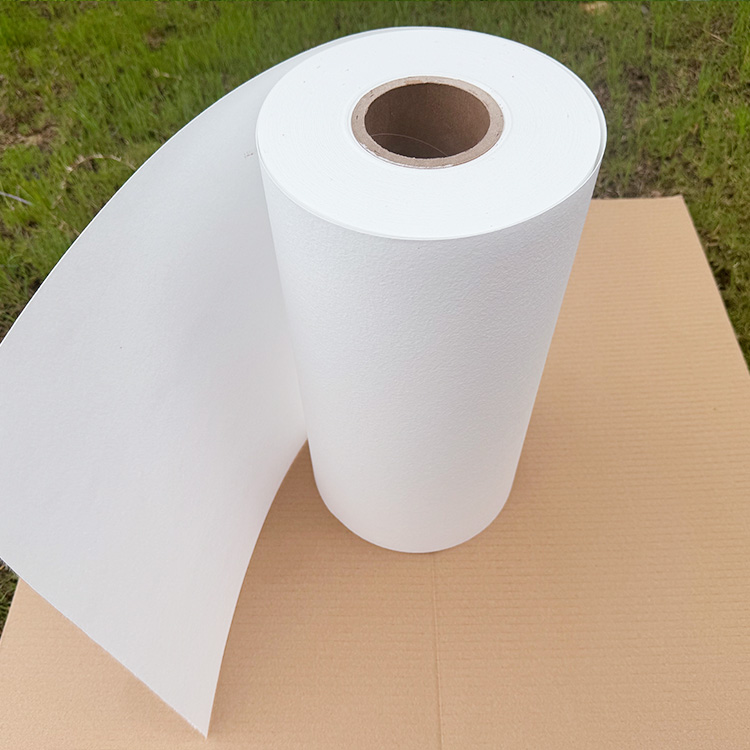
Evaluating and selecting the right media requires a deep dive into specific technical parameters. You cannot rely on generic marketing claims. You must scrutinize the raw engineering data.
You must verify capture rates targeting the 0.1 to 0.3-micron range. This specific range represents the Most Penetrating Particle Size (MPPS). Particles in this size bracket are notoriously difficult to capture. They evade both direct interception and Brownian motion mechanisms. Always demand verifiable test data specifically mapping the MPPS range. Warn your procurement teams against generalized efficiency claims. If a supplier claims "99.99% efficiency" but fails to specify the test particle size, disqualify their product. Precision testing validates true H14 filter media capabilities.
Aerodynamic resistance directly impacts cleanroom functionality. You must specify low resistance filter paper for modern facility designs. This specification involves a strict operational trade-off. Overly dense media heavily restricts airflow. This restriction forces fan filter units (FFUs) to overwork to maintain necessary air change rates. Overworked FFUs generate excess heat, noise, and vibration.
To optimize aerodynamic performance, evaluate the media's basis weight and thickness. You want the lowest possible pressure drop without compromising the 99.995% efficiency threshold. Modern manufacturing techniques produce highly uniform fiber matrices. These advanced matrices allow air to pass smoothly while physically blocking nano-particles.
Filtration media must survive rigorous manufacturing processes. High tensile strength remains a non-negotiable requirement. The paper must withstand intense pleating processes without micro-tearing. Whether the manufacturer uses hot-melt mini-pleat configurations or deep-pleat aluminum separators, the media must hold its structure.
You must also critically evaluate the binder formulation used in the glass fiber matrix. Manufacturers use chemical binders to hold the delicate glass fibers together. Poorly formulated binders cause severe issues. They can lead to chemical outgassing. Outgassing releases Volatile Organic Compounds (VOCs) into the cleanroom. In semiconductor environments, these VOCs condense on optics and ruin lithography processes. Furthermore, weak binders lead to media shedding. Shedding introduces secondary fiber contamination into the airstream. Always specify low-outgassing acrylic binders for sensitive applications.
Comparative Media Performance Metrics | |||
Filter Grade | Efficiency (at MPPS) | Typical Pressure Drop (Pa) | Primary Application |
|---|---|---|---|
H13 | ≥ 99.95% | Low to Moderate | Standard ISO 6 / ISO 7 Cleanrooms |
H14 | ≥ 99.995% | Moderate (Requires Low Resistance Spec) | ISO 5 / Sterile Manufacturing |
U15 | ≥ 99.9995% | High | ISO 3 / Advanced Semiconductor |
Procuring media based strictly on initial specifications overlooks the most critical operational phase. Facility managers must look beyond baseline per-square-meter parameters. They must evaluate how the media performs over its entire operational lifespan.
Energy consumption represents the most significant operational burden in cleanroom management. A minor increase in initial pressure drop compounds into massive electrical loads. Over a typical 3-to-5-year filter lifespan, high-resistance media continually forces blower motors to work harder. This continuous strain directly impacts facility power grids. Selecting optimized, highly permeable media minimizes this continuous energy drain. It keeps FFU operations stable and reduces overall electrical consumption.
Maintenance and replacement cycles also heavily influence operational efficiency. Media featuring a high dust-holding capacity captures more particulate mass before reaching its terminal pressure drop. This expanded capacity directly extends the intervals between mandatory changeouts. Reducing replacement frequency minimizes cleanroom downtime. Every filter changeout requires facility shutdown, extensive labor, and subsequent recertification. High-capacity media mitigates these disruptions. It ensures stable, long-term cleanroom filtration performance without demanding constant intervention.
Strict adherence to international standards defines successful cleanroom operations. Procurement teams cannot accept unverified performance claims. They must require media that actively supports the final filter's compliance with established frameworks.
The two primary frameworks governing this space are EN 1822-1 and ISO 29463. These standards outline rigorous testing protocols for HEPA and ULPA filters. They classify filters based purely on their performance at the Most Penetrating Particle Size. You must ensure your chosen HEPA filter paper aligns mathematically with these stringent standard tiers.
Testing methodologies form the backbone of this compliance. Final filter manufacturers rely on automated scanning and oil thread tests to verify integrity. The PAO (Polyalphaolefin) test remains a critical industry benchmark. It evaluates the assembled filter for microscopic leaks. This testing methodology traces its origins back to historical EPA Method 3-1 principles. While the media itself does not undergo the final in-situ leak test, its structural consistency guarantees the assembled filter will pass.
Documentation traceability protects facilities during regulatory audits. Demand lot-specific Certificates of Analysis (CoA) from your media suppliers. A robust CoA provides granular data on basis weight, thickness, tensile strength, and penetration rates. If a vendor cannot provide batch-level resistance and penetration data, disqualify them immediately. Lack of documentation introduces unacceptable risk into pharmaceutical and microelectronics manufacturing.
Transitioning to a new media supplier requires diligent evaluation. Facility managers must assess equivalency, customization capabilities, and long-term reliability.
Evaluating brand equivalents prevents proprietary vendor lock-in. Many facilities default to expensive legacy brands out of habit. You can use cross-reference specification tables to find equivalent performance. When evaluating alternative glass fiber media, match the core engineering parameters exactly. Compare the basis weight (measured in g/m²). Scrutinize the media thickness (measured in mm). Evaluate the air permeability rates carefully. Matching these three parameters ensures the alternative media behaves identically in your HVAC system.
Customization capabilities separate exceptional suppliers from generic distributors. Assess whether the supplier can adapt their media for specific manufacturing needs. Can they provide varying roll widths to minimize waste on your production lines? Can they adjust the binder stiffness? Stiff media suits deep-pleat aluminum separator configurations perfectly. Conversely, softer media handles hot-melt mini-pleat processes much better without cracking.
Supply chain reliability guarantees your facility never faces media shortages. Examine the manufacturer's historical lead times. Review their Minimum Order Quantities (MOQs) to ensure they align with your inventory strategy. Finally, verify their Quality Management Systems. A robust ISO 9001 certification demonstrates their commitment to consistent, scalable delivery. Reliable suppliers maintain stringent quality control over every single master roll they produce.
Specifying high-grade filtration media is a rigorous engineering decision. It is never a simple commodity purchase. The integrity of your entire cleanroom relies on the microscopic architecture of the filter paper. Selecting the right media ensures maximum particulate capture while minimizing aerodynamic drag.
To implement a successful filtration strategy, take the following action-oriented steps:
Audit Your Current Specifications: Review your existing filter testing data to identify unexplained pressure drops or efficiency failures.
Request Physical Samples: Demand raw media samples from potential suppliers to conduct internal tensile and folding tests.
Demand Raw Testing Data: Require batch-level Certificates of Analysis to perform side-by-side specification comparisons.
Verify Binder Compatibility: Ensure the media binder formulation aligns with your facility's VOC outgassing limits.
By rigorously evaluating these parameters, engineering teams can secure reliable, high-performance cleanroom environments.
A: The primary difference lies in their efficiency thresholds and target applications. H14 media captures 99.995% of MPPS and is widely used in ISO Class 5 cleanrooms, such as sterile pharmaceutical suites. U15 media captures 99.9995% of MPPS. Facilities use U15 strictly for extreme ISO Class 3 or ISO Class 4 environments, predominantly in advanced semiconductor manufacturing.
A: There is a direct correlation between initial pressure drop and electrical load. Low resistance media allows air to pass through more easily. This reduces the mechanical strain on HVAC systems and Fan Filter Unit (FFU) blower motors. Consequently, the motors draw significantly less electrical power to maintain the required cleanroom air change rates.
A: No. While you can use equivalent media brands during the manufacturing of the filter, the cleanroom itself requires recertification. Once the newly manufactured HEPA filters are installed, the facility must undergo mandatory in-situ leak testing. Testing methods like PAO aerosol scanning are legally required to certify the final cleanroom integrity.
A: Yes, poor-quality binders can release Volatile Organic Compounds (VOCs). This outgassing poses severe risks in sensitive environments like semiconductor lithography, where VOCs fog delicate optical lenses. To prevent this, you must explicitly specify low-outgassing acrylic binders or specialized proprietary formulations designed specifically for critical microelectronics applications.
