
English


T: +86-572-6200777
Mr. Xin: +86-17357227212
Mr. Xin: +86-17357227212
Mr.Li: +86-13706256441
Building 31, Tianneng Chain Innovation Industrial Park, Meishan Town, Changxing County, Huzhou City, Zhejiang Province

Views: 0 Author: Site Editor Publish Time: 2026-07-06 Origin: Site


Upgrading commercial air filtration systems requires more than just choosing the highest MERV rating available. Facility managers face a constant balancing act. They must prioritize indoor air quality (IAQ) compliance alongside strict HVAC constraints. Maintenance schedules and energy bills also demand careful attention. Poor filtration choices often restrict airflow. This strains blower motors and drastically increases energy usage across the building. You need a transparent, engineering-based framework to evaluate options effectively. This guide will show you how to assess media performance properly. We will explore how to achieve optimal capture rates without exceeding acceptable pressure drops. You will also learn to navigate different building requirements, from demanding healthcare facilities to standard corporate offices. Ultimately, we will provide actionable steps to select the right filtration solution for your specific mechanical system.
ASHRAE Standard 52.2 provides the primary testing methodology for air filters. It measures exact capture efficiency across distinct particle size ranges. Engineers rely on these metrics to understand how a filter performs against different pollutants. The standard divides test aerosols into three critical brackets:
Understanding these ranges helps you target specific indoor air quality threats accurately.
The Minimum Efficiency Reporting Value (MERV) derives directly from the 52.2 testing protocol. However, MERV reflects a laboratory baseline. It does not always predict real-world longevity. In a lab, technicians load filters with standardized potassium chloride particles. In your facility, filters face varying humidity, biological contaminants, and complex dust compositions. This environmental stress causes real-world degradation. Consequently, a filter that tests well on day one might lose efficiency rapidly if the media degrades under high moisture.
Many international facilities now procure materials globally. You must understand how ASHRAE 52.2 compares to the ISO 16890 standard. While MERV uses a 1-16 rating scale, ISO 16890 categorizes filters based on particulate matter size (ePM1, ePM2.5, ePM10). They do not translate perfectly. An ePM1 60% rating roughly equates to MERV 13, but the testing dust differs. Recognizing this distinction prevents purchasing errors when sourcing materials internationally.
Hospitals and laboratories demand uncompromising filtration standards. They routinely specify high-efficiency media, ranging from MERV 14 to HEPA. These strict targets align with CDC mandates for airborne infection control. Media used in these environments must also resist microbial growth. Damp environments encourage mold. Therefore, synthetic, hydrophobic media often outperforms traditional blends in sensitive medical wings.
Corporate facilities face a different challenge. Building owners must balance tenant health with strict energy budgets. Post-2020 guidelines pushed MERV 13 as the new baseline for offices. Upgrading to MERV 13 improves air quality significantly. However, it also introduces higher static pressure. Facility managers must source media that achieves this rating while maintaining low initial resistance.
Manufacturing floors generate heavy particulate loads. High dust-loading environments quickly blind standard filters. You cannot rely on high-MERV surface-loading media here. Instead, industrial settings require media with superior depth-loading characteristics. These filters trap dirt throughout the entire thickness of the material. This prevents premature clogging and extends the maintenance interval.
| Facility Type | Minimum Recommended MERV | Primary Air Quality Challenge | Filtration Media Focus |
|---|---|---|---|
| Healthcare & Labs | MERV 14 - HEPA | Pathogen & airborne infection control | Microbial resistance, absolute capture |
| Corporate Offices | MERV 13 | Tenant health vs. energy consumption | Low initial pressure drop |
| Industrial Plants | MERV 8 - 11 (Pre-filters) | High coarse dust & debris loading | High depth-loading capacity |
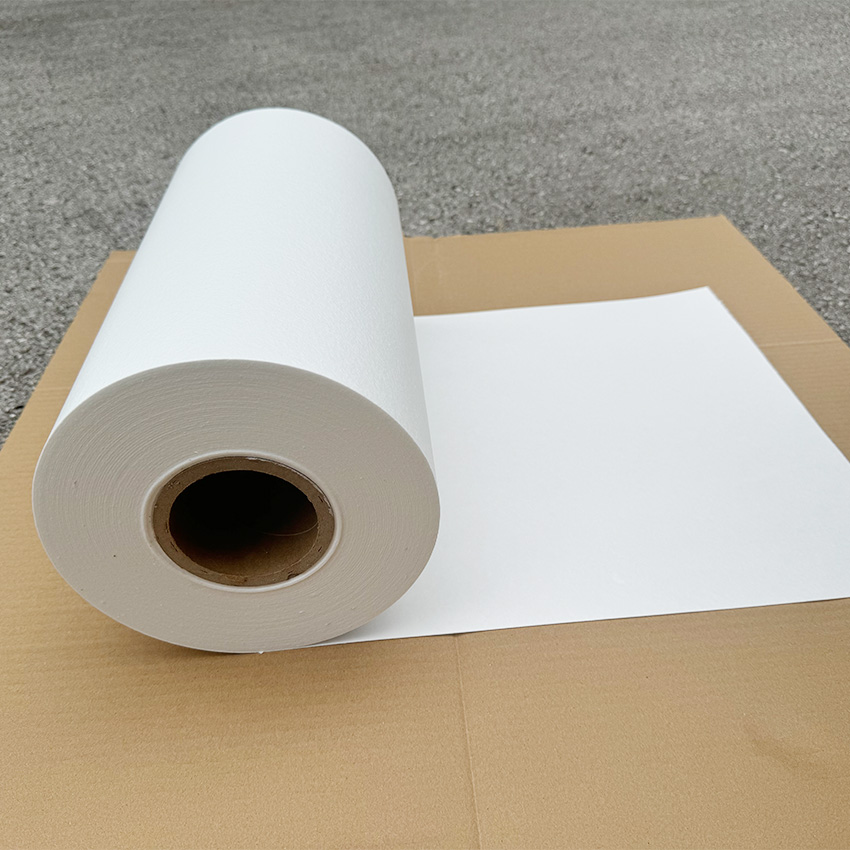
The fundamental physical trade-off in air filtration dictates system performance. Media that catches finer particles naturally restricts airflow. You cannot increase efficiency without impacting resistance. Advanced synthetic fibers and microglass components help optimize this ratio. Microglass media offers incredibly fine fiber diameters. This creates a dense web for capture while leaving enough open space for air to pass. Evaluating your HVAC filter media ensures you hit the optimal balance between restriction and efficiency.
Pressure drop measures the resistance air faces when pushing through the filter. Initial pressure drop occurs when the filter is brand new. Final pressure drop marks the point when the filter is fully loaded and requires replacement. As resistance climbs, the blower motor consumes exponentially more electrical power. Selecting a media that maintains lower resistance as it loads will drastically reduce your utility bills.
| Media Type | Initial Resistance (in. w.g.) | Mid-Life Resistance (in. w.g.) | Final Resistance (in. w.g.) |
|---|---|---|---|
| Standard Cotton-Poly Blend | 0.30 | 0.65 | 1.00 |
| Advanced Synthetic Pleat | 0.24 | 0.48 | 1.00 |
| High-Capacity Microglass | 0.20 | 0.40 | 1.00 |
Dust Holding Capacity determines how much physical mass the filter can retain before failing. High DHC directly extends the lifespan of the unit. Several physical traits dictate this capacity. Media thickness provides more space for particles to settle. High pleat density maximizes the available surface area. Furthermore, a gradient fiber structure captures large particles on the surface while trapping fine dust deeper inside. These combined factors delay the final pressure drop limit.
Efficiency ratings mean nothing if the filter physically collapses. You must evaluate when to specify rigid cell formats over standard pleated designs. Modern commercial buildings often use Variable Air Volume (VAV) systems. These systems adjust fan speeds continuously based on cooling demand. Standard cardboard-framed pleats struggle under this stress. The media oscillates, bending back and forth. This movement sheds trapped dust back into the airstream. Rigid cell filters utilize sturdy internal supports. They prevent media oscillation and perform consistently under turbulent air volume changes.
High humidity destroys inferior filter media. Wet environments cause traditional cotton-poly blends to swell. Swollen fibers restrict air pathways entirely, spiking pressure drop overnight. Conversely, synthetic media acts hydrophobically. It repels water molecules. This prevents structural collapse and maintains steady efficiency even in humid coastal climates. Specifying the correct ASHRAE air filter material ensures stability regardless of weather conditions.
Even the finest media fails completely if air simply routes around it. Bypass leaks ruin system efficiency. Air naturally follows the path of least resistance. If gaps exist between the filter frame and the holding rack, dirty air bypasses the media entirely. You must prioritize structural rigidity. High-quality foam gaskets seal the edges securely. Proper hardware ensures the unit locks tightly into place. Ignoring gasket quality renders expensive media upgrades useless.
Evaluating commercial filters requires a broad financial perspective. The initial purchase price represents a tiny fraction of the overall operational expense. Fan motors consume massive amounts of electricity pushing air through restricted filters. In fact, electrical energy typically accounts for over 80% of a filter's lifetime expense. Investing in premium media with lower pressure drop curves pays for itself quickly through measurable utility savings. You must calculate labor and energy costs together to see the true value of an upgrade.
Many facility managers assume that higher efficiency always equals better results. This false assumption leads directly to the over-filtration trap. Installing high-resistance MERV 14 media into older, underpowered HVAC systems causes severe mechanical stress. The blower motor cannot overcome the added restriction. Consequently, total airflow drops. This starves the cooling coils, leading to ice formation and potential compressor burnout. Always audit blower capacity before aggressively upgrading filtration levels.
Follow a structured action plan when upgrading your commercial filters. Guesswork leads to mechanical failures and wasted budgets.
Specifying commercial filter media requires careful engineering analysis rather than simple commodity purchasing. You must balance exact capture needs against the mechanical limits of your specific system. Rely heavily on verifiable ASHRAE 52.2 testing data when evaluating new products. Do not let basic marketing claims dictate your facility's indoor air quality strategy. We strongly encourage you to consult with a dedicated HVAC filtration specialist. They can conduct a comprehensive life-cycle energy analysis and system pressure audit. Taking these steps ensures you achieve superior air quality without punishing your utility budget or damaging your mechanical equipment.
A: ASHRAE filters undergo rigorous, standardized testing under ASHRAE Standard 52.2. This protocol guarantees specific fractional particle capture efficiencies across defined micron ranges. Conversely, generic or "standard" filters often lack verified, independent performance data. They may rely on unproven marketing claims rather than scientific laboratory results.
A: Lower air permeability creates higher resistance, known as static pressure. Air cannot pass through the media easily. To compensate, the system's blower motor must work significantly harder to maintain adequate airflow. This increased mechanical workload consumes exponentially more electrical energy, sharply driving up your monthly utility costs.
A: No. Upgrading to higher MERV ratings introduces greater airflow resistance. You must verify that your existing HVAC fan motor can handle the increased static pressure. Installing restrictive filters in incompatible systems will drastically reduce airflow, potentially freezing cooling coils or causing premature motor failure.
A: Replacement schedules should never rely solely on a calendar. Instead, monitor the final pressure drop limit recommended by the filter manufacturer. You should dictate changeouts using system differential pressure gauges. Replacing them based on actual airflow resistance maximizes filter lifespan and prevents unnecessary energy waste.
