
English


T: +86-572-6200777
Mr. Xin: +86-17357227212
Mr. Xin: +86-17357227212
Mr.Li: +86-13706256441
Building 31, Tianneng Chain Innovation Industrial Park, Meishan Town, Changxing County, Huzhou City, Zhejiang Province

Views: 0 Author: Site Editor Publish Time: 2026-07-09 Origin: Site


Particulate contamination acts as the primary destroyer of heavy machinery. It stands as the root cause behind the vast majority of hydraulic component failures today. At the critical 10-micron threshold, particles roughly match the dynamic clearance size of sensitive servo valves and high-performance piston pumps. Standard filtration proves entirely insufficient for high-pressure systems operating under these incredibly tight tolerances.
Upgrading your machinery from standard components to synthetic glass fiber media represents a strategic reliability decision. You cannot treat this upgrade as a basic consumable swap. It demands a fundamental shift in how you protect your capital equipment from premature wear and catastrophic breakdowns.
We designed this guide to establish an evidence-based framework for your engineering and procurement teams. You will learn how to evaluate, shortlist, and source reliable materials without falling for misleading nominal ratings. We will show you exactly how to verify performance data and ensure your fluid power systems remain fully protected under peak loads.
Absolute over Nominal: A true 10 micron filter media must be validated by ISO multi-pass testing (Beta ratio > 1000), not just marketed as "10-micron."
Superior Dirt Holding Capacity (DHC): Glass fiber retains up to 400% more particulate than cellulose due to its deep-pleat, multi-layer matrix.
Lower Total Cost of Ownership: Despite higher upfront costs, glass fiber oil filters prevent catastrophic pump wear and extend hydraulic fluid lifespans.
Material Integrity: Look for composite glass fiber with structural mesh backing to prevent media migration under high differential pressure.
Engineers have long debated the merits of different filtration materials. Traditional cellulose, derived from natural wood pulp, served as the industry standard for decades. However, modern industrial hydraulic filtration requires absolute precision. Cellulose inherently features inconsistent pore sizes. Large pores allow dangerous particulates to pass directly through the element. Conversely, abnormally small pores trap dirt immediately on the surface. This causes rapid blinding, restricting flow and forcing maintenance teams into frequent replacement cycles.
Micro-glass fibers solve these exact problems through synthetic engineering. Manufacturers spin synthetic glass fibers to uniform, highly controlled diameters. They arrange these fibers to create a complex, tortuous path. This specific architecture captures particles throughout the entire depth of the media matrix, rather than just trapping them on the outer surface. Depth filtration prevents sudden pressure drops and maintains system stability.
We must look closely at two critical performance metrics when comparing these materials:
Flow Resistance: Glass fiber inherently causes significantly less pressure drop across the filter element compared to cellulose. The uniform structure allows fluid to pass efficiently while trapping solid contaminants.
Moisture Tolerance: Water ingress frequently occurs in active hydraulic systems. Cellulose absorbs water, swells, and dramatically restricts fluid flow. Glass fiber repels water. It does not swell, degrade, or lose structural integrity when exposed to moisture.
Feature | Cellulose (Wood Pulp) | Synthetic Glass Fiber |
|---|---|---|
Pore Structure | Inconsistent, irregular sizes | Uniform, engineered diameters |
Filtration Style | Surface loading (blinds quickly) | Depth loading (tortuous path) |
Moisture Reaction | Swells and restricts flow | Unaffected by water ingress |
Efficiency Rating | Typically Nominal (50% - 80%) | Always Absolute (99.9%+) |
When you evaluate 10 micron filter media, you must demand hard data. Marketing brochures often use the term "10-micron" loosely. A nominal rating means the filter might catch half of the 10-micron particles passing through it. In a high-pressure system, allowing 50% of abrasive particles to reach your servo valves guarantees failure. You must demand absolute filtration ratings validated by ISO 16889 multi-pass testing.
The Beta ratio (β) serves as the industry standard for capture efficiency. Engineers calculate this by dividing the number of particles upstream by the number of particles downstream. A β10(c) ≥ 1000 rating means exactly 99.9% of all 10-micron particles are captured on the very first pass. If a supplier cannot provide a documented Beta ratio greater than 1000, reject the material immediately.
Next, you must evaluate Dirt Holding Capacity (DHC). DHC measures how many grams of standardized ISO test dust the media can physically retain before reaching its terminal pressure drop. Higher DHC directly translates to longer maintenance intervals. Because glass fiber utilizes a deep, porous structure, it holds vastly more dirt than surface-loading cellulose.
Finally, assess the physical architecture. Premium synthetic media never consists of a single layer. Manufacturers build a composite structure to survive harsh environments. A typical high-quality design includes an upstream pre-filter layer, the primary 10-micron retention layer, and a rigid downstream scrim backing. This multi-layer composite maintains absolute pleat stability even during violent flow surges.
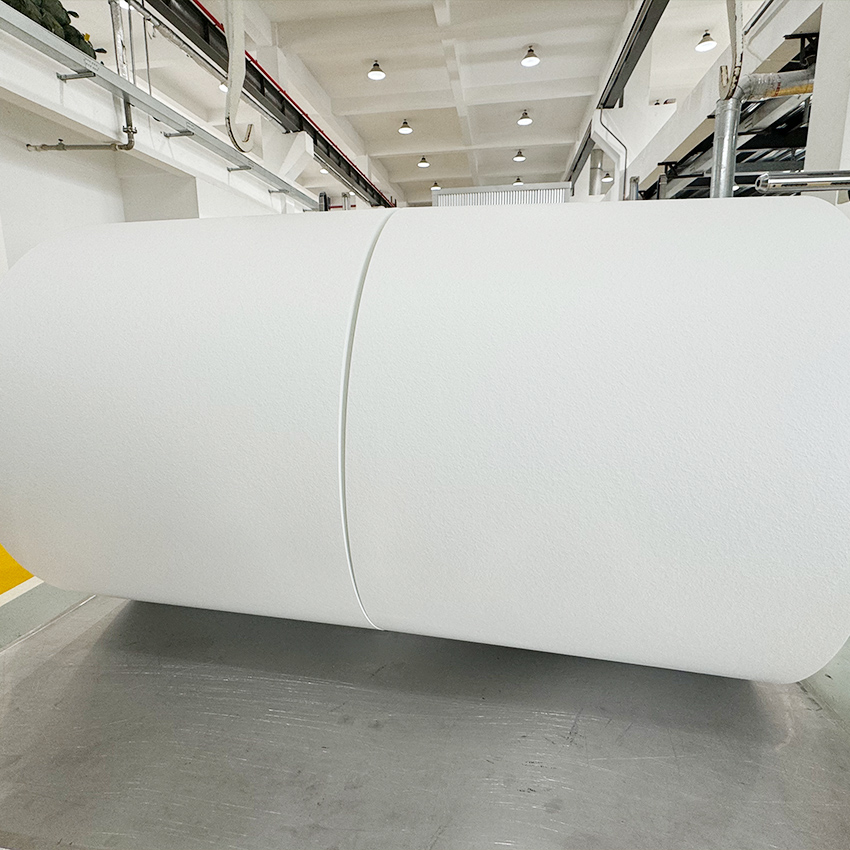
Installing high-efficiency media changes how fluids move through your equipment. You must rigorously assess how a new glass fiber oil filter will interact with your existing housing and fluid characteristics. Flow dynamics dictate machinery survival.
Identify Differential Pressure (ΔP) Limits: Every filter housing contains a bypass valve. As the filter captures dirt, pressure builds up upstream. If this differential pressure exceeds the bypass valve limit, the valve springs open. Unfiltered, highly contaminated oil then rushes directly into your sensitive components. You must calculate the exact maximum pressure drop the media can withstand to ensure the bypass valve stays closed during normal operation.
Evaluate Viscosity and Cold Starts: Cold starts represent a highly vulnerable phase in hydraulic fluid filtration. Cold oil thickens dramatically. Pushing highly viscous oil through dense filter paper creates immediate pressure spikes. Glass fiber features superior inherent porosity. This exceptional porosity allows thick oil to pass through safely, completely eliminating the risk of pump cavitation during freezing morning start-ups.
Verify Fluid Chemical Compatibility: Filter media relies on complex binder resins to hold the microscopic glass fibers together. Standard mineral oils rarely cause chemical issues. However, if your system utilizes fire-resistant fluids, phosphate esters, or advanced synthetic blends, you must act carefully. Incompatible fluids will dissolve the binder resins. This causes the entire filter matrix to collapse into the fluid stream.
By mapping these three dynamic constraints, you protect your system from unintended consequences. Never assume a universally compatible filter exists.
Transitioning to synthetic media brings immense benefits, but poor manufacturing quality introduces severe implementation risks. You must know exactly what red flags to look for when inspecting sample elements.
Media migration stands as the most catastrophic failure mode. If a manufacturer uses cheap binder resins or poor curing processes, the brittle glass fibers can break apart under pressure. These microscopic glass shards then migrate directly into the hydraulic system. They act as an abrasive lapping compound, accelerating the exact wear the filter was installed to prevent. To prevent this, physically verify the presence of a protective downstream mesh backing. This structural mesh acts as a failsafe, capturing any broken fibers before they exit the filter element.
Inconsistent pleat density represents another major manufacturing flaw. Pleats must remain perfectly spaced to distribute fluid evenly.
Over-pleated media: Manufacturers sometimes cram too many pleats into a small housing to boast about high surface area. This restricts flow because the pleats pinch together, causing localized fluid velocity spikes and early pressure bypass.
Under-pleated media: This reduces the active filtration surface area. Fluid passes too quickly, reducing the element's total lifespan and dirt holding capacity.
Furthermore, be highly skeptical of supplier compliance illusions. Many vendors stamp "ISO Certified" across their marketing materials. Often, this merely refers to an ISO 9001 factory management certification. It has absolutely nothing to do with filter performance. You must demand specific ISO 16889 multi-pass performance data for the exact media roll you intend to purchase.
Ignoring the housing's bypass valve spring rating when upgrading media.
Failing to flush the system before installing high-efficiency elements.
Relying on physical dimensions alone without checking the element's collapse burst pressure.
Procuring genuine 10 micron glass fiber filter paper requires strict vendor vetting. You must separate engineering partners from commodity resellers. Do not treat this process like buying standard hydraulic oil filter paper. The technical stakes are substantially higher.
Begin your procurement cycle by mandating pilot testing. Never commit to a bulk order based solely on digital specifications. Request flat-sheet media samples directly from the manufacturer. Your engineering team should conduct localized differential pressure tests. Once flat-sheet testing passes, order pilot filter elements for field trials. Run these pilot filters in a controlled machine environment. Monitor the downstream fluid cleanliness using the ISO 4406 particle counting standard. If the vendor's media genuinely performs at an absolute 10-micron level, your fluid particle counts will drop dramatically within the first 48 hours of continuous operation.
Next, establish rigid vendor data requirements. Shortlist only those suppliers who provide transparent, standardized testing curves. You need to see Beta stability graphs over time. Poor quality filters demonstrate a high Beta ratio initially, but their efficiency plummets as differential pressure builds. Premium suppliers provide performance curves proving their media maintains a Beta ratio > 1000 from the first minute of operation right up to the terminal pressure drop. Discard any vendor who answers technical engineering questions with simplified marketing brochures.
You should also mandate batch traceability. Quality control in glass fiber manufacturing requires precision mixing of micro-fibers and resins. Ask potential suppliers for their batch testing protocols. They must prove they sample and test every master roll before slitting and pleating. This ensures you do not receive a highly efficient filter in January and a rapidly blinding filter in June.
Selecting the correct 10-micron synthetic media requires moving past generic housing dimensions. You must scrutinize structural integrity, verify mathematical Beta ratios, and demand proven Dirt Holding Capacity metrics. Upgrading your filtration strategy shifts your maintenance approach from reactive repairs to proactive equipment preservation.
We strongly recommend prioritizing manufacturers who engineer true composite glass fiber. Demand physical downstream mesh backings. Refuse to accept nominal ratings. Always verify performance through documented ISO multi-pass test results. By enforcing these strict technical standards, you ensure your fluid power systems remain completely protected under the harshest peak load conditions.
A: A nominal rating means the filter might catch some 10-micron particles, often demonstrating only 50% efficiency. It offers no guaranteed protection. An absolute rating means the media consistently captures 99.9% or more of all 10-micron particles on a single pass. Absolute ratings are strictly verified by standardized ISO multi-pass testing.
A: Yes, physically they often fit the same housings. However, you must account for dynamic changes in fluid flow rates and pressure drops. Glass fiber generally improves flow due to its high porosity, but you should always verify housing and bypass valve compatibility before completing the swap.
A: Lifespan depends entirely on the operating environment and the filter's Dirt Holding Capacity (DHC). However, due to its deep-pleat matrix, synthetic media objectively outlasts traditional cellulose equivalents by two to four times under identical contamination loads.
