
English


T: +86-572-6200777
Mr. Xin: +86-17357227212
Mr. Xin: +86-17357227212
Mr.Li: +86-13706256441
Building 31, Tianneng Chain Innovation Industrial Park, Meishan Town, Changxing County, Huzhou City, Zhejiang Province

Views: 0 Author: Site Editor Publish Time: 2026-07-08 Origin: Site


High-efficiency downstream filters are notoriously expensive to replace. They are also highly prone to premature blinding when exposed to heavy particulate loads. Industrial plant managers understand the massive frustration of shutting down entire production lines simply because a primary intake clogged prematurely. Operations relying solely on fine micro-filters often face crippling, unplanned downtime. Implementing a robust coarse filter paper at the intake or primary stage acts as a sacrificial barrier. This vital first line of defense protects your most critical fluid components. It achieves this goal without severely restricting necessary system flow rates. This comprehensive guide breaks down the essential evaluation criteria and material trade-offs. You will discover practical implementation realities for selecting the right media. We will equip you with clear strategies to optimize your system lifespan and streamline daily maintenance budgets.
Deploying the correct coarse pre-filtration material extends the lifecycle of secondary fine filters and reduces overall maintenance downtime.
Material choice (e.g., standard cellulose vs. F6 glass fiber media) strictly depends on the system’s specific fluid dynamics, operating temperature, and chemical compatibility requirements.
Evaluating high flow filter paper requires balancing particle retention efficiency with acceptable initial pressure drop (Delta P).
Successful procurement relies on supplier batch-to-batch consistency and the ability to provide custom formats (roll stock vs. die-cut).
Unfiltered high-micron particulates wreak havoc on fluid and air processing systems. They cause rapid clogging of expensive HEPA, ULPA, or fine liquid filters. This rapid blinding severely inflates overall operational expenses. It also triggers frequent production stops. Maintenance teams often spend excessive hours swapping out precision membranes that should have lasted months. You must establish a strong primary defense to stop this financial drain.
A successful industrial pre-filter installation captures 80 to 95 percent of large particulates. These contaminants typically range from 10 to over 50 microns. Importantly, the media achieves this particle retention while maintaining your target throughput. Success means your secondary filters only handle the microscopic contaminants they were engineered to catch.
You can measure this success through a clear return on investment calculation. Compare the nominal cost of bulk coarse paper replacements against your current spending baseline. You must factor in the labor costs of frequent filter changes. Add the cost of unplanned facility downtime. Finally, include the exorbitant unit cost of replacing downstream micro-filters. When you run the exact numbers, the business case for a sacrificial layer becomes undeniable. You spend pennies upfront to save thousands on the back end.
Assessing filtration media requires looking far beyond basic marketing datasheets. You need specific engineering metrics to ensure compatibility with your machinery.
You must clarify nominal versus absolute ratings in coarse grades. A nominal rating means the media captures an average percentage of particles at that given size. An absolute rating guarantees the retention of almost all particles at a specific threshold. Your primary decision point is simple. You must match the micron retention size just below the threshold that actively threatens your fine filter.
High-flow systems demand media that actively minimizes fluid resistance. You must evaluate high flow filter paper carefully. Look closely at Frazier permeability or Gurley stiffness test data. The Frazier test measures the volume of air passing through a specific area at a set pressure. Lower initial Delta P means your pumps or fan motors consume less energy during daily operation.
Standard untreated paper degrades quickly in high-humidity air intakes or liquid processing streams. You must evaluate the absolute necessity of wet-strength resin binders. These chemical additives prevent the fibrous matrix from swelling and collapsing when soaked. Without these binders, the paper quickly ruptures under mechanical pressure.
DHC dictates the operational lifespan of your media. Assess the physical thickness, known as caliper, and the internal porosity structure. Higher void volumes yield significantly longer lifespans. They delay the exact moment your system reaches its terminal pressure limits.
Below is a summary table detailing the critical parameters you should track during your evaluation phase:
Evaluation Metric | What It Measures | Why It Matters |
|---|---|---|
Basis Weight (GSM) | Mass per unit area | Indicates density and structural strength. |
Caliper | Material thickness | Impacts dust holding capacity and void volume. |
Frazier Permeability | Airflow rate through media | Determines energy efficiency and Delta P. |
Wet Burst Limit | Pressure tolerance when wet | Prevents catastrophic media rupture in liquids. |
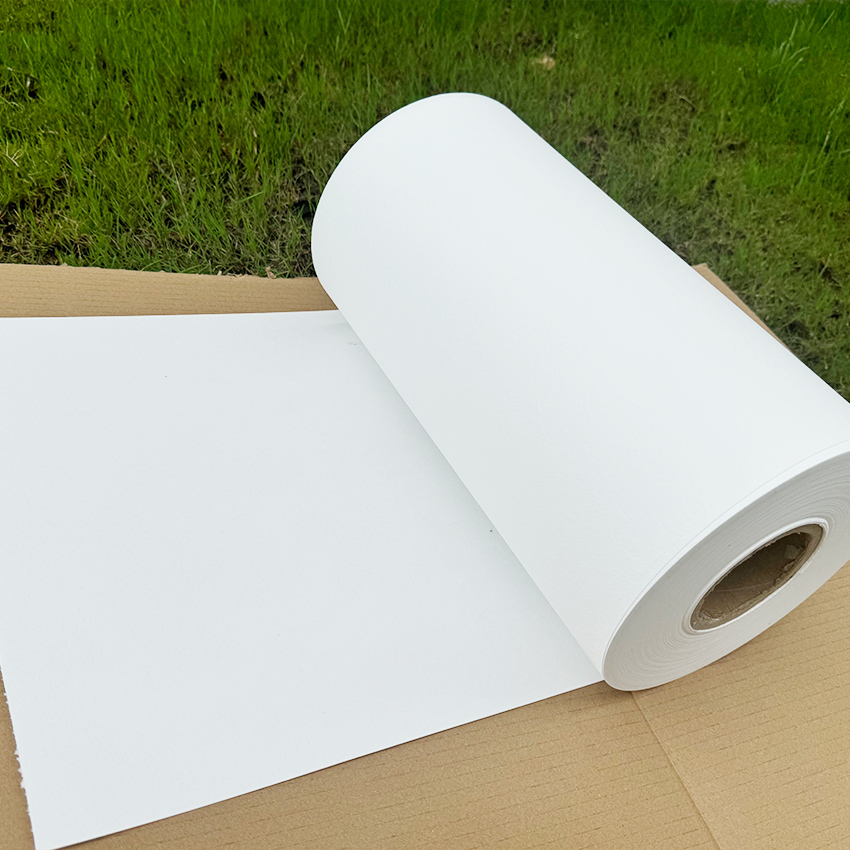
Material selection makes or breaks your filtration line. Choosing the wrong matrix leads to sudden blowouts or unnecessary spending. Let us examine the two primary categories used across industrial sectors.
Cellulose remains the undisputed industry workhorse for a reason. It derives from natural wood pulp and offers predictable performance.
Pros: It is highly cost-effective and easily incinerable after use. This makes it excellent for standard ambient air intakes or non-aggressive liquid processes.
Cons: Cellulose offers very limited chemical resistance. It remains highly vulnerable to structural failure in high-moisture or high-temperature environments. It will swell and choke fluid flow if it encounters aggressive solvents.
Engineered fibers solve the inherent shortcomings of natural cellulose. For instance, F6 glass fiber media steps in when operating conditions become severe.
Pros: It is ideal for coarse air filter media applications requiring stringent fire ratings. Glass fibers deliver high thermal stability and superior depth filtration. They do not swell in wet conditions.
Cons: You face a higher upfront material cost. Furthermore, glass fibers require specific handling protocols to prevent micro-fiber shedding during installation. Improper handling releases irritating particulates.
Engineers often rely on environmental variables to dictate material choice. We have structured a decision matrix chart below to guide your specification process.
Operating Environment | Recommended Material | Strategic Rationale |
|---|---|---|
Dry, Ambient Air | Standard Cellulose | Maximizes cost efficiency. Easy to dispose of or incinerate. |
High Humidity / Wet Air | Resin-Treated Cellulose | Prevents paper from swelling and blocking airflow. |
High Temp / Chemical Mist | F6 Glass Fiber | Offers extreme thermal stability and resists acid degradation. |
Buying the correct roll of material does not guarantee operational success. You must install it correctly within your specific machinery. Poor execution ruins even the best engineered fibers.
You must evaluate how you will integrate the material into the daily workflow. Will you source continuous roll stock for automated systems? Or do you need pre-cut sheets and discs for static housings? Automated roll advancements save immense labor hours. However, they require precise tension control mechanisms to prevent tearing. Static sheets require manual labor but offer easier visual inspection.
The most common point of failure is never the media itself. It is bypass leaks. If fluid circumvents the paper entirely, your expensive secondary filter takes the full hit. Edge sealing matters immensely. You must verify gasket compatibility across all housings. You must also understand housing compression limits.
Here are common mistakes regarding sealing:
Overtightening: Crushes the porosity of the paper, creating an artificial blockage and spiking the pressure drop immediately.
Undertightening: Allows fluid channeling around the edges, rendering the entire pre-filtration stage useless.
Incompatible Gaskets: Using standard rubber gaskets with aggressive solvents causes the seal to melt and leak.
Engineers should always mandate rigorous pilot testing. Bench-scale trials reveal exactly how the material performs in reality. You should expect significant variations between pristine lab datasheets and real-world industrial slurries. Actual airflows carry highly unpredictable contaminant mixes.
Follow these steps for proper bench-scale validation:
Secure a physical A4 sample of the proposed media.
Install the sample in a scaled-down Buchner funnel or small flow duct.
Run a sample of your actual process fluid or facility air through the matrix.
Measure the exact time it takes to reach terminal pressure drop.
Analyze the downstream fluid to confirm the precise particle retention rate.
Partnering with the right manufacturer ensures long-term operational stability. A poor supplier causes constant headaches through delayed shipments and inconsistent quality.
In heavy industrial settings, varying basis weight or porosity between lots causes unpredictable pressure drops. You cannot tolerate these wild fluctuations on a production line. Demand strict quality assurance protocols from your partners. Look specifically for ISO 9001 certifications. You should also ask if they utilize automated defect inspection cameras on their manufacturing lines.
Avoid highly rigid suppliers. Look for manufacturers fully capable of custom slitting and precise pleating. They should also apply specific wet-strength binders without forcing exorbitant minimum order quantities (MOQs). Custom formats reduce your internal processing time. Finding the ideal pre-filtration material relies heavily on flexible and responsive supply chains.
Start the supplier vetting process early. Request technical data sheets (TDS) and safety data sheets (SDS) upfront. Review them alongside your engineering team. More importantly, ask for physical roll samples. You need these exact samples to conduct the bench testing detailed earlier. A confident supplier will gladly provide test material to prove their performance.
A well-designed primary defense strategy fundamentally changes your annual maintenance schedule. You drastically reduce the burden on fine micron filters. This shift keeps your facility running smoothly and predictably. Let us review the critical steps for achieving this success.
Prioritize Flow Maintenance: Select media that carefully balances high capture rates with the lowest possible initial pressure drop.
Match Materials to Stress: Deploy standard cellulose for dry ambient tasks. Reserve engineered glass fibers for thermal or chemical extremes.
Validate Everything: Never skip bench-scale pilot testing before a facility-wide rollout. Real-world fluids behave differently than lab models.
Secure the Housing: Eliminate bypass leaks through careful gasket selection and proper compression protocols.
Ultimately, you must shift your perspective. Treat this primary barrier not as a cheap commodity, but as a critical engineered component. Its daily performance dictates the survival, efficiency, and safety of your broader filtration ecosystem. Make your selection methodically.
A: Typically, coarse grades retain particles ranging from 10 microns up to 50 microns or larger. These materials prioritize rapid flow rates over absolute micro-particle retention. They serve primarily to capture large bulk debris, protecting downstream precision filters from premature blinding.
A: F6 media offers specific efficiency ratings compliant with EN779 or ISO 16890 standards. It is optimized specifically for HVAC and industrial air intakes. Unlike standard cellulose paper, F6 fiberglass provides significantly higher dust holding capacity and superior moisture resistance. It maintains structural integrity even in damp environments.
A: Initially, introducing any new media causes a slight pressure drop. However, it prevents the rapid blinding of downstream fine filters. By capturing the heavy particulate load early, it actually maintains a stable, higher average flow rate over the system's entire operational lifecycle.
A: You should request physical sample sheets. For liquid applications, conduct a bench-scale Buchner funnel test. For air applications, utilize a small-scale flow duct test. These methods accurately measure pressure drop and dust holding capacity against your specific process fluid, revealing real-world performance.
