
English


T: +86-572-6200777
Mr. Xin: +86-17357227212
Mr. Xin: +86-17357227212
Mr.Li: +86-13706256441
Building 31, Tianneng Chain Innovation Industrial Park, Meishan Town, Changxing County, Huzhou City, Zhejiang Province

Views: 0 Author: Site Editor Publish Time: 2026-07-05 Origin: Site


Contaminants in the intake air directly compromise paint finish quality. They increase rework costs significantly in automotive and industrial finishing operations. Dirt and particulates ruin perfect coats in seconds. Procurement and facility managers face a tough balancing act. They must juggle critical airflow requirements against strict filtration efficiency. They also need to manage ongoing replacement costs effectively.
This article provides a clear, evidence-based framework for facility operators. You will learn how to evaluate intake solutions properly. We will help you determine if specific fiberglass media fits your unique booth configuration. You can use these insights to meet tight compliance needs. We explore material mechanics, airflow compatibility, and practical maintenance protocols.
Performance: F6 classification indicates a medium efficiency filter media, capturing fine particulates (1-10 microns) before they enter the spraying environment.
Material Advantage: Glass fiber maintains structural integrity and consistent airflow better than many synthetics under heavy load.
Compliance: Proper intake filtration supports broader system compliance with environmental guidelines (e.g., EPA auto refinishing standards) by ensuring optimal booth pressure.
Maintenance: Replacement schedules should be dictated by pressure drop metrics (manometer readings), not generic timeframes.
Defining F6 efficiency requires understanding European and global filter standards. The F6 rating indicates a highly capable medium efficiency filter media. It typically delivers 60% to 80% efficiency for capturing particles between 1 and 10 microns. These microscopic particles include fine dust, pollen, and industrial soot. You cannot see them easily. However, they easily cause prominent defects on wet paint surfaces. F6 media provides a robust barrier against these invisible threats.
Many operators confuse intake filters and exhaust filters. Intake filters specifically protect your valuable workpiece from external environmental dust. They clean atmospheric air entering the cabin. Exhaust filters perform a completely different job. They protect the outside environment from sticky overspray. You must use the correct material for each specific zone. Interchanging them causes catastrophic system failures.
Using a dedicated glass fiber prefilter function transforms your entire filtration strategy. The primary intake stage captures the heaviest dust burdens. This action shields the delicate and expensive ceiling filters downstream.
Primary intake filters catch coarse and medium particulate matter.
The air travels through the plenum toward the ceiling.
Ceiling diffusion media performs the final microscopic polish.
By absorbing the initial dirt load, the F6 stage extends the lifespan of expensive final-stage media. It saves you considerable money on premium ceiling panel replacements over time.
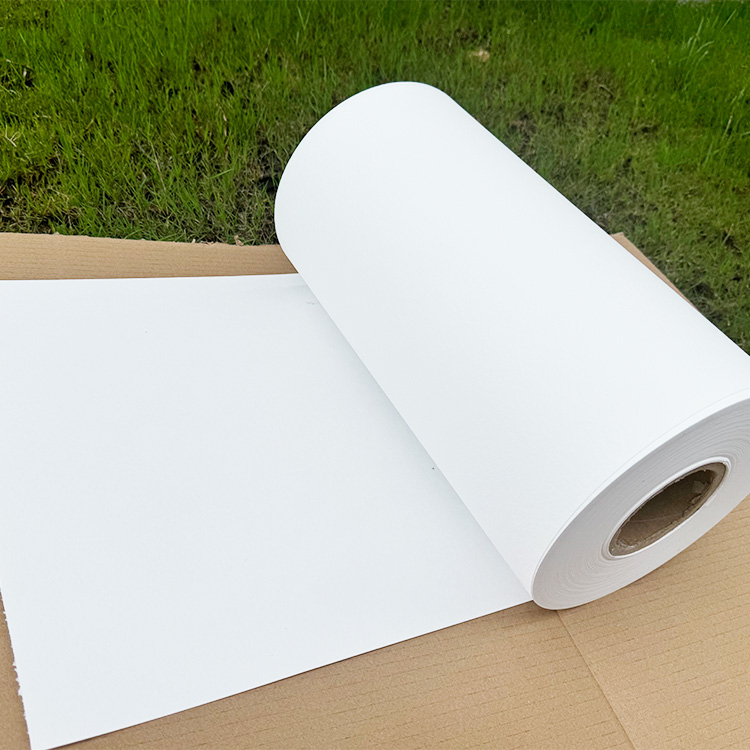
Material mechanics define how well a filter performs under real stress. Glass fiber utilizes a progressive density structure. The fibers sit loosely at the air-entry surface. They pack much tighter toward the air-exit side. This engineering marvel captures larger particles at the surface. Finer particles penetrate deeper before becoming trapped. F6 glass fiber filter paper utilizes this exact depth-loading principle. It prevents rapid surface blinding entirely.
Airflow and pressure drop represent critical operational metrics. Glass fiber possesses a distinct aerodynamic advantage. It typically offers a lower initial pressure drop compared to densely woven polyester synthetic alternatives. Air moves freely around the rigid glass strands. Synthetics often compress under heavy airflow. They choke the fan mechanism prematurely. Glass fiber maintains its rigid shape, ensuring consistent air velocity across the spray cabin.
The cost-to-value ratio requires careful analysis. Upfront costs differ between material types. Glass media often provides extended holding capacity. You avoid exaggerated lifespan claims by tracking actual ambient air quality. High-smog industrial areas load filters faster than rural shops.
Comparison Chart: Glass Fiber vs. Synthetic Media | ||
Performance Metric | F6 Glass Fiber Media | Synthetic Polyester Media |
|---|---|---|
Initial Pressure Drop | Low (Aerodynamic rigidity) | Moderate to High |
Particle Loading Method | Depth Loading (Progressive) | Surface Loading primarily |
Airflow Consistency | Excellent under heavy loads | Can compress under suction |
Moisture Resistance | High (Does not absorb water) | Moderate |
Purchasing formats vary widely based on your facility layout. Suppliers offer standard bulk rolls for large operations. The industry standard sizing often measures 41 inches by 300 feet. You can also purchase pre-cut pads. Pads save installation time for standard door intake frames. Rolls provide better economy for custom framing. You simply cut the exact paint booth filter paper dimensions required for your specific intake boxes.
Application scaling dictates your installation approach. Commercial and industrial booths demand continuous roll deployment. Maintenance teams stretch the media across large structural framing. They secure it tightly to prevent sagging. Hobbyist and micro-booth setups face different challenges. Small setups possess severe static pressure limitations. You must address specific sizing to avoid overwhelming small blower motors.
CFM matching prevents dangerous air starvation in the cabin. You must verify compatibility carefully.
Check the manufacturer tag on your intake fan motor.
Note the maximum Cubic Feet per Minute (CFM) rating.
Review the resistance curves of your selected filter media.
Calculate the total square footage of your intake housing.
Ensure the media allows the required CFM at a low static pressure.
Mismatched media chokes the fan. The fan works harder, heats up, and potentially fails. Proper CFM matching guarantees smooth, laminar airflow over your painted products.
Regulatory context frames every facility upgrade. You must adhere to general EPA guidelines for auto refinishing. Industrial spraying also faces strict local oversight. These rules do not dictate exact filter brands. They do require verifiable efficiency standards. You must prove your system captures specified particulate volumes safely.
System synergy plays a massive role in compliance. Intake filters do not directly filter volatile organic compounds (VOCs). They never touch the exhaust air stream. However, optimal intake flow remains legally critical. It maintains the negative or positive booth pressure required by safety standards. Clogged intake filters drop cabin pressure. Negative pressure forces dirty shop air through door seals. Unfiltered air creates dangerous working conditions and ruins paint jobs.
Verifiable metrics protect your business from audit failures. Always advise your purchasing team to request independent lab test sheets. You need documented arrestance ratings directly from the manufacturers. This documentation ensures the automotive spraying filter meets all promised specifications. Relying on verbal claims risks your compliance standing. Documented proof simplifies environmental inspections.
Installation best practices dictate your ultimate success. Directional installation remains absolutely vital. Progressive density media features distinct air-entry and air-exit sides. The loosely woven side must face the incoming dirty air. The tightly woven backing side must face the fan. Installing it backward causes immediate surface blinding. Furthermore, you must ensure perfect edge seals. Unsealed edges allow dirty air to bypass the filter entirely.
Predicting replacement cycles requires data, not guesswork. We strongly warn against relying on visual inspection alone. Dirt loads often hide deep inside the media structure. The surface might look surprisingly clean while the core remains completely choked.
Maintenance Diagnostic Table | ||
Symptom / Indicator | Likely Cause | Required Action |
|---|---|---|
High manometer reading (Pressure Drop) | Filter has reached maximum holding capacity | Replace filter immediately |
Visible dust bypassing edges | Improper framing or lack of edge sealing tape | Reseat filter and tape edges |
Surface looks dirty, pressure drop is low | Normal operation of depth-loading media | Continue monitoring; do not replace yet |
We recommend using manometers or digital differential pressure gauges. These tools accurately track pressure drop across the F6 filter media bank.
Handling risks demand strict safety protocols. Fiberglass causes skin irritation. Airborne glass particles irritate the respiratory system. Maintenance staff must wear proper Personal Protective Equipment (PPE) during every change-out. Supply your team with heavy-duty nitrile gloves, long sleeves, and N95 masks. Roll up dirty media carefully. Never shake it aggressively inside the facility.
Evaluating intake filtration solutions demands a structured approach. You must weigh multiple decision criteria simultaneously. Booth size directly dictates your purchasing format, whether rolls or pads. Ambient environment dust loads determine your required filter depth and holding capacity. The required finish quality establishes your needed efficiency rating. Budget constraints inform your long-term procurement strategy.
Taking immediate action improves your operational efficiency today. We recommend auditing your current pressure drop baselines immediately. Record your manometer readings during standard operation. Next, request sample patches or pilot rolls from trusted suppliers. Test the F6 media in a single intake bank. Monitor the airflow improvements and particulate capture rates closely. Execute a bulk facility-wide transition only after verifying these pilot results.
A: While physically possible, exhaust requires specialized paint arrestors designed specifically for sticky overspray. F6 is optimized for dry particulate intake.
A: It is strictly dictated by operating hours, ambient air dirtiness, and pressure drop readings—rarely by a fixed calendar date.
A: Yes, because the intake filter only handles incoming atmospheric air. The type of paint used primarily dictates the requirements for the exhaust filtration system.
