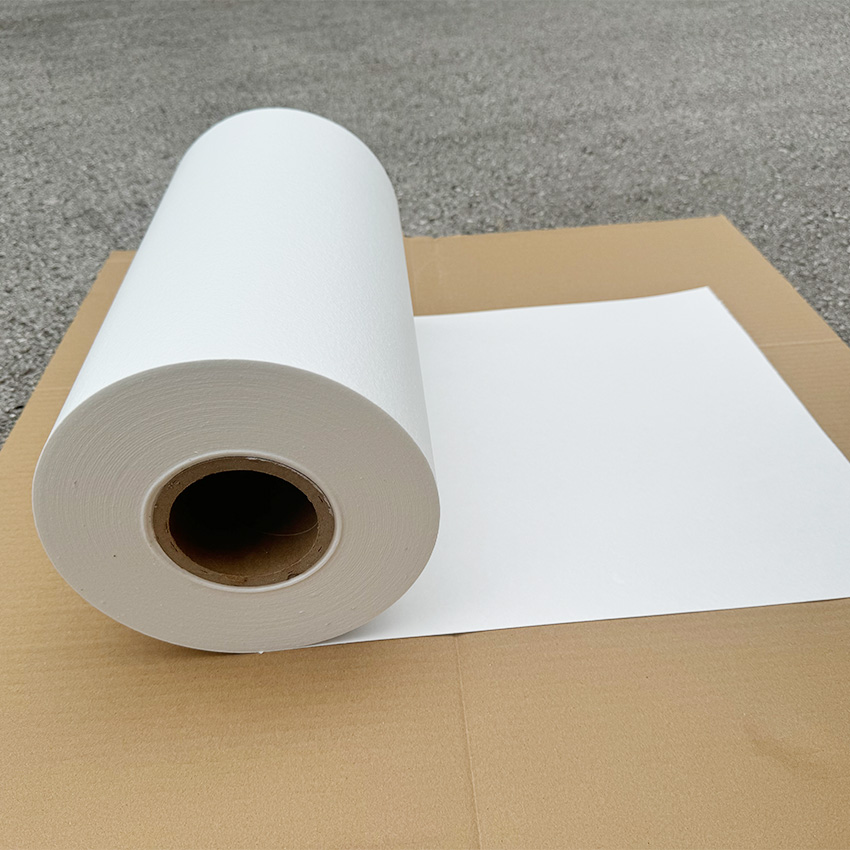
In semiconductor and microelectronics manufacturing, airborne contamination directly impacts yield rates. Even minor particulate intrusions ruin sensitive components on the production line. Selecting the right filtration media is a critical facility decision. It goes far beyond a standard procurement checklist. While filter frames and system designs vary widely, the core media performance dictates your actual cleanroom classification. Facilities depend on these materials to achieve strict ISO Class 4 or 5 environments reliably. This guide outlines the essential technical criteria, implementation risks, and supplier evaluation frameworks. We will help you source H14 glass fiber filter paper effectively. You will learn how to meet the stringent demands of an electronics cleanroom.
Key Takeaways
H14 glass fiber filter paper guarantees a minimum efficiency of 99.995% at MPPS (0.3μm), essential for semiconductor and microelectronics environments.
Balancing high efficiency with a low resistance filter paper profile is critical to controlling HVAC energy expenditures over the filter's lifecycle.
When evaluating glass fiber HEPA media, procurement must verify mechanical strength (for pleating) and chemical stability (to prevent outgassing).
Supplier shortlisting should prioritize batch-to-batch consistency, transparent EN 1822 / ISO 29463 testing data, and verifiable supply chain lead times.
The Role of H14 HEPA Filter Paper in Electronics Cleanrooms
Micro-contaminants cause massive defect density issues during wafer fabrication and printed circuit board (PCB) assembly. A single sub-micron particle landing on a semiconductor node can short-circuit the entire microchip. Cleanroom HVAC systems must eliminate these microscopic threats continuously. They must trap particles effectively without causing prohibitive pressure drops across the ventilation network. Managing this airflow balance requires highly specialized filtration materials.
The EN 1822 standard defines the precise threshold for HEPA filters. It requires a minimum efficiency of 99.995% for the Most Penetrating Particle Size (MPPS). This MPPS usually hovers around 0.3 micrometers. We consider H14 the absolute baseline for critical electronics environments. Lower grades like H13 only offer 99.95% efficiency. That slight percentage difference allows thousands of additional particles into the cleanroom per hour. You need H14 HEPA filter paper to guarantee minimal particle penetration.
Ultrafine borosilicate glass microfibers form the foundation of this filtration media. Manufacturers wet-lay these microfibers into a dense, randomized labyrinth. This complex web does not act like a simple sieve. Instead, it captures sub-micron particles through three distinct physical mechanisms: mechanical capture, interception, and diffusion. Larger particles hit the fibers directly. Mid-sized particles graze the fibers and stick. The smallest particles bounce erratically due to Brownian motion until they collide against a glass fiber. This multi-layered depth filtration ensures unmatched reliability for critical facility operations.
Glass Fiber HEPA Media vs. PTFE: An Objective Evaluation
Facility engineers frequently weigh glass fiber against PTFE (Polytetrafluoroethylene) membranes. They must choose the optimal material for cleanroom filtration upgrades. Both materials offer distinct advantages, but they operate on fundamentally different physics. Understanding these differences helps you avoid costly operational mistakes.
Glass fiber provides exceptional performance stability. It utilizes depth filtration. Particles penetrate the media and distribute throughout the internal fiber matrix. This characteristic offers proven, predictable dust-holding capacity. Your filters will last longer before reaching their terminal pressure drop. Conversely, PTFE relies on surface filtration. It acts like an absolute barrier. Dust accumulates entirely on the outer membrane surface. This rapid surface loading can cause sudden spikes in airflow resistance.
Cost remains a deciding factor for large-scale operations. Glass fiber provides a significantly lower initial capital expenditure (CapEx). It remains the undisputed industry standard for high-volume cleanroom panel filters. Facilities can replace hundreds of terminal ceiling modules affordably. PTFE membranes cost substantially more to manufacture and procure.
Chemical stability also requires careful consideration. Standard glass fibers contain trace amounts of boron. In highly specific semiconductor zones using hydrofluoric (HF) acid, boron can off-gas and cause airborne molecular contamination. If you operate at cutting-edge nodes below 10 nanometers, you might require low-boron glass fiber or PTFE. However, standard microelectronics, PCB assembly, and flat-panel display manufacturing safely utilize traditional H14 glass fiber media without any chemical risks.
Core Evaluation Dimensions for Low Resistance Filter Paper
Procuring the right media requires matching physical specifications to facility outcomes. You must look beyond top-line efficiency ratings. The following matrix details the critical parameters you must evaluate.
Feature Category
Technical Metric
Operational Outcome
Efficiency
>99.995% retention at MPPS
Maintains ISO Class 4/5 environment compliance.
Airflow Resistance
Target Pa at specific face velocity
Reduces fan motor energy consumption and HVAC strain.
Tensile Strength
Machine Direction (MD) > Cross Direction (CD)
Prevents media tearing during high-speed pleating.
Uniformity
Thickness variance < ±0.02mm
Ensures stable, laminar airflow across the filter face.
Filtration Efficiency & MPPS Testing
Manufacturers must validate the 99.995% retention rate rigorously. High-quality media features documented dual-testing compatibility. You need media tested successfully against both DOP (Dioctyl Phthalate) and PAO (Polyalphaolefin) aerosols. The industry largely replaced DOP due to toxicity concerns. PAO now serves as the standard challenge aerosol. The media must demonstrate zero weak spots or pinholes during automated scanning tests. Minor efficiency drops lead directly to failed cleanroom certification audits.
Pressure Drop (Airflow Resistance)
Energy consumption represents the highest ongoing expense in any cleanroom facility. Fan Filter Units (FFUs) run continuously to maintain air exchange rates. Pushing air through dense HEPA media requires massive fan power. You must specify the acceptable Pascal (Pa) range at standard face velocities. Typically, testing occurs at 5.3 cm/s. You should demand low resistance filter paper formulations. This optimized media reduces the aerodynamic drag. Lower resistance decreases the electrical load on your fan motors significantly.
Tensile Strength & Pleatability
Filter assembly subjects the media to extreme mechanical stress. The paper must withstand tight folding without developing micro-fractures. Manufacturers evaluate tensile strength in two ways: Machine Direction (MD) and Cross Direction (CD). MD strength must be exceptionally high to survive the pulling forces of rotary pleating machines. Deep-pleat filters use aluminum separators and require robust stiffness. Mini-pleat applications rely on hot-melt glue beads and require high flexibility. The media formulation must match your specific filter construction method perfectly.
Thickness and Uniformity
Media thickness consistency directly influences cleanroom aerodynamics. Inconsistent thickness leads to uneven air velocity exiting the filter. This disruption destroys the laminar flow required in critical zones. Turbulent air creates vortexes. These vortexes trap particles and drag them onto the cleanroom floor. You must demand strict variance tolerances from your media manufacturers. A standard tolerance of ±0.02mm ensures perfectly uniform air distribution across the entire filter panel.
Implementation Realities: Risks and Mitigation Strategies
Sourcing premium glass fiber HEPA media solves only half the equation. Improper handling and environmental exposure can ruin the best materials before they ever filter a single particle. You must implement strict protocols to mitigate these inherent material risks.
Glass fiber remains inherently brittle. Microfibers snap easily under localized pressure. Media damage often occurs during filter assembly, transit, and installation. A single dropped roll or bumped edge creates microscopic tears. These tears remain invisible to the naked eye but will fail PAO leak tests instantly. You must require suppliers to use secure, rigid packaging. Rolls should arrive suspended in boxes using core plugs to prevent edge crushing. Furthermore, operators must use specialized lifting equipment to move rolls onto the pleating lines.
Moisture sensitivity poses a massive threat to production yields. High ambient humidity degrades glass fiber tensile strength rapidly. The paper acts like a sponge, absorbing atmospheric moisture. Wet media tears immediately inside the pleating machine gears. You must establish strict storage requirements. Keep the media inside climate-controlled warehouses. Maintain relative humidity below 60%. Never unwrap the moisture-proof plastic film until the roll sits actively on the production line.
Binder selection also introduces chemical risks. Manufacturers use acrylic or polyurethane binders to hold the glass fibers together during the wet-laid process. If formulated poorly, these binders off-gas volatile organic compounds (VOCs). Procurement teams must verify the binder formulation carefully. You must ensure the chosen binder minimizes Airborne Molecular Contamination (AMC) inside the fab. Always request outgassing test reports before approving a new media supplier.
Sourcing Framework: Shortlisting H14 Media Suppliers
Evaluating potential suppliers requires a structured, evidence-based approach. Marketing claims about efficiency mean nothing without raw data. Use the following framework to shortlist vendors.
Demand Compliance & Certification Data: Never accept a simple "H14 compliant" stamp. Suppliers must provide batch-specific testing reports. These reports must adhere strictly to global standards like ISO 29463 and EN 1822. Review the MPPS fractional efficiency curves yourself.
Evaluate Customization Capabilities: Standard roll sizes rarely fit every production line perfectly. Assess if the supplier can adjust roll widths dynamically. They should provide custom slitting services to minimize your edge trim waste. Furthermore, they must optimize media formulations for your specific separator types (hot melt vs. aluminum corrugated).
Audit Supply Chain Reliability: Media shortages stop filter production immediately. Evaluate the supplier's Minimum Order Quantities (MOQ). Ensure their MOQ aligns with your inventory turnover rate. Investigate their raw material origins. Verify their quoted lead times through reference checks to protect your facility against unexpected production downtime.
Request Sample Rolls for Prototyping: Do not sign bulk contracts based on A4-sized paper samples. Purchase three full-sized sample rolls. Run them through your actual pleating machines.
Conduct In-House Resistance Testing: Build prototype filters using the sample media. Test the finished filters in your own wind tunnel. Verify the actual pressure drop matches the supplier's Technical Data Sheet (TDS).
Conclusion
Sourcing reliable filtration media requires looking far beyond basic top-line efficiency claims. You must evaluate pressure drop, material strength, and chemical stability holistically. Balancing these factors ensures your facility maintains strict contamination control while keeping operational energy expenses manageable.
Your next step involves rigorous vendor qualification. Advise your engineering and procurement teams to collaborate closely. Request full sample rolls and standard Technical Data Sheets (TDS) from prospective suppliers. Run in-house pleating trials and aerodynamic resistance testing before committing to bulk contracts. By prioritizing mechanical durability and low airflow resistance, you will secure an optimized, high-performing cleanroom environment.
FAQ
Q: Can H14 glass fiber filter paper be tested with PAO aerosols?
A: Yes. High-quality glass fiber media is fully compatible with standard PAO (Polyalphaolefin) aerosol testing. The industry uses PAO widely for cleanroom certification and filter integrity scanning. The media handles the aerosol safely without degrading.
Q: What is the difference in media requirements for mini-pleat vs. separator filters?
A: Mini-pleat filters require thinner, highly uniform media. They rely on specific flexible binder formulations to support hot-melt glue separators. Traditional aluminum separator filters can utilize slightly thicker, stiffer media to withstand the physical pressure of the corrugated metal inserts.
Q: How does low resistance filter paper impact operating costs?
A: It directly reduces the required fan energy (kilowatt-hours) needed to push air through the HEPA filter bank. Lower aerodynamic drag means Fan Filter Units consume less electricity. This efficiency provides a substantial return on investment over the 3-5 year lifespan of a typical cleanroom filter.
With the background of “Dual Carbon” and the vision of “New Materials for ECO”, Meco (Zhejiang) New Materials Co., Ltd.(“MECONM”) was established in 2022 and located in Huzhou City, Zhejiang Province.
CONTACT US
Tel:+86-572-6200777
Email:
colinli@meconm.com Add:Building 31, Tianneng Chain Innovation Industrial Park, Meishan Town, Changxing County, Huzhou City, Zhejiang Province