
English


T: +86-572-6200777
Mr. Xin: +86-17357227212
Mr. Xin: +86-17357227212
Mr.Li: +86-13706256441
Building 31, Tianneng Chain Innovation Industrial Park, Meishan Town, Changxing County, Huzhou City, Zhejiang Province

Views: 0 Author: Site Editor Publish Time: 2026-07-13 Origin: Site


Industrial oil-gas separation carries high stakes for operational integrity. Carryover oil damages downstream equipment rapidly. It fouls sensitive pneumatic sensors and degrades critical sealing valves. This contamination also triggers strict environmental non-compliance penalties and inflates your daily maintenance costs. Standard cellulose media often fails under these intense, high-velocity conditions. Engineers instead turn to specialized oleophilic glass fiber to capture sub-micron oil aerosols effectively. These oil-attracting fibers coalesce tiny droplets before they escape the system.
Selecting the right media is rarely straightforward. You must balance strict separation efficiency against long-term energy consumption. A high pressure drop drains compressor power continuously. Mechanical durability also matters greatly in harsh, high-vibration environments. We will explore how to navigate these technical trade-offs successfully. You will learn to evaluate core material criteria and avoid common implementation risks. We also provide actionable strategies for vetting suppliers and cross-referencing brand-equivalent materials.
Material Superiority: Oleophilic glass fiber outperforms traditional cellulose in sub-micron oil mist separation due to its fine fiber matrix and controlled porosity.
The Critical Trade-off: Maximum filtration efficiency inherently increases differential pressure; selection must balance clean air requirements with compressor energy costs.
Application Specificity: Media specifications (basis weight, thickness, binder chemistry) must align with the specific operational environment, from rotary screw compressors to heavy automotive industry uses.
Testing is Mandatory: Sourcing decisions should rely on standardized testing (e.g., DOP penetration) and cross-reference validation rather than generalized marketing claims.
Engineers consistently upgrade from standard paper to glass fiber separator media to solve a fundamental physics problem. Cellulose fibers are relatively thick. They create large, irregular pore structures. High-velocity gas pushes sub-micron oil aerosols straight through these gaping pores. Traditional paper relies mostly on direct interception. This mechanism fails completely when dealing with particles smaller than one micron. Glass fibers offer a radically different structure. Manufacturers spin them into extremely fine, dense matrices. This creates a highly tortuous path. Tiny aerosols collide with the fibers through inertial impaction and Brownian diffusion.
Surface chemistry dictates how effectively the filter performs over time. You must understand the difference between oleophilic and hydrophobic properties. Oleophilic means oil-attracting. Hydrophobic means water-repelling. We heavily rely on oleophilic properties for proper oil mist separation. The fibers attract microscopic oil droplets upon impact. These tiny droplets migrate along the fiber intersections. They merge into larger, heavier drops. We call this vital process coalescing. Gravity eventually pulls these heavy drops down to the bottom of the filter housing. The liquid drains away safely. This continuous draining prevents media saturation. It stops the filter from flooding and failing prematurely.
Evaluating this transition requires a long-term value perspective. Glass fiber materials carry a higher upfront material cost compared to basic cellulose. However, this initial investment prevents expensive downstream contamination. Clean air protects your specialized tools and sensitive automated machinery. A coalescing filter also extends routine service intervals dramatically. You replace parts less frequently. You experience fewer unplanned system shutdowns. The superior capture rate justifies the premium material cost completely.
Selecting the ideal oleophilic filter paper requires strict scrutiny of engineering data. You cannot rely on visual inspection alone. You must analyze specific laboratory metrics to ensure operational success.
The target capture range for industrial oil mist typically sits between 0.1 to 1.0 microns. Particles in this sub-micron range represent the hardest sizes to trap. Manufacturers verify efficiency claims using standardized metrics like DOP (Dioctyl Phthalate) penetration testing. The DOP test generates uniformly sized 0.3-micron aerosols. Technicians push these particles through the media at a controlled face velocity. This test provides a reliable, universally accepted baseline. It proves exactly how much aerosol penetrates the barrier. Demand DOP test results before approving any new material.
You face an unavoidable engineering trade-off here. Tighter fiber matrices capture more sub-micron oil. However, they also restrict the natural airflow heavily. We measure this restriction as differential pressure or pressure drop. Increased pressure drop forces your compressor motor to work much harder. It must burn more electrical energy to maintain the required system output. Over a typical operational year, this wasted electricity costs significantly more than the filter itself. You must carefully balance strict clean air requirements against this ongoing energy penalty.
Structural integrity directly relies on appropriate basis weight. We measure this in grams per square meter (GSM). A higher GSM indicates a denser, heavier paper construction. Thickness operates independently but correlates closely to dirt-holding capacity. Thicker oleophilic glass fiber filter paper provides more internal volume. It traps solid particulates and liquid aerosols deep within its structure. This depth-loading capability extends the overall operational lifespan.
Media Characteristic | Low GSM / Thin Profile | High GSM / Thick Profile |
|---|---|---|
Airflow Resistance | Very Low (Energy efficient) | Higher (Requires more power) |
Dirt-Holding Capacity | Limited (Faster clogging) | Excellent (Longer service life) |
Sub-Micron Capture | Moderate | Maximum Efficiency |
Structural Rigidity | Requires heavy backing | Self-supporting in some cases |
Mechanical durability determines field survival. Raw glass fibers are inherently brittle. They snap under minimal physical stress. Manufacturers apply specialized chemical binders to hold the fiber matrix together. Typical choices include acrylic or epoxy resins. The specific binder chemistry dictates flexibility. It determines the material's resistance to rigorous pleating stress during filter assembly. Furthermore, the binder must resist chemical degradation. Harsh synthetic compressor oils can dissolve cheap binders over time.
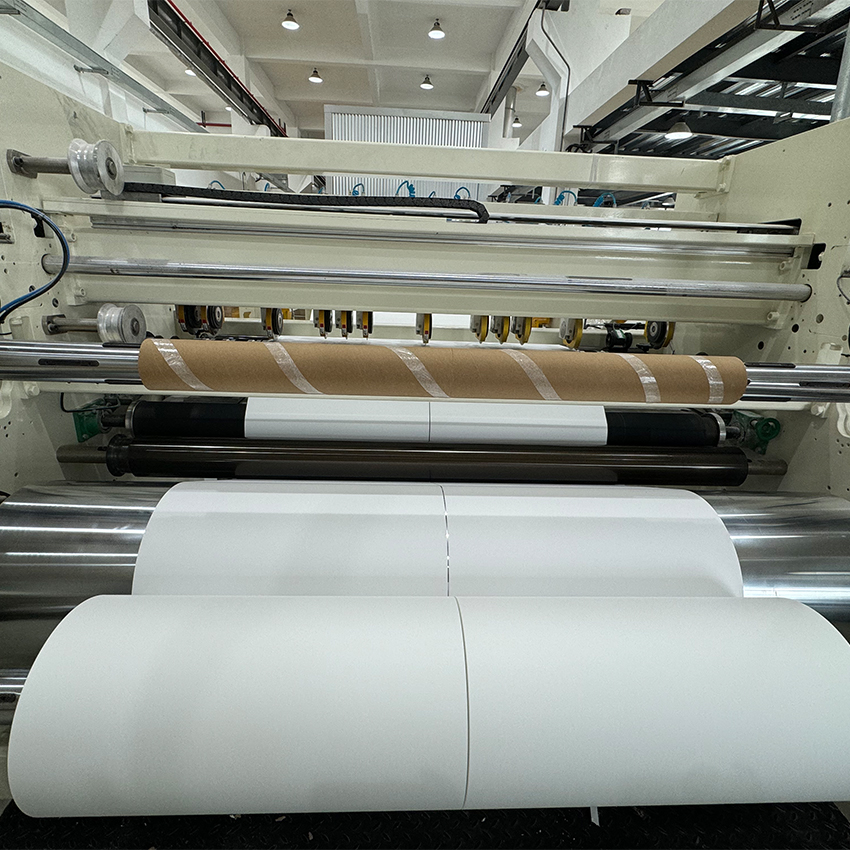
No single specification works across all industrial applications. You must align the material properties with your exact environmental challenges. Factors like temperature, flow velocity, and vibration vary wildly across different machine types.
These machines generate extreme internal environments. High temperatures and high-velocity gas streams dominate the separation chamber. The media faces continuous, heavy oil saturation. Rotary compressors inject massive amounts of oil to seal and cool the rotors. Effective compressor filtration requires materials designed for this exact abuse. The paper must withstand endless fluid loading without suffering structural collapse. If the matrix compresses under flow pressure, the coalescing process halts immediately.
Diesel engines and heavy machinery present unique challenges. Engineers use specialized media for crankcase ventilation (CCV) systems. Engines produce blowby gases filled with unburned fuel, soot, and oil mist. Heavy-duty applications also generate intense, continuous vibrations. The filter material needs exceptional mechanical resilience. It must endure physical shaking without tearing at the pleat folds. Furthermore, automotive environments expose the media to varying oil viscosities. Cold starts push thick, sluggish oil against the paper. The media must process this safely until normal operating temperatures thin the fluid.
Vacuum pumps require entirely different flow dynamics. The exhaust system expels high volumes of air rapidly at near-atmospheric pressures. You must specify media possessing an exceptionally low pressure drop. If the filter restricts the exhaust too much, backpressure builds up instantly. This excess pressure forces the vacuum pump to overheat. Prolonged overheating destroys the pump seals and ruins the internal bearings. Sizing for vacuum exhaust prioritizes maximum air permeability over absolute extreme particle capture.
Transitioning to high-performance coalescing materials introduces specific manufacturing and operational risks. You must anticipate these challenges during the design phase.
You must address the physical brittleness of glass fiber early. Sharp folds snap the microscopic fibers instantly. Proper pleating techniques remain absolutely vital. Factory technicians must control the pleat blade pressure precisely. Manufacturers commonly laminate a protective backing layer to the glass media. We call these layers scrims. Scrims offer several critical manufacturing benefits:
They prevent catastrophic media fracture during high-speed rotary pleating.
They add vital tensile strength to resist sudden gas pressure surges.
They keep pleat spacing uniform, preventing blind spots and maintaining optimal airflow.
They protect the soft glass fibers from abrasion during handling and shipping.
Modern equipment heavily utilizes aggressive synthetic lubricants. Polyalphaolefin (PAO) and polyalkylene glycol (PAG) oils break down inferior filter materials. High operating temperatures severely accelerate this chemical attack. If you select the wrong binder resin, the synthetic oil will dissolve it. Once the binder washes away, the glass fibers detach. This phenomenon causes downstream media migration. Tiny glass shards travel into your clean air supply, causing severe mechanical damage to moving parts.
Industrial gas streams frequently carry significant water vapor. Ambient humidity condenses inside the compression chamber. Water droplets compete directly with oil mist for surface area on the glass fibers. Water creates a strong capillary action. It fills the microscopic pores and blocks the airflow path. We call this water blinding. To combat this, high-humidity environments require advanced dual treatments. Manufacturers coat the media to be both hydrophobic and oleophilic simultaneously. The treated paper repels water droplets while actively capturing and coalescing the oil aerosol.
Sourcing reliable materials requires strict technical diligence. Marketing brochures often hide poor performance metrics. You must implement a rigid evaluation framework to protect your equipment.
Instruct your procurement buyers to read manufacturer specification sheets skeptically. Many suppliers loudly advertise "99.9% efficiency." You must question this number immediately. A valid efficiency claim must always list the test particle size and the specific face velocity used. Catching 99.9% of a 10-micron particle requires zero advanced engineering. Catching 99.9% of a 0.3-micron particle at high velocity proves true material excellence. Reject any oil-gas separation media that lacks comprehensive laboratory testing parameters.
Buyers often need alternatives to major OEM materials like Hollingsworth & Vose grades. Cross-reference tables help identify potential brand equivalents. However, you must verify the foundational numbers yourself. Never assume two grades perform identically just because a chart links them. Focus on matching three critical variables precisely: Basis Weight (GSM), caliper thickness, and airflow resistance. If an alternative paper is 10% thicker, it will alter your housing fitment. If it has lower permeability, it will spike your compressor energy usage.
Never authorize bulk procurement based solely on paper specifications. You must establish a physical testing protocol to validate supplier claims. Outline a sound evaluation framework using these concrete steps:
Request A4-sized flat sheet samples from all shortlisted manufacturers.
Perform in-house differential pressure testing across your expected minimum and maximum flow rates.
Verify the tensile strength manually to ensure the binder matches your pleating machinery capabilities.
Run a limited field pilot on a single compressor unit for 500 operating hours.
Analyze the drained oil volume and rigorously inspect the downstream air purity for carryover.
Choosing the right oleophilic glass fiber filter paper represents a critical exercise in mitigating operational risk. It demands a perfect optimization of the efficiency-to-pressure-drop ratio. Cellulose media simply cannot handle the physics of sub-micron aerosols. Upgrading to specialized glass matrices guarantees cleaner air, protected downstream machinery, and longer service intervals. However, you must navigate the trade-offs carefully. A poorly specified paper will drain electrical power or collapse under synthetic chemical attacks.
Your next steps require immediate action. Audit your current compressor filtration performance today. Document your exact baseline for oil carryover and energy usage. Define your absolute acceptable pressure drop limits based on your power availability. Finally, request detailed, lab-verified technical data sheets from your shortlisted suppliers. Demand DOP penetration numbers and binder chemistry details before testing any flat sheet samples in your facility.
A: Glass fiber offers a much finer fiber diameter. This creates a dense, complex matrix capable of capturing sub-micron oil aerosols effectively. The fibers facilitate coalescing, forcing tiny droplets to merge and drain. These sub-micron aerosols easily pass through the much larger pores of standard cellulose.
A: Oleophilic media attracts oil. This attraction facilitates the coalescing and draining processes vital for continuous operation. Hydrophobic media repels water. High-performance separators often utilize specific chemical treatments combining both properties. This hybrid approach prevents water blinding while successfully managing high volumes of oil mist.
A: Every additional unit of pressure drop across the filter acts as a physical barrier. The compressor motor must work significantly harder to push air and maintain required system pressure. This directly increases electrical energy consumption, steadily driving up your daily operational costs over the filter's lifespan.
A: You must compare the foundational physical specifications directly. Focus closely on Basis Weight (g/m²), Thickness (mm), Air Permeability (L/m²s), and Tensile Strength (MD/CD). Do not rely solely on marketing grade names or generalized efficiency percentages when sourcing critical system replacements.
