
English


T: +86-572-6200777
Mr. Xin: +86-17357227212
Mr. Xin: +86-17357227212
Mr.Li: +86-13706256441
Building 31, Tianneng Chain Innovation Industrial Park, Meishan Town, Changxing County, Huzhou City, Zhejiang Province

Views: 0 Author: Site Editor Publish Time: 2026-07-16 Origin: Site


Generic, off-the-shelf filter media often creates manufacturing bottlenecks, compromises final product performance, or introduces unnecessary material waste in original equipment manufacturer (OEM) environments. Sticking to standard rolls forces production lines to adapt to the material rather than the other way around. You face frequent web breaks, excessive edge trim, and inconsistent liquid or air flow rates. Transitioning from standard to customized specifications requires strict attention to material science, web handling limits, and supply chain scalability.
We provide a structured, evidence-based framework for specifying exact filter parameters. This ensures seamless integration into existing production lines and strict compliance with end-user requirements. You will learn how to evaluate retention trade-offs, define physical roll tolerances, and structure scalable procurement strategies. By shifting the burden of compatibility back to the material supplier, you can standardize your assembly processes and build higher-performing filtration products.
Precision dictates performance: Selecting the correct filtration grade requires a deliberate trade-off between particle retention rates and required flow dynamics.
Dimensional accuracy prevents downtime: Custom filter paper width, roll diameter, and core sizes must align perfectly with your automated converting equipment's tolerances.
Scale dictates procurement strategy: Aligning prototype, pilot, and full-scale manufacturing quantities minimizes waste and optimizes wholesale filter paper pricing.
Testing mitigates risk: Batch-to-batch consistency and wet/dry tensile strength testing are non-negotiable prerequisites before finalizing OEM filter media contracts.
Adapting automated manufacturing processes to fit standard media introduces heavy, hidden penalties. Plant managers frequently notice excessive edge trim waste when standard roll widths do not match their specific filter housing dimensions. If you use a standard 1000mm roll for an 850mm application, you immediately throw away 15% of your raw material. Furthermore, standard basis weights often fail under automated tension controls. This leads to frequent web breaks. Every web break can easily trigger 30 minutes of machine downtime, directly impacting output quotas.
Moving toward custom solutions shifts the burden of compatibility entirely onto the material supplier. Instead of modifying your highly calibrated assembly lines, you require the paper mill to adjust their slitting and calendering processes. This standardizes the entire manufacturing operation. You dictate the exact fiber blend, thickness, and tension resistance. They deliver a plug-and-play material.
How do we measure the success of this transition? The criteria are highly specific. First, you should see dramatically reduced scrap rates at the unwinding station. Second, you achieve predictable machine uptime because the tensile strength matches your equipment's pull forces. Finally, you secure verifiable batch-to-batch consistency. Relying on properly specified OEM filter media ensures your final filtration products perform identically across every single production run.
Accepting "closest match" standard widths instead of demanding exact slitting.
Ignoring machine direction (MD) tensile strength limits during standard roll trials.
Failing to calculate the downtime costs associated with standard media web breaks.
Selecting the right technical attributes determines how the final product performs in the field. Every specification choice impacts the end user directly. We must evaluate several core dimensions to find the perfect balance.
You must match the micron rating to the target contaminant. This requires a strong understanding of depth filtration versus surface filtration logic. Depth filtration traps particles throughout the thick matrix of the paper. It works well for heavy particulate loads. Surface filtration traps particles strictly on the outer layer. It offers precise cut-off points but clogs much faster. Choosing a specific filtration grade means aligning these physical trapping mechanisms with the specific fluid or gas passing through the system.
Pressure drop constraints dictate system performance. Thicker or tighter papers increase particle retention. However, they also require higher pump pressures or much larger surface areas to maintain flow rates. If your application uses low-power pumps, a highly restrictive paper will burn out the motor. You must calculate the exact permeability required to keep system pressures within safe operating limits.
Chemical compatibility and thermal resistance guide material selection. Qualitative cellulose works well for general liquid clarification. Quantitative ashless paper is mandatory for analytical applications where residual ash corrupts data. Glass fiber blends offer exceptional thermal resistance and handle aggressive chemicals effortlessly. You must define the operational environment before choosing the fiber blend.
Industrial applications demand strict regulatory adherence. You cannot simply select a paper based on flow alone. Food and beverage components require strict FDA compliance for food-contact materials. Automotive or medical devices demand adherence to specific ISO standards. Always verify these certifications during the initial material selection phase.
Material Type | Filtration Mechanism | Flow Rate Impact | Typical Industry Application |
|---|---|---|---|
Standard Cellulose | Depth Filtration | Moderate to High | General Automotive, Coolant |
Ashless Cellulose | Surface & Depth | Moderate | Laboratory, Analytical Prep |
Glass Fiber Blend | Depth Filtration | High (Low Pressure Drop) | Medical, Heavy Industrial Air |
Synthetic Media | Surface Filtration | Variable | Chemical Processing |
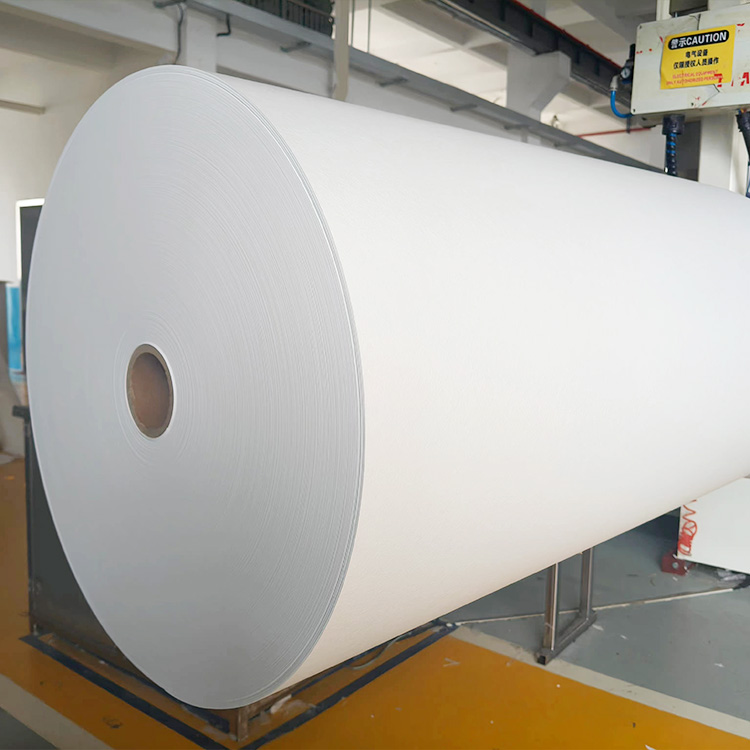
Implementation realities quickly expose poorly specified materials. Web handling defines the success of automated converting. The exact filter paper width is critical for minimizing edge trim waste. Tightly controlled dimensions prevent automated line jams and keep assembly speeds high.
You need a strict physical dimension checklist before running trial operations. Missing even one parameter will cause machine faults.
Slitting Tolerances: Define acceptable variance in millimeters. A standard +/- 2mm variance might work for manual assembly. High-speed pleating machines often require +/- 0.5mm tolerances to prevent overlapping or gaping inside the filter frame.
Core Size and Outer Diameter (OD): Match the roll dimensions to your unwinding stand limits. Standard core sizes run either 3 inches or 6 inches. If you specify a 6-inch core but your chucks only handle 3 inches, you cannot mount the material. Likewise, OD must stay under your machine's weight and height capacities.
Tensile Strength Limits: Evaluate both dry and wet tensile strength. Automated converting processes apply immense tension. If the machine direction (MD) tensile strength falls too low, the paper snaps immediately. Wet tensile strength matters just as much if the end product processes heavy liquids.
Risk mitigation requires balancing operational efficiency against supplier capabilities. Demanding extremely tight width tolerances usually increases lead times. Suppliers must slow their slitting machines and perform frequent blade changes to maintain sub-millimeter accuracy. You must weigh the benefit of zero-waste assembly against the reality of longer delivery schedules.
Proper volume and supply chain logic prevents costly procurement mistakes. You must phase your purchasing carefully from initial research and development through mass production. Moving too quickly incurs excessive minimum order quantity (MOQ) penalties. Moving too slowly delays product launches.
During the prototyping phase, you should secure flat sheets or small sample rolls. This allows engineering teams to perform basic proof-of-concept testing. They can check chemical compatibility and verify basic flow rates without committing to massive industrial rolls.
Once prototypes pass, enter the pilot run phase. Order localized, short runs to test your automated machine handling. This exposes hidden web handling issues, tension failures, or pleating problems. Pilot runs provide early-stage quality assurance data before large capital expenditures occur.
Finally, you transition to full-scale production. This involves negotiating long-term contracts for wholesale filter paper. At this stage, your master roll dimensions are locked in. You optimize shipments to fill entire containers, dropping the per-unit cost significantly.
You must transparently evaluate setup costs. Custom slitting blades or unique fiber blends require initial tooling fees. Suppliers pass these setup costs directly to you. However, you recover these costs quickly during mass production. Reduced edge waste and fewer web breaks generate long-term per-unit savings. Always plot the break-even point where initial tooling investments yield permanent manufacturing savings.
Always specify your final intended master roll size even during the pilot phase.
Negotiate MOQ reductions by aligning your custom width evenly across the supplier's master web width.
Keep pilot run materials stored in the exact climate conditions as your final production floor to test humidity impacts.
Evaluating supplier trustworthiness is your final barrier to success. You must audit an OEM media manufacturer thoroughly before finalizing any specifications. A beautiful prototype means nothing if the supplier cannot deliver consistent industrial volumes.
Demand robust Quality Assurance (QA) documentation upfront. Require a Certificate of Analysis (CoA) with every pilot batch. This certificate must verify critical metrics like basis weight, ash content, and thickness consistency. You want to see historical data proving they maintain these parameters across different production shifts. If their basis weight fluctuates by 10% between batches, your automated pleaters will constantly jam.
Supply chain redundancy is equally vital. Assess their ability to maintain raw material reserves. Global supply chain disruptions happen frequently. A specialized manufacturer of custom filter paper must stock adequate pulp and glass fibers to ride out shipping delays. Ask about their secondary sourcing protocols. If they rely on a single pulp mill, your production line carries their risk.
Build a standardized Request for Quotation (RFQ). This document must clearly define your grade requirements and width tolerances. It must list all required industry certifications. Finally, provide a realistic forecasted annual quantity. Transparent RFQs separate capable partners from inexperienced brokers quickly.
Customizing filter materials is not merely a purchasing task. It represents a highly critical engineering and supply chain decision. By moving away from standard limitations, you regain complete control over your assembly line.
Balancing retention metrics, dimensional accuracy, and phased order volumes ensures a high-performing final product. This strategy actively protects your profit margins by eliminating material waste and machine downtime.
We encourage engineering and procurement teams to initiate technical consultations with specialized manufacturers immediately. Start by reviewing your specific application requirements. Request material samples. Lock in your physical tolerances and build a scalable supply chain that supports your exact manufacturing needs.
A: MOQs vary by manufacturer but are generally dictated by the master roll size. Requesting a width that evenly divides into the master roll minimizes waste and lowers the effective MOQ. For example, if a master roll is 1200mm wide, ordering 400mm custom widths produces three perfect cuts with zero waste, significantly reducing your minimum purchasing requirement.
A: Specify acceptable variance limits for basis weight, thickness, and porosity in your procurement contract, and require a Certificate of Analysis (CoA) with every wholesale shipment. This legally binds the manufacturer to test and verify the material before it leaves their facility, ensuring your automated lines never encounter out-of-spec rolls.
A: Yes, to a degree. Manufacturers can adjust the fiber blend and calendering (pressing) process to alter pore size and flow rate while maintaining specific thickness parameters required by OEM housing limits. By compressing the fibers tighter, they modify the permeability without expanding the physical footprint of the material.
