
English


T: +86-572-6200777
Mr. Xin: +86-17357227212
Mr. Xin: +86-17357227212
Mr.Li: +86-13706256441
Building 31, Tianneng Chain Innovation Industrial Park, Meishan Town, Changxing County, Huzhou City, Zhejiang Province

Views: 0 Author: Site Editor Publish Time: 2026-06-26 Origin: Site


In high-stakes environments like semiconductor manufacturing and pharmaceuticals, achieving 99.995% filtration efficiency traditionally comes at a steep operational cost. Massive HVAC energy consumption occurs due to high aerodynamic resistance across the filter bed. Facility and procurement managers face a strict trade-off every day. They must meet rigorous regulatory compliance standards while aggressively controlling long-term operational expenses. Finding an acceptable balance between pure clean air delivery and skyrocketing energy expenditure often feels impossible. This guide evaluates how adopting advanced filtration materials directly mitigates this challenging trade-off. We thoroughly outline the underlying technical criteria, cost-benefit realities, and procurement risks necessary for an informed supplier evaluation. You will discover exactly how specialized media reduces daily energy burdens. We also explain how to verify genuine performance benchmarks before making bulk purchasing decisions for your facility.
Transitioning to low-resistance H14 media can substantially reduce HVAC fan energy consumption without compromising EN1822-certified filtration efficiency.
Material selection (specifically advanced H14 glass fiber paper) directly impacts the reliability of mini pleat configurations and long-term pressure drop stability.
Sourcing decisions must require verifiable batch testing to avoid standard filters falsely marketed as true H14 grade.
Total Cost of Ownership (TCO) models should prioritize long-term energy savings over raw material procurement costs.
The physical density required for H14 filtration inherently restricts airflow within any facility. HVAC systems must constantly push massive volumes of air through microscopic fiber matrices. This physical restriction forces blowers to operate at significantly higher fan speeds to maintain required air exchange rates. Higher fan speeds inevitably demand massive electrical energy loads. In many critical environments, fan energy accounts for up to 70% of a cleanroom’s entire operational budget.
Incremental increases in Pascal (Pa) resistance drastically compound energy costs over a filter’s lifecycle. The relationship between pressure drop and energy consumption is nearly linear. Every additional 10 Pa of resistance forces the fan motor to draw proportionally more kilowatt-hours. Over a three-year lifespan, a highly restrictive filter wastes thousands of dollars in excess electricity.
You can leverage low pressure drop HEPA media to resolve this core conflict. We view this material transition not just as a routine operational upgrade. It acts as a primary driver for corporate sustainability goals and direct budget reduction. Lowering resistance immediately reduces power draw, lowering overall carbon footprints.
Facility managers must audit current initial and final pressure drop metrics carefully. Doing so establishes a solid, evidence-based baseline. Encourage your procurement buyers to log existing energy usage before evaluating new media suppliers.
Best Practices for Baselining:
Record the initial pressure drop immediately upon installing a new filter.
Monitor energy draw at the air handling unit (AHU) level weekly.
Calculate the financial cost per Pascal of resistance based on local utility rates.
Common Mistakes:
Ignoring the fan affinity laws, which dictate that fan power increases exponentially with speed adjustments.
Evaluating filters based solely on initial purchase price rather than operational energy impact.
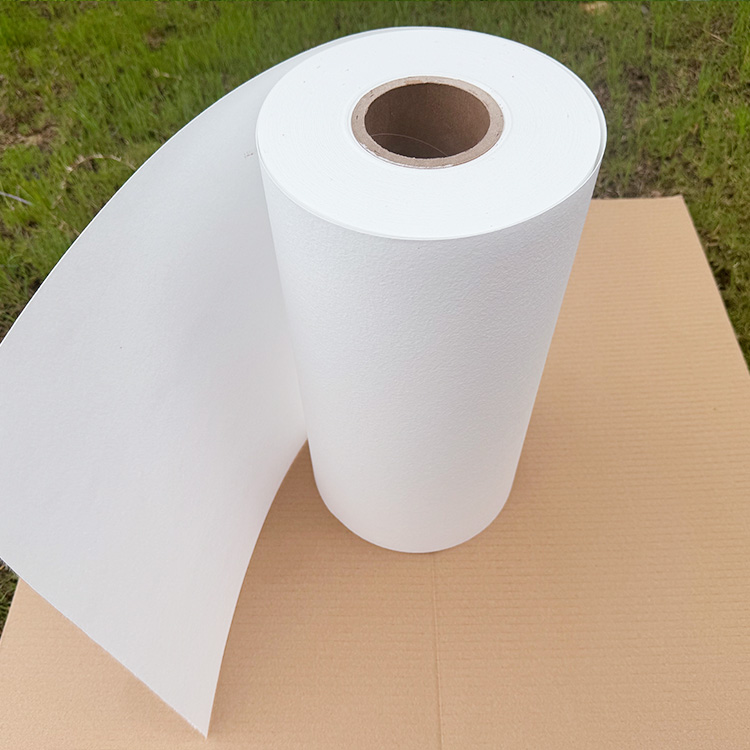
Ultrafine borosilicate glass fiber remains the absolute industry standard for critical environments. It delivers incredibly stable, non-degrading mechanical filtration performance. This material reliably captures microscopic particles through three distinct physical mechanisms: interception, inertial impaction, and diffusion. Interception catches particles brushing against fibers. Inertial impaction traps larger particles that cannot navigate the twisting air paths. Diffusion captures the tiniest particles bouncing randomly due to Brownian motion.
H14 glass fiber paper excels precisely due to its complex, non-uniform fiber matrix. Buyers must rigorously assess tensile strength, base weight (grammage), and thickness consistency. Uniform thickness prevents weak spots where dangerous air bypass might occur. Adequate tensile strength ensures the paper survives the intense folding processes inside the factory.
Alternative composites, such as PTFE or various membrane technologies, also exist in the current market. We must compare glass fiber against these membrane technologies objectively. Synthetic options sometimes offer impressively lower initial resistance. However, they carry specific and notable drawbacks regarding structural fragility.
Membranes can be highly fragile during handling and installation. A minor scratch can ruin the entire filter's efficiency. Furthermore, some synthetic options may introduce off-gassing concerns, releasing trace volatile organic compounds (VOCs) into pristine cleanrooms. Glass fiber presents zero off-gassing risk.
We acknowledge certain performance trade-offs when comparing these options. Synthetic media might save initial energy, but glass fiber provides vastly superior dust holding capacity. Higher dust holding capacity extends the maintenance cycle. Glass fiber maintains its structural reliability and efficiency rating steadily over many years of continuous use.
Evaluation Metric | Borosilicate Glass Fiber | PTFE / Synthetic Membrane |
|---|---|---|
Filtration Mechanism | Depth filtration (captures throughout the matrix) | Surface filtration (captures mostly on top) |
Initial Resistance | Moderate to Low | Very Low |
Dust Holding Capacity | Exceptionally High | Low (prone to rapid clogging) |
Handling Fragility | Durable under standard assembly | Highly fragile; easily scratched |
Off-Gassing Risk | None | Potential trace VOCs depending on binders |
The physical characteristics of the media strongly dictate ultimate manufacturing success. Modern production requires intricate pleating geometry. The media must withstand high-speed mechanical folding without experiencing any micro-fracturing. Broken fibers at the crease lines completely compromise the filter's efficiency rating. Good media flexes appropriately without snapping.
Engineers rely heavily on mini pleat filter media configurations to maximize active surface area. This advanced design uses thin ribbons of hot melt adhesive to separate the folds. It successfully eliminates the need for bulky, outdated aluminum separators. Eliminating aluminum reduces overall weight and frees up valuable space inside the frame.
By packing more media into the same physical dimensions, you effectively lower the air velocity passing through any given square inch of the material. Lowering media velocity inherently and dramatically reduces aerodynamic resistance. The slower the air moves through the tiny pores, the less friction it encounters.
You must evaluate manufacturing readiness before procuring new materials. Check whether the media is fully compatible with your specific OEM or ODM production line requirements.
Best Practices for Manufacturing Integration:
Test the media's compatibility with your current hot melt adhesive curing temperatures.
Run a small prototype batch to ensure the paper folds without cracking at your standard machine speeds.
Verify that the material stiffness allows for clean, straight pleat packs.
Addressing the risk of mislabeled or counterfeit HEPA products in B2B marketplaces is crucial. Many suppliers vaguely claim standard HEPA equivalence without providing hard proof. You need a cleanroom HEPA filter that definitively passes stringent independent testing. Vague marketing terms like "True HEPA" hold no legal weight in industrial engineering.
Facilities must enforce mandatory EN1822 or ISO 29463 compliance testing for every batch. These frameworks dictate strict testing methodologies focused on the Most Penetrating Particle Size (MPPS). The MPPS represents the exact particle dimension that is hardest for the filter to capture. It usually falls between 0.1 and 0.2 microns. If a filter can stop the MPPS at a 99.995% rate, it will capture smaller and larger particles even more effectively.
Procurement teams should demand deep data transparency from their supply chain. Do not simply accept isolated efficiency claims on a glossy brochure. Procurement must require empirical data detailing precise aerosol and particulate removal rates.
Common Mistakes in Verification:
Accepting historical test data instead of batch-specific certificates of analysis.
Overlooking the specific face velocity parameters used during the testing phase. A filter tested at artificially low speeds will show deceptive results.
Authentic suppliers always provide comprehensive test reports outlining exact airflow rates, test aerosols, and environmental conditions.
High-performance media can sometimes be structurally delicate. Utilizing low-resistance H14 filter paper absolutely requires careful handling protocols. We must address the inherent risk of media damage during filter assembly, transit, and final installation. Even microscopic tears destroy the integrity of the finished unit, rendering it useless for pharmaceutical or semiconductor applications.
Supply chain reliability requires thorough, methodical vetting. Look strictly for manufacturers operating within ISO 9001 certified cleanroom environments. Producing cleanroom filters in a dirty factory introduces immediate contamination risks. Ensure your chosen partner maintains consistent lead times and demonstrates the capacity for handling large-scale B2B orders without quality fade.
When evaluating operational budgets over raw unit price, follow this strategic shortlisting framework:
Validate EN1822 certification: Demand independent lab reports confirming 99.995% efficiency at the MPPS.
Compare initial resistance (Pa): Request test data at standard airflow velocities (e.g., 5.33 cm/s) to ensure the baseline pressure drop is genuinely low.
Assess dust holding capacity: Higher capacity directly extends the maintenance cycle length, reducing labor and replacement frequency.
Model the HVAC energy reduction: Calculate the anticipated kilowatt-hour savings against the unit cost premium of the energy saving filter media.
Structuring your procurement logic this way guarantees you select a partner capable of delivering long-term financial and operational value.
Adopting advanced filtration materials serves as a critical lever for reducing operational overhead in highly regulated cleanrooms. Upgrading to optimized media ensures you maintain strict regulatory compliance while simultaneously slashing daily utility bills. Energy-efficient materials yield massive returns over a facility's lifecycle, proving that sustainability and performance can easily coexist.
We strongly advise buyers to request sample rolls before signing extensive contracts. Conduct in-house prototype testing. Secure independent resistance validation before committing to bulk procurement. Taking these preliminary steps prevents costly supply chain mistakes and validates the manufacturer's claims.
Contact our engineering team today to review specific pressure drop calculations for your facility. You can also request certified technical data sheets to begin your rigorous evaluation process.
A: Energy savings depend heavily on localized electricity costs, fan motor efficiency, and total operational hours. Cleanrooms running 24/7 see the highest returns. Reducing filter resistance by just 50 Pascals can cut fan energy consumption by 10% to 15%. Over a multi-year lifecycle, this translates to thousands of dollars saved per air handling unit.
A: A standard benchmark for advanced H14 media sits between 220 Pa and 260 Pa. This metric is usually measured at a standard testing face velocity of 5.33 cm/s. Older or lower-quality media often exceeds 300 Pa under the same airflow conditions, forcing HVAC fans to work significantly harder from day one.
A: No, it does not. Advanced fiber distribution techniques achieve lower resistance while fully maintaining all required physical capture mechanisms. Manufacturers blend varied diameters of borosilicate micro-fibers to create an open yet complex matrix. It allows air to pass freely while trapping 99.995% of MPPS particles via interception and diffusion.
A: Yes, it is fully compatible. The media integrates perfectly into existing aluminum, galvanized steel, or wooden frame setups. It works seamlessly with standard polyurethane sealants and hot melt adhesives. Filter manufacturers can utilize this paper on their standard pleating machines without requiring costly equipment modifications.
