
English


T: +86-572-6200777
Mr. Xin: +86-17357227212
Mr. Xin: +86-17357227212
Mr.Li: +86-13706256441
Building 31, Tianneng Chain Innovation Industrial Park, Meishan Town, Changxing County, Huzhou City, Zhejiang Province

Views: 0 Author: Site Editor Publish Time: 2026-07-20 Origin: Site


Inefficient oil mist separation in industrial compressors leads to downstream contamination. It rapidly increases system energy consumption. It also causes premature equipment wear across your pneumatic network. You cannot afford these systemic failures in high-stakes manufacturing environments. Specifying the right filter media becomes absolutely critical here. Specifically, utilizing surface-modified glass fiber helps you balance differential pressure constraints with high aerosol retention demands. We often hear widespread industry myths about "100% efficiency" in compressed air filtration. We must avoid these unrealistic claims completely. Instead, we must frame this technical discussion around optimizing the actual coalescence process. You need to manage lifecycle pressure drops effectively. Correct media specification ensures continuous airflow, recovers expensive lubricants, and protects your downstream industrial assets.
Mechanism: Oleophilic glass fiber excels at coalescing sub-micron oil aerosols without becoming saturated and blocking airflow.
Efficiency vs. Cost: Balances high-efficiency oil gas separation media performance with manageable energy costs via controlled pressure drops.
Specification Imperative: Correctly matching basis weight, thickness, and grade to the specific compressor capacity is mandatory to prevent media migration or premature structural failure.
Risk Management: Synthetic compressor oils require specific binder compatibility verification to ensure the oleophilic filter paper does not degrade under high operating temperatures.
Understanding the physics behind an effective oil mist filtration system requires a close look at surface treatments. The oleophilic surface treatment actively attracts microscopic oil droplets. Standard, untreated media often repel oil or allow it to pool unevenly. Oleophilic glass fiber behaves differently. It draws the oil into its matrix. This chemical affinity prevents the fine aerosols from bouncing off the fibers. Instead, droplets coat the individual glass strands. They form a thin, uniform liquid film. This film serves as the foundational layer for continuous liquid recovery.
The capture process happens in three distinct stages inside the glass fiber matrix. You must understand these mechanisms to optimize compressor efficiency.
Direct Interception: Larger oil droplets simply collide with the glass fibers. They travel along the airflow path and strike the media directly.
Inertial Impaction: Medium-sized droplets cannot adjust to sudden airflow shifts around the fibers. Their momentum carries them straight into the fiber matrix.
Brownian Diffusion: Sub-micron droplets move erratically. They bounce randomly within the airstream until they eventually contact a coated fiber.
Drainage dynamics play a massive role in system longevity. Once droplets attach to the fibers, they migrate through the depth of the media. They merge with other droplets. We call this process coalescence. The droplets grow larger and heavier. Gravity eventually pulls these enlarged liquid masses downward. They drain safely into the compressor sump. This continuous drainage prevents sudden differential pressure spikes. You often see these dangerous spikes in untreated media. Properly managed coalescence leads to predictable energy consumption. It significantly extends your routine maintenance intervals.
You cannot select filtration media based on guesswork. You need hard data to evaluate its potential performance. First, look at micron retention and efficiency ratings. Acceptable ranges for sub-micron capture usually fall between 0.1 to 0.3 microns. Standard compressor applications require high efficiency within this precise band. Most oil aerosols generated by rotary screw compressors fit into this tiny size range. If your media cannot capture 0.3-micron particles effectively, downstream oil carryover remains inevitable.
Differential pressure dictates your operational expenses. We often refer to this as Delta P. You face an inherent trade-off here. Stricter filtration traps more oil but restricts airflow heavily. This restriction drains energy. The compressor motor must work harder to push air through dense media. Fresh media exhibits a low baseline Delta P. Saturated media operates at a higher baseline. You must ensure the saturated Delta P remains stable over thousands of hours. A sudden exponential rise signals structural failure or severe pore blockage.
Physical specifications define how the media handles harsh operating conditions. We monitor several critical structural attributes carefully:
Basis Weight: Measured in grams per square meter (g/m²). It directly impacts structural integrity. Heavier weight usually indicates more depth for coalescence.
Thickness and Porosity: Optimal thickness gives droplets room to merge. High porosity ensures air passes through without excessive drag.
Tensile Strength: Compressors generate aggressive pressure pulses. The media must withstand these shocks without tearing.
Navigating manufacturer grades requires attention to detail. Many suppliers categorize their glass fiber separator media using standard industry designations. You will often see references to Grade C or Grade D specifications. Grade C generally provides finer filtration. Grade D handles higher flow rates with slightly less strict retention. You must cross-reference these grades carefully when switching suppliers. Ask for empirical test data. Do not rely solely on generic grade labels.
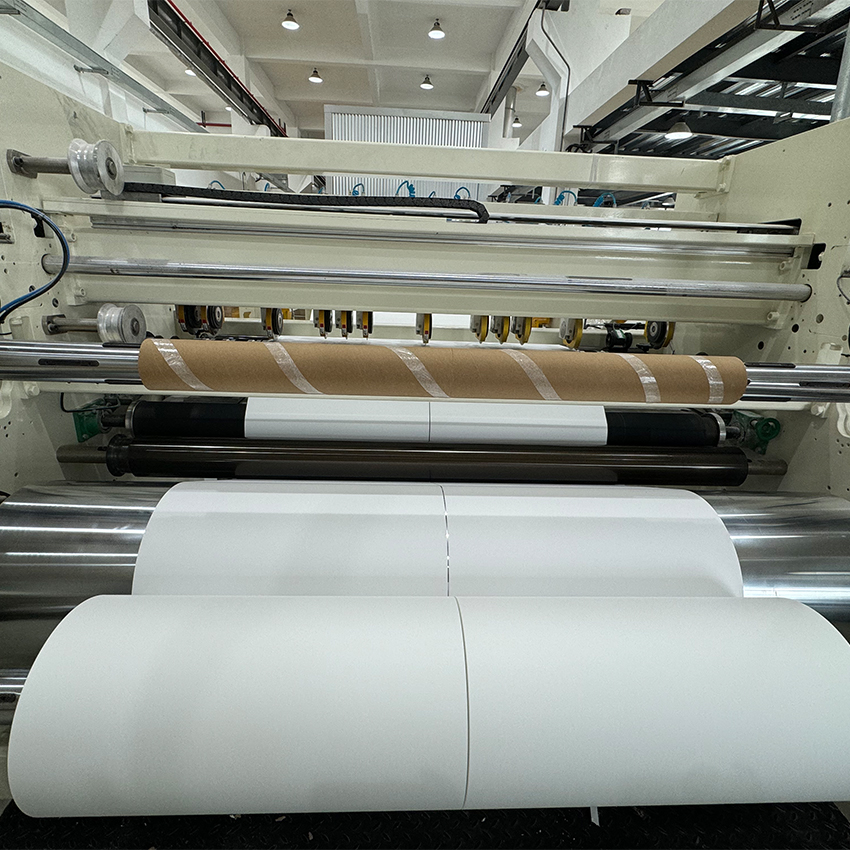
Engineers often debate the merits of different filtration materials. We must look at the specific environmental demands of rotary screw compressors. Standard cellulose blends remain popular due to their low upfront cost. However, cellulose exhibits severe limitations in high-moisture and high-temperature environments. Cellulose fibers absorb water readily. They swell up and block the necessary airflow channels. This swelling causes rapid media degradation. In contrast, oleophilic glass fiber filter paper remains dimensionally stable. It ignores moisture and maintains its structural porosity.
Some systems use untreated borosilicate glass. This seems like a logical choice initially. Borosilicate handles heat well. However, untreated glass lacks the necessary surface chemistry. It experiences rapid saturation. The oil forms localized pools instead of draining evenly. These pools block airflow paths. You experience higher pressure drops almost immediately. Without oleophilic surface modification, untreated glass fails to establish a continuous drainage cycle.
You might also encounter hydrophilic or oleophobic synthetics. Oleophobic materials actively repel oil. This property works perfectly for protective vents. It fails completely inside a continuous compressor oil separator. You need the media to attract and hold the oil long enough for droplets to coalesce. If the media repels the oil, fine aerosols slip right through the filter matrix. They never merge. They never drain. Oleophilic treatment solves this by embracing the oil. It facilitates the merging process rather than fighting it.
We evaluate the financial impact through lifecycle energy savings. Treated glass fiber demands a higher upfront investment. We offset this initial price through massive reductions in oil carryover. You lose less expensive synthetic lubricant. More importantly, stable pressure drops reduce the electrical load on your compressor motor. The energy savings over an 8,000-hour operational cycle easily eclipse the initial media purchase price.
Media Type | Moisture Resistance | Oil Coalescence | Pressure Drop Stability |
|---|---|---|---|
Cellulose Blends | Poor (Swells easily) | Moderate | Low stability |
Untreated Glass Fiber | Excellent | Poor (Pools oil) | Moderate stability |
Oleophobic Synthetics | Excellent | Very Poor (Repels oil) | High stability but fails to capture |
Oleophilic Glass Fiber | Excellent | Excellent (Merges/drains) | High stability over lifecycle |
Rolling out a new filtration strategy introduces specific engineering risks. Binder compatibility stands out as the most critical failure point. Manufacturers use various chemical binders to hold the glass fibers together. Standard binders work well with basic mineral oils. They fail catastrophically when exposed to aggressive synthetic ester-based compressor lubricants. The synthetic oil breaks down the binder resin. The media loses its structural integrity. You must verify binder compatibility before making any purchasing decisions. Ensure your oleophilic filter paper utilizes advanced, chemically resistant resins.
Media migration poses another significant operational danger. This occurs when glass fibers break off and travel downstream. It usually happens due to improper specification. If you exceed the maximum rated flow rates, the air velocity tears the fibers apart. These broken glass shards contaminate your downstream pneumatic equipment. They damage sensitive valves and pneumatic cylinders. You prevent media migration by strictly matching the filter’s rated capacity to your compressor's maximum output.
Installation tolerances matter just as much as the media itself. Superior filtration paper fails instantly if the cartridge construction allows bypass. Pleat geometry must remain consistent. Uneven pleats create high-velocity air channels. These localized channels blind the media prematurely. Housing design must ensure a perfect seal. Even a microscopic gap around the end caps allows aerosol-laden air to bypass the filter matrix entirely. You must audit your cartridge construction methods closely.
Moisture contamination complicates the separation process further. Industrial environments often introduce high humidity or free water into the intake air. Water alters the surface tension dynamics within the filter matrix. It competes with the oil for space on the oleophilic fibers. Excessive water emulsion increases flow resistance rapidly. You should employ pre-filtration or effective intercoolers. Removing bulk water before it reaches the fine coalescence stage protects the media. It ensures the oil separation process functions exactly as intended.
Establishing clear success criteria simplifies your procurement process. You need quantifiable baseline metrics. Start by defining your acceptable oil carryover limit. Most modern industrial applications demand less than 3 ppm (parts per million) of oil carryover. Some sterile environments require even lower limits. Next, establish your maximum allowable pressure drop. Define both the initial clean drop and the maximum terminal drop before replacement. These two metrics guide your entire evaluation process.
Look for media tested against recognized industry compliance standards. Do not accept proprietary, internal testing metrics from unverified suppliers. Demand ISO 12500-1 testing data. This specific ISO standard governs compressed air filters. It provides a standardized method for testing oil aerosol retention. It ensures you compare different suppliers on a completely level playing field. If a supplier cannot provide ISO 12500-1 data, eliminate them from your shortlist immediately.
Supplier verification requires rigorous data requests. Many suppliers present "clean/dry" laboratory benchmark numbers. These numbers look fantastic on a marketing brochure. They mean very little in a hot, vibrating compressor housing. Request empirical data based on continuous, saturated operation testing. You need to see how the media performs after 1,000 hours of continuous oil mist exposure. This saturated performance data reveals the true drainage capabilities of the media.
Prototyping prevents costly fleet-wide rollout errors. Never switch your entire facility to a new media blind. Recommend ordering sample sheets first. Build a small batch of test cartridges. Install them in a designated test compressor. Monitor the pressure drop curve over a three-month period. Analyze the downstream air quality. Validate the actual drainage characteristics in your specific operating environment. This cautious approach guarantees the media performs as promised before you commit to large-volume contracts.
Upgrading your filtration systems represents a strategic engineering decision. Choosing advanced oil gas separation media directly improves system energy efficiency. It ensures highly reliable liquid recovery. It eliminates downstream contamination risks. You balance strict retention limits with sustainable pressure drops. This balance reduces your overall lifecycle expenses significantly.
We must reiterate the importance of precision. You cannot simply guess media specifications. You must match the media grades precisely to your specific compressor flow rates. You must also verify compatibility with your specific synthetic lubricant chemistries. Failing to align these variables leads to premature cartridge failure and system bypass.
Take actionable steps today. We encourage all technical buyers to contact their shortlisted suppliers immediately. Request comprehensive technical datasheets (TDS). Ask for detailed binder compatibility charts. Validate these documents against your current operational parameters. Making an evidence-based selection protects your equipment and optimizes your long-term energy consumption.
A: The lifespan varies based on load and environmental conditions. It typically ranges from 4,000 to 8,000 operational hours. However, you should never replace it based on time alone. Differential pressure dictates replacement. Once the pressure drop exceeds the manufacturer's maximum limit, you must replace the unit to avoid energy waste.
A: Yes, but it depends entirely on the binder. Synthetic ester-based oils aggressively attack standard resins. The paper must utilize specific, chemically resistant binders designed for high-temperature synthetic environments. Always verify chemical compatibility with your media supplier before installation.
A: There is a direct correlation between filter pressure drop and electrical load. If the media restricts airflow too much, the compressor motor works harder to maintain system pressure. A stable, low pressure drop reduces this motor load, saving significant electrical energy over the filter's lifespan.
A: Oleophilic media actively attracts oil. It allows sub-micron droplets to attach, merge, and drain continuously. Oleophobic media repels oil. Repelling oil prevents merging, allowing fine aerosols to slip through the matrix. Compressors require oleophilic media to ensure proper liquid coalescence and recovery.
