
English


T: +86-572-6200777
Mr. Xin: +86-17357227212
Mr. Xin: +86-17357227212
Mr.Li: +86-13706256441
Building 31, Tianneng Chain Innovation Industrial Park, Meishan Town, Changxing County, Huzhou City, Zhejiang Province

Views: 0 Author: Site Editor Publish Time: 2026-06-28 Origin: Site


High-yield manufacturing environments operate under a zero-tolerance reality for sub-micron contamination. A single rogue particle can compromise intricate microelectronics runs. It can also invalidate delicate pharmaceutical compounding batches. Facility operators need a reliable physical barrier to protect these critical production zones. Enter U15 glass fiber filter paper. This material serves as the essential bridge between standard HEPA filtration limits and extreme-efficiency ULPA demands. It intercepts microscopic threats before they ever enter your pristine airstream.
Our goal in this guide is straightforward. We aim to equip facility engineers and procurement teams with an evidence-based framework. You will learn how to evaluate and source these advanced media materials effectively. We will explore performance realities, regulatory compliance, and practical integration risks. You will leave with a clear roadmap for selecting media based on structural integrity, vendor reliability, and seamless equipment integration.
U15 media guarantees a minimum retention rate of 99.9995% at the Most Penetrating Particle Size (MPPS), establishing the baseline for ULPA-grade efficiency.
Selecting the right glass fiber ULPA media requires balancing extreme particle capture with manageable pressure drop to prevent HVAC energy overruns.
Micro-glass fiber structural integrity, binder formulation, and EN 1822 / ISO 29463 compliance are non-negotiable evaluation metrics for semiconductor and critical manufacturing applications.
Supplier shortlisting should prioritize lot-to-lot consistency, certified testing documentation, and compatibility with specific pleating equipment.
Understanding where U15 fits within the broader filtration spectrum clarifies its operational value. Filtration standards rely on strict efficiency tiers. The EN 1822 standard dictates these classifications based on rigorous retention testing.
The standard filtration spectrum divides media into EPA, HEPA, and ULPA categories. E10 through E12 represent EPA (Efficient Particulate Air) grades. H13 and H14 represent traditional HEPA grades. The ULPA (Ultra-Low Penetration Air) category begins strictly at U15. It extends upward to U16 and U17 for the most extreme environments.
Here is a simplified chart detailing these thresholds:
Filter Class (EN 1822) | Category | Retention at MPPS (%) | Typical Application Context |
|---|---|---|---|
H13 | HEPA | 99.95% | Standard medical and industrial cleanrooms |
H14 | HEPA | 99.995% | Advanced biosafety and aerospace assembly |
U15 | ULPA | 99.9995% | Semiconductor fabrication and nanotech |
U16 | ULPA | 99.99995% | Extreme sub-nanometer critical zones |
Filtration efficiency means little without defining the particle size. U15 media guarantees 99.9995% retention at the Most Penetrating Particle Size (MPPS). This specific size typically ranges between 0.1 and 0.2 microns for borosilicate glass fibers. Particles smaller than MPPS fall victim to Brownian motion. They bounce erratically and strike the fibers via diffusion. Particles larger than MPPS succumb to direct interception and inertial impaction. The MPPS represents the "weakest link" in mechanical filtration. Excelling here proves the material's genuine stopping power.
Operations do not upgrade to U15 on a whim. Clear business triggers drive this transition. Facility managers seek ULPA filter paper when node shrinking occurs in a semiconductor cleanroom. Moving from 14-nanometer to 7-nanometer architecture demands radically cleaner air. Similarly, stringent new ISO Class 3 or Class 4 compliance mandates force pharmaceutical facilities to abandon H14 media. Upgrading becomes a mandatory step to protect process integrity and maintain high manufacturing yields.
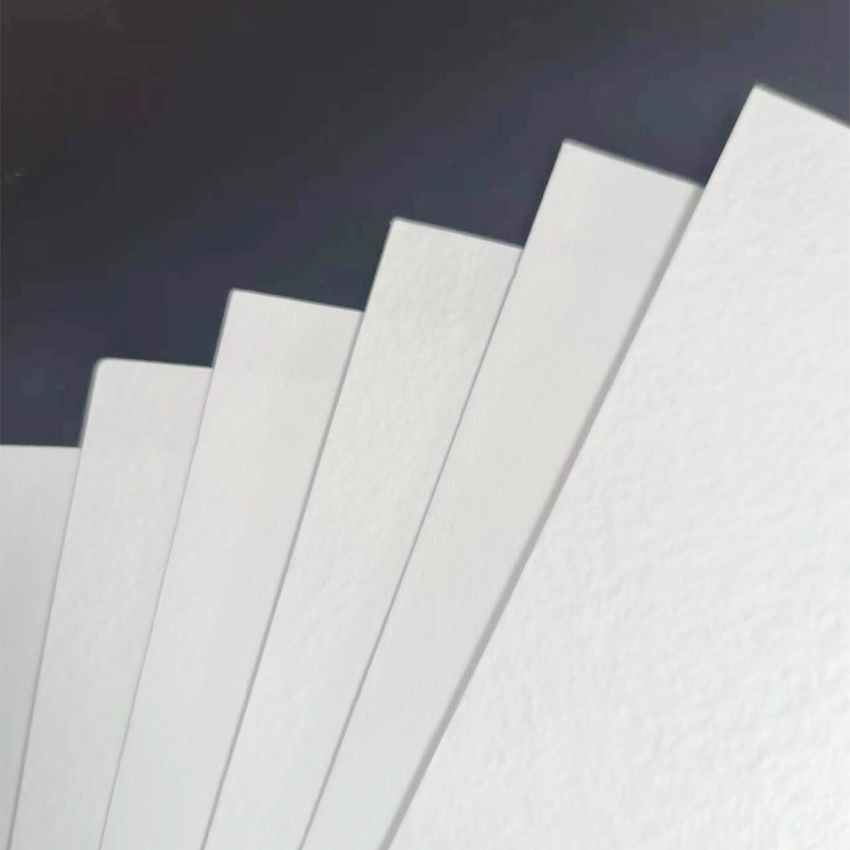
Not all media performing at the U15 level share the same physical traits. Evaluating raw materials requires a deep dive into fiber mechanics, resistance metrics, and structural uniformity.
Sub-micron borosilicate glass fibers represent the gold standard for this filtration tier. Standard synthetic fibers often rely on electrostatic charges to attract particles. This charge degrades over time. Humidity, aerosols, and simple aging strip the static charge away. Efficiency plummets as a result. Micro-glass fibers act differently. They utilize purely mechanical filtration. The dense matrix physically traps particles through interception and diffusion. This structure ensures permanent, reliable efficiency throughout the entire lifespan of the installed filter.
Every filtration upgrade introduces a physical trade-off. Higher density traps more particles but creates higher airflow resistance. We measure this resistance as pressure drop in Pascals (Pa). Pristine U15 media at a standard face velocity of 5.3 cm/s typically exhibits a pressure drop between 260 Pa and 320 Pa. You must verify these figures during procurement. Exceeding this range forces HVAC blower fans to work much harder. Maintaining manageable pressure drops protects system infrastructure and prevents rapid equipment degradation.
Raw glass fibers cannot hold their shape alone. Manufacturers add acrylic or PVA binders to create a stable web. The binder ratio dictates the physical durability of the paper. Too little binder creates a fragile sheet. The fibers shed into the airstream, creating the very contamination they should prevent. Too much binder coats the microscopic pores. This impedes airflow and artificially spikes resistance. A balanced formulation ensures high tensile strength. High strength allows the media to survive rigorous folding on high-speed pleating machines without tearing.
Caliper consistency directly impacts final filter performance. Media thickness must remain absolutely uniform across the entire master roll. Variations in thickness cause air channeling. Air naturally follows the path of least resistance. It rushes through thinner sections and avoids thicker sections. This destroys uniform face velocity across the final filter panel. Laminar airflow relies on perfectly even distribution. Evaluating standard deviation in media thickness prevents turbulent dead zones in your cleanroom.
Claiming U15 efficiency is insufficient. Regulatory environments demand rigorous, verifiable proof. Compliance testing defines modern ultra-clean air filtration protocols.
Reliable media production requires continuous validation. Suppliers must utilize automated scanning systems aligned with EN 1822-4 or ISO 29463 protocols. These tests involve challenging the media with specific aerosols. Polystyrene latex (PSL) spheres or Polyalphaolefin (PAO) oils serve as the test contaminants. Laser particle counters scan the downstream airflow. They verify that penetration does not exceed 0.0005%. Facilities should always request batch-specific certification. Never accept generic compliance statements.
Airborne Molecular Contamination (AMC) presents a unique challenge in sub-nanometer fabrication. Standard borosilicate glass inherently contains boron. Moisture in the air reacts with the glass, causing trace boron off-gassing. This off-gassing interacts disastrously with specific photoresists in advanced semiconductor lithography. You must map your environmental sensitivity. For standard ULPA applications, traditional glass works perfectly. For AMC-critical nodes, you must evaluate low-boron glass formulations. Understanding your specific chemical limits prevents catastrophic yield losses.
Industrial cleanroom infrastructure requires stringent fire safety compliance. High-velocity air systems can spread smoke rapidly during thermal events. You must verify UL 900 certification for your media. This standard evaluates the amount of smoke generated and the flammability limits of the filter paper. Selecting certified media mitigates facility risk. It ensures your filtration system will not act as an accelerant during emergency scenarios.
Procuring pristine U15 filter media only solves half the equation. Transforming flat paper into a functional filter panel introduces significant mechanical risks.
Glass fiber media is inherently brittle. High-efficiency grades contain extremely fine fibers, compounding this fragility. Rotary and blade pleating machines subject the paper to sudden physical stress. Poorly calibrated machines create micro-fractures at the pleat tips. These microscopic tears leak particles instantly, instantly failing local leak tests. Operators must optimize web tension control. They must use softened pleating blades. Running pleaters at reduced speeds often prevents structural fracturing during the folding process.
Environmental conditions heavily influence raw media performance. Mishandling destroys batches before pleating even begins. Consider these critical handling parameters:
Humidity Control: High moisture swells the fibers and degrades water-soluble binders. Store rolls strictly below 60% relative humidity.
Temperature Stability: Extreme temperature fluctuations cause condensation inside the packaging. Maintain a stable 20°C to 25°C storage environment.
Physical Orientation: Never store master rolls horizontally on their sides. Always suspend them through the core or stand them vertically. Horizontal storage causes physical compression and permanently crushes the fiber matrix.
Pleated media requires structural support to keep the folds open. Hot-melt mini-pleat systems apply thin beads of adhesive to separate the pleats. Aluminum separator systems use corrugated foil. The thickness of the chosen U15 media directly impacts pleat pitch. Thicker media reduces the number of pleats you can fit into a standard frame. This reduces total surface area. You must match the media caliper tightly to your specific separator technology to maximize airflow capacity.
Finding a trustworthy supplier requires a methodical approach. Do not rely solely on marketing brochures. Use a structured logic to evaluate potential partners producing glass fiber ULPA media.
Demand Lot-to-Lot Traceability: Reliable suppliers maintain exhaustive raw data. They should provide batch-specific test reports for every single roll. You must verify basis weight, thickness, pressure drop, and actual penetration values. Consistency across multiple shipments proves manufacturing maturity.
Evaluate Format and Customization: Standardized dimensions rarely fit specialized production lines. Evaluate the supplier's ability to provide custom roll widths and specific core sizes. Review their packaging standards. Rolls must arrive in heavy-duty, moisture-barrier protective bagging. This prevents transit damage.
Require Rigorous Prototyping: Never commit to volume purchasing blindly. Request sample rolls first. Conduct in-house pleating trials. Run the pleated samples through your standard potting and framing process. Perform flat-sheet bench testing to verify the supplier's stated pressure drop claims. Prototyping eliminates integration surprises on the factory floor.
Specifying U15 filtration media goes far beyond checking a compliance box. It represents an exercise in strict risk mitigation. Securing absolute air purity requires attention to microscopic details. You must navigate the technical thresholds distinguishing HEPA from ULPA. You must balance aggressive particle capture rates against aerodynamic drag.
Verified testing data acts as your primary shield against contamination. Structural uniformity guarantees predictable performance. Careful handling during assembly ensures the raw material survives the journey to the cleanroom ceiling. These elements ultimately deliver the high manufacturing yields your facility promises.
Take proactive steps today to secure your operational integrity. Download updated technical specification sheets from your prospective vendors. Review their lot-testing protocols extensively. Contact your engineering team immediately to discuss your specific cleanroom compliance requirements and schedule media prototyping trials.
A: The difference lies in efficiency at the Most Penetrating Particle Size (MPPS). U15 requires a 99.9995% retention rate. U16 demands a much tighter 99.99995% rate. Moving to U16 exponentially increases pressure drop and media cost. We strongly advise against specifying U16 unless strictly required by your facility's specific yield profile and contamination limits.
A: Conditionally yes, but they require careful adjustments. U15 media features finer fiber diameters, making it noticeably more brittle than standard HEPA grades. You must optimize web tension control. Operators should install softer pleating blades and reduce machine speeds to prevent micro-fractures at the pleat tips.
A: High humidity negatively impacts the media structure. Excessive moisture causes fiber swelling and can degrade the chemical binder holding the paper together. This leads to increased pressure drop and potential structural failure during installation. We recommend strict climate-controlled storage for all raw rolls before pleating.
A: It depends on the formulation. Standard borosilicate glass causes boron off-gassing, which damages certain semiconductor processes. For these ultra-critical nodes, you must evaluate specialized low-boron glass formulations or alternative membrane options alongside standard U15 media to prevent chemical contamination.


