
English


T: +86-572-6200777
Mr. Xin: +86-17357227212
Mr. Xin: +86-17357227212
Mr.Li: +86-13706256441
Building 31, Tianneng Chain Innovation Industrial Park, Meishan Town, Changxing County, Huzhou City, Zhejiang Province

Views: 0 Author: Site Editor Publish Time: 2026-07-13 Origin: Site


Mobile machinery operates under brutally unforgiving conditions on a daily basis. Excavators, agricultural tractors, and mining loaders endure severe high-pressure cycling. Extreme ambient temperature fluctuations constantly alter fluid properties. Furthermore, severe external particulate exposure constantly threatens sensitive system internals. Standard cellulose media often fails prematurely under these extreme conditions. This rapid degradation allows abrasive contaminants to circulate, leading to catastrophic pump and valve wear. The shift toward synthetic glass fiber provides a proven mitigation strategy for these failures. However, successfully upgrading your system requires careful specification and accurate sizing. This article provides engineers and procurement teams an evidence-based framework. We will help you evaluate, specify, and source optimal media for heavy-duty applications. You will learn the mechanical differences between materials and critical retrofitting considerations. Ultimately, this guide ensures your mobile hydraulic networks remain protected against premature failure.
10 micron glass fiber filter paper delivers a fundamentally higher Beta ratio (efficiency) and Dirt Holding Capacity (DHC) compared to standard cellulose.
The uniform pore structure of glass fiber reduces initial pressure drop (Delta P), which is critical for cold-start conditions in mobile hydraulic filtration.
True mobile-grade glass media requires composite construction (mesh backing) to withstand flow fatigue and pressure spikes without media migration.
Upgrading a system from cellulose to 10-micron glass requires recalculating bypass valve settings and evaluating fluid viscosity ranges.
Mobile equipment relies on exceptionally tight clearance tolerances to function efficiently. Proportional valves, servo valves, and high-pressure piston pumps feature internal gaps smaller than a human hair. Protecting these delicate components establishes 10 microns as a critical threshold. Particles exceeding this microscopic size easily bridge internal gaps. Once jammed inside a spool, they scar cylinder walls and cause sluggish machine response. Strong 10 micron filter media serves as the primary defense line against these damaging particles.
The mobile operating environment introduces severe, unpredictable stressors. Machines endure constant vibration and heavy mechanical shock loads during regular duty cycles. Ambient temperature shifts drastically alter hydraulic fluid viscosities from morning to afternoon. Thick, cold fluid heavily stresses delicate filter elements during morning startups. Conversely, hot, thin fluid significantly reduces lubricity, increasing the danger of abrasive friction. Traditional paper elements cannot survive these violent fluctuations.
Targeting precise hydraulic contamination control directly impacts overall system reliability. Controlling transient particles in the 5-to-15 micron range is absolutely vital. This specific micron band causes the most severe chain-reaction wear inside hydraulic circuits. Filtering out these contaminants helps operators achieve strict target ISO cleanliness codes. You often aim for ISO cleanliness levels like ISO 18/16/13 in sensitive equipment. Meeting these codes prevents erratic machine behavior. Clean fluid ensures hydraulic arms move smoothly and predictably under heavy loads.
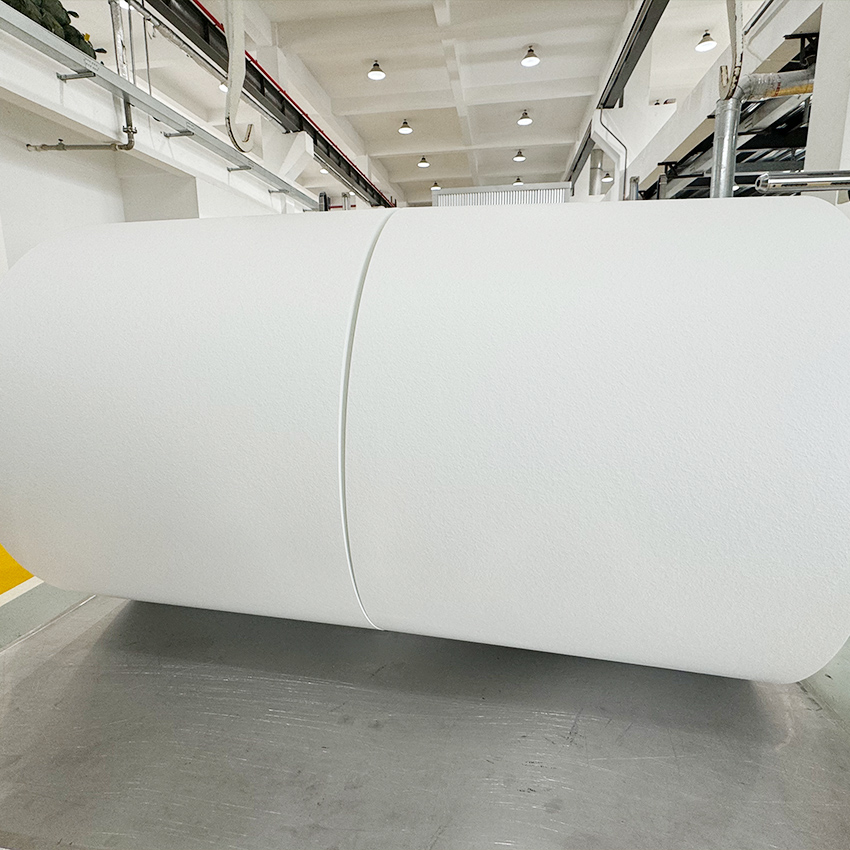
Comparing material architecture reveals stark mechanical differences. Synthetic glass fiber consists of uniform, continuous, micro-spun threads. Manufacturers carefully engineer these continuous threads to create a highly consistent pore structure. Traditional wood-pulp cellulose features a completely random, irregular structural layout. This uneven natural matrix creates inconsistent flow paths. It leads to highly variable and unpredictable particle trapping.
Filtration efficiency testing strongly favors synthetic options over natural materials. A true glass fiber oil filter achieves exceptional Beta ratios under pressure. These engineered ratios typically range from β10(c) ≥ 200 to 1000. This guarantees a capture efficiency between 99.5% and 99.9%. Conversely, standard hydraulic oil filter paper struggles significantly under dynamic flow conditions. Pressure surges often push trapped dirt directly through the weak cellulose matrix.
Dirt Holding Capacity (DHC) directly dictates the functional lifespan of any element. The higher internal porosity of glass fiber allows much greater particulate trapping. The synthetic matrix holds more microscopic dirt without restricting fluid flow. This specific characteristic significantly extends service intervals between necessary filter changes. Maintenance teams spend less time swapping elements in the field.
Moisture resistance offers another major operational advantage. Glass fiber does not absorb water under any circumstances. It will not swell, distort, or degrade when exposed to moisture. Standard cellulose readily absorbs ambient condensation right out of hydraulic reservoirs. This rapid swelling leads to premature blinding and sudden, catastrophic flow restriction.
Feature | Synthetic Glass Fiber Media | Traditional Cellulose (Paper) |
|---|---|---|
Pore Structure | Uniform, engineered, consistent paths | Random, irregular, overlapping fibers |
Filtration Efficiency | Absolute (99.5% to 99.9% capture) | Nominal (roughly 50% capture) |
Dirt Holding Capacity | High (greater internal void volume) | Low (surface blinding occurs rapidly) |
Moisture Resistance | Excellent (fibers do not swell) | Poor (swells and restricts fluid flow) |
Engineers must look far beyond basic nominal micron ratings. Rigorous technical evaluation ensures the selected media performs safely under high pressure. Use these core evaluation dimensions to specify the right filtration materials.
Always demand ISO 16889 Multi-pass Test Data from potential suppliers. This standardized laboratory testing verifies both efficiency claims and Dirt Holding Capacity. Multi-pass testing provides objective, mathematical proof of element performance. Particle counters measure contamination levels upstream and downstream simultaneously. This reveals the true Beta ratio over an extended operational period.
Evaluate the composite and multi-layer construction methods thoroughly. Mobile-grade media desperately needs internal structural reinforcement. Pure synthetic glass fiber is inherently brittle by nature.
Pre-filtration layers: These outer layers capture larger macro-particulates early. They protect the finer internal media from rapid blinding.
Support layers: Manufacturers typically add woven wire mesh or epoxy-coated screens. These critical supports prevent brittle glass fibers from collapsing inward. They stop tiny fibers from shedding directly into the fluid under high differential pressure.
Assess the flow fatigue resistance of the entire filter assembly. Mobile machinery actuators create rapid, cyclic flow rates during operation. Variable displacement pumps generate continuous, punishing flow pulsations. The filter media must handle this constant flexing without structural failure. Proper mesh backing prevents the delicate pleats from pinching together during flow surges.
Upgrading existing mobile equipment systems requires careful, deliberate planning. Simply swapping out elements often triggers unintended system consequences. You must mitigate these common retrofitting risks.
The Delta P and cold start risk demands immediate engineering attention. Upgrading to a tighter micron rating naturally increases fluid resistance. This quickly elevates the initial pressure drop (Delta P) across the housing. During cold weather starts, thick fluid drastically amplifies this internal resistance. If the new filter lacks adequate surface area, the internal bypass valve will open prematurely. Fluid then bypasses the element entirely. This sends unfiltered, dirty oil straight to delicate proportional valves. Robust mobile hydraulic filtration design accounts for worst-case cold flow scenarios.
Sizing and pleat geometry play crucial roles in successful retrofitting. Moving to a tighter 10-micron element usually demands significantly more surface area. You may require a completely new filter housing featuring deeper internal pleats. Sometimes, increasing the overall housing footprint becomes absolutely necessary. This expanded surface area maintains acceptable flow rates and prevents premature element clogging.
Baseline system flushing remains a non-negotiable step. Always perform a comprehensive fluid flush before installing high-efficiency glass media. Legacy contamination hides deep inside old hoses, cylinders, and reservoirs. If you skip this flush, the new glass element will instantly capture years of hidden dirt. It will plug almost immediately, wasting a premium replacement component.
Finding a reliable manufacturing partner ensures consistent equipment performance. You must vet potential suppliers thoroughly before committing to bulk purchases. Ask hard technical questions during the procurement phase.
Assess their internal manufacturing tolerances carefully. Ask specific questions regarding raw media consistency and resin binder quality. Inquire deeply about their pleat spacing stability under differential pressure. Poor pleat spacing causes immediate media blinding and shortens element life. High-quality 10 micron glass fiber filter paper requires extremely strict quality controls during the corrugation process.
Assess Customization vs. Off-the-Shelf Capabilities: Decide early when standard elements suffice. Standard dimensions work perfectly well for generic stationary power units. However, compact mobile OEM housings often require tailored spatial solutions. Consider co-engineering custom double-sided glass configurations for tight, proprietary spaces.
Evaluate Supply Chain and Quality Assurance: Scrutinize the manufacturer's batch-testing protocols. Request specific details regarding their lot traceability standards. If a catastrophic failure occurs in the field, you need answers. You need the ability to trace the failed element back to its exact master roll of media.
What to watch out for: Beware of vendors who refuse to provide structural cross-sections. Some low-cost manufacturers omit the critical epoxy-coated support screens. Without these screens, the glass media will inevitably rupture during a cold start.
Upgrading to synthetic glass fiber fundamentally transforms mobile equipment reliability. This advanced material prevents catastrophic failures in highly sensitive proportional valves and piston pumps. You achieve noticeably better machine uptime in harsh, unforgiving environments.
To implement this transition effectively, follow these actionable next steps:
Request comprehensive ISO 16889 multi-pass test reports from all potential vendors to validate their technical claims.
Ask for physical structural cross-sections to verify the presence of adequate wire mesh support layers.
Recalculate your system's maximum flow rate at expected cold-start temperatures to prevent unwanted bypass valve actuation.
Plan and execute a thorough baseline system flush protocol before installing any new high-efficiency filter elements.
A: No. Glass fiber is a depth-filtration media. Attempting to wash or blow it out will fracture the synthetic matrix, compromise the micron rating, and risk sending broken glass fibers directly into the hydraulic circuit.
A: Traditional paper is often "nominal" (capturing ~50% of 10-micron particles). High-quality glass fiber is "absolute," utilizing strict Beta ratios to guarantee 99%+ capture efficiency at the stated micron size.
A: Not necessarily. Despite the finer filtration, glass fiber offers lower resistance to flow than similarly rated cellulose. However, element surface area must be correctly specified to match the system's maximum flow rate.
