
English


T: +86-572-6200777
Mr. Xin: +86-17357227212
Mr. Xin: +86-17357227212
Mr.Li: +86-13706256441
Building 31, Tianneng Chain Innovation Industrial Park, Meishan Town, Changxing County, Huzhou City, Zhejiang Province

Views: 0 Author: Site Editor Publish Time: 2026-07-15 Origin: Site


Industrial fluid systems demand precise contamination control. Without it, you risk premature equipment wear and unscheduled downtime. Standard cellulose media often fails under these tough conditions. It suffers from severe moisture swelling and rapid plugging. It also shows significantly lower efficiency in high-viscosity applications. This leads to frequent element change-outs and wasted labor. Transitioning to 30 micron glass fiber filter paper offers a highly effective solution. This material provides superior depth filtration. It delivers highly predictable flow rates and excellent chemical compatibility. It thrives in demanding, heavy-duty industrial environments. Our objective is clear. We want to provide engineers and procurement managers a robust evaluation framework. You will learn how to evaluate, specify, and seamlessly source this advanced media for your operational fluid systems.
Performance Baseline: 30 micron glass fiber filter paper provides exceptional depth filtration, capturing rigid and deformable particles without restricting system flow rates.
Material Superiority: Compared to standard cellulose, glass fiber liquid media maintains structural integrity in harsh chemical and high-temperature environments.
Cost-to-Lifespan Ratio: A naturally high dust holding capacity significantly extends maintenance intervals, offsetting higher initial material costs.
Primary Applications: Highly recommended as industrial oil filter media and for heavy-duty hydraulic fluid filtration where ISO cleanliness codes are strictly enforced.
Engineers must select the exact intercept point for particulate removal carefully. The 30-micron threshold represents a critical balance. At this size, the media effectively intercepts large, damaging particulates. It stops metal shavings, rust flakes, and degraded seal materials. Capturing these contaminants early prevents catastrophic gouging in downstream pumps and servo valves. We rely on this threshold heavily for pre-filtration, coolant processing, and heavy lubricating oils.
This stage also acts as a vital protective shield. High-efficiency systems often utilize expensive 3-micron or 5-micron absolute filters downstream. If you expose these fine filters directly to raw fluid, they blind over within hours. Placing a 30-micron depth media upstream absorbs the bulk contamination load. This extends the lifespan of your expensive absolute filters exponentially.
Modern industrial equipment strictly enforces fluid cleanliness through ISO 4406 standards. This standard measures particles at the 4-micron, 6-micron, and 14-micron levels. While 30 microns sounds larger than these targets, the depth media actually plays a crucial role in achieving them. A strong 30-micron pre-filter reliably pulls out the heavy sludge and large aggregates. It ensures the downstream filters can polish the fluid down to targets like ISO 16/14/11. Without this bulk removal, fluid systems struggle to maintain their baseline cleanliness targets. Contamination simply overwhelms the fine polishing loops.
Standard sieves rely on surface filtration. They catch particles on a single flat plane. Once that surface fills, fluid stops moving. Glass microfibers behave entirely differently. Manufacturers engineer these fibers into a randomized, multi-layered matrix. This creates true depth filtration. As fluid navigates the tortuous paths inside the media, particles become trapped throughout the entire thickness of the sheet.
This complex web captures both rigid metals and deformable sludges. Sludge often extrudes right through thin wire mesh. However, the deep fibrous maze holds onto these soft gels effectively. The fluid travels smoothly through the open voids, leaving the contaminants securely locked inside the matrix.
Cellulose remains a popular choice for budget applications. However, paper fibers possess a fatal flaw in industrial settings. They are naturally hygroscopic. Cellulose absorbs free water from the fluid stream rapidly. When paper fibers absorb moisture, they swell. This swelling physically shrinks the available pore pathways.
As the pores close, the system experiences unpredictable pressure drops ($\Delta$P). The pump works harder to push fluid through the swollen media. Furthermore, cellulose operates primarily via surface-loading behavior. Dirt accumulates quickly on the outermost layer, forming an impenetrable cake. This drastically shortens the overall lifecycle, forcing maintenance teams into a constant cycle of replacement.
Glass fiber presents a fundamentally superior structure. The material consists of purely inorganic borosilicate glass. It strongly resists water absorption. The fibers never swell, regardless of how much moisture enters the system. This guarantees stable pore sizes and highly predictable pressure differentials over time.
Additionally, this matrix offers an extraordinary void volume. High-quality glass media often features up to 90% open void space. This means fluid passes through with almost zero initial resistance. The media traps massive amounts of contamination while allowing high-viscosity oils to flow freely.
Procurement teams often hesitate at the higher upfront material cost. However, standard paper media generates massive hidden expenses. You must factor in the frequent labor required for swap-outs. You also incur steep hazardous waste disposal costs for every spent element.
Glass fiber easily lasts three to five times longer than standard cellulose. This dramatically reduces maintenance interventions. You purchase fewer elements annually. You pay for less disposal. You eliminate the downtime required to constantly crack open filter housings. The extended operational lifespan easily absorbs the initial price difference.
Performance Metric | Standard Cellulose Media | Glass Fiber Media |
|---|---|---|
Void Volume | Low (typically 40-50%) | High (up to 90%) |
Moisture Resistance | Poor (fibers swell and blind) | Excellent (inorganic, no swelling) |
Dirt Loading Style | Surface-loading cake | True depth-loading matrix |
Flow Restriction ($\Delta$P) | High and unpredictable | Low and highly stable |
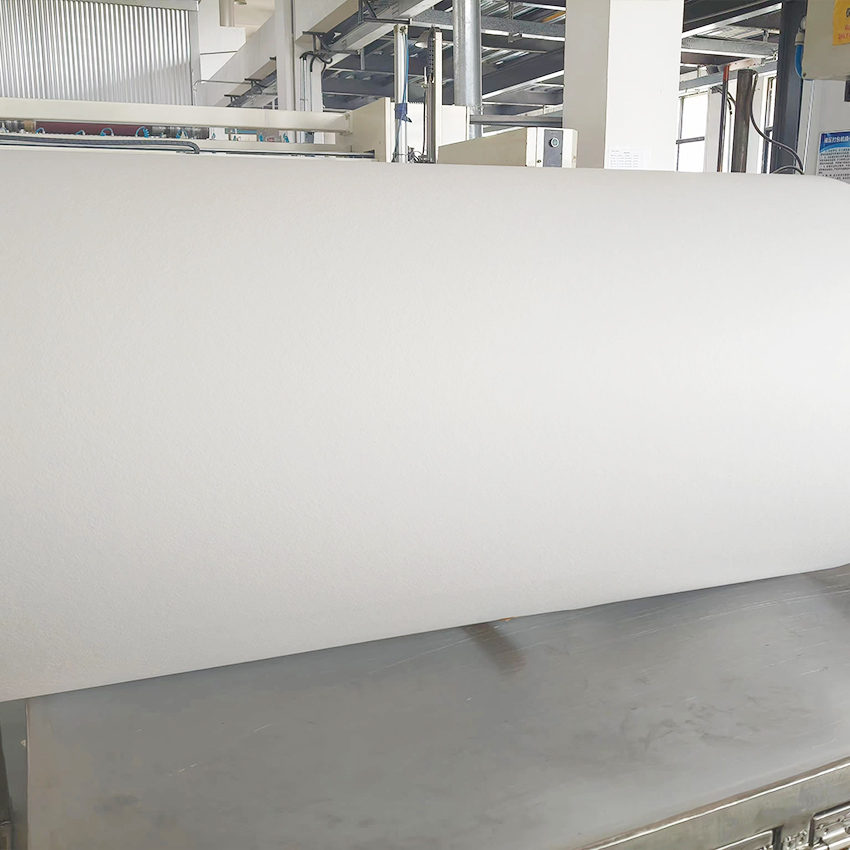
When selecting industrial oil filter media, dust holding capacity stands as the ultimate metric. Glass fiber's deep matrix design exponentially increases dirt holding capacity compared to standard paper. The vast internal void space gives particles plenty of room to hide without blocking fluid flow.
You should never guess at these metrics. Engineers must verify them using standard manufacturer spec sheets. Always request ISO 16889 multi-pass test data. This rigorous laboratory protocol introduces a constant stream of test dust into the fluid. It measures exactly how many grams of dirt the media holds before reaching terminal pressure. Choosing a media with exceptionally high dust holding capacity guarantees fewer maintenance interruptions.
Heavy manufacturing systems often utilize thick fluids. Cold industrial gear oils present a massive challenge for standard filtration. High-viscosity fluids naturally resist flowing through tight pores. If the media causes too much resistance, the system bypass valve opens. This allows dirty oil to circulate freely, entirely defeating the purpose of the filter.
You must evaluate $\Delta$P curves carefully. A strong 30-micron glass matrix balances high viscosity with minimal resistance. By charting the expected pressure drop over time, maintenance teams can accurately predict the filter lifespan. They can schedule replacements during planned outages rather than reacting to sudden blockage alarms.
Manufacturers produce this media in two distinct chemical formulations. Understanding the difference prevents catastrophic element failure.
Binder-Free Media: This consists of pure borosilicate glass. It offers maximum temperature resistance and complete chemical inertness. Laboratories use this for analytical testing. However, it lacks mechanical strength. It will tear under heavy industrial fluid flow.
With Binder (Acrylic/Epoxy): Industrial applications require reinforced media. Manufacturers add acrylic or epoxy binders to glue the fiber intersections together. This provides the sheer mechanical strength required for high-pressure processing. Always evaluate the specific binder compatibility against your synthetic oils to ensure the chemicals will not dissolve the glue.
Modern automated machinery relies entirely on clean hydraulic fluid filtration. Precision servo valves operate with microscopic clearances. Even a slight buildup of silt causes these valves to stick. Sticking valves lead to erratic machine movements and ruined production runs.
Using 30-micron glass depth media prevents this silt agglomeration. Furthermore, specialized hydraulic fluids contain aggressive anti-wear additives. Standard paper often degrades chemically when exposed to these hot additives over time. Glass fibers remain completely inert, resisting media degradation effectively and protecting the system integrity.
Heavy manufacturing facilities process massive amounts of lubrication fluid. Steel mills, paper machines, and mining excavators use extremely thick gear oils. These high-viscosity fluids run hot and collect heavy particulate loads from massive mechanical gears.
Standard surface filters collapse under the sheer weight and pressure of heavy gear oil. The 90% void volume of glass fiber handles these extreme dynamic viscosities effortlessly. It manages the thick fluid while continually stripping out the abrasive wear metals generated by the heavy machinery.
CNC milling and turning centers require continuous coolant processing. Cutting tools shear off millions of tiny metal chips known as swarf. Additionally, machine ways leak lubricating oil into the coolant, creating sticky tramp oils. This combination quickly blinds traditional filtration screens.
Glass fiber media excels in this harsh environment. It captures the rigid metal swarf efficiently. It also traps the sticky tramp oil droplets inside its depth matrix. Most importantly, the inert glass fibers accomplish this without stripping the essential chemical additives out of the valuable coolant base.
Procurement teams often confuse laboratory grades with industrial process media. Standard laboratory grades range from A to F. For example, Grade A provides 1.6-micron filtration, while Grade F provides 0.7-micron retention. These small circular discs suit analytical bench work perfectly. However, they fail instantly in heavy machinery.
You need custom 30-micron industrial roll or sheet configurations. Glass fiber liquid media manufactured for industrial use features distinct structural backing. It arrives on massive spools designed for automated coolant bed filters or gets pleated into heavy-duty hydraulic elements.
Transitioning to 30 micron filter paper carries specific engineering risks. You must mitigate these during the design phase.
Media Migration: If you select a media lacking proper acrylic binder or structural backing wire, fibers can break off. These broken glass fibers migrate into the clean fluid stream, essentially becoming a dangerous contaminant themselves. Always specify reinforced industrial grades.
System Bypass: Premium media proves worthless if fluid circumvents it. Using incorrect die-cut sheet sizing allows fluid to slip around the edges. Improper or degraded housing O-ring seals create paths of least resistance. Dirty fluid will always bypass the 30-micron media entirely if a leak exists.
Selecting the right manufacturing partner ensures operational stability. Use this logical framework to shortlist your vendors:
Demand Multi-Pass Test Data: Reject vendors who only provide nominal ratings. Demand verifiable ISO 16889 multi-pass test reports showing specific $\beta$-ratio performance (e.g., $\beta$30 > 200).
Verify Manufacturing Standards: Check for strict lot-to-lot consistency guarantees. Ensure the factory operates under strict ISO 9001 quality management standards to avoid varying pressure drops between batches.
Evaluate Custom Configurations: A strong vendor provides flexibility. Ensure they offer bulk industrial rolls, precise die-cut sheets, and media optimized for pleated element backing.
Choosing 30 micron glass fiber filter paper represents a strategic operational upgrade, not a basic commodity purchase. It transforms how your high-viscosity and high-contamination fluid systems perform. By eliminating moisture swelling, utilizing immense void volume, and trapping dirt deep within the matrix, you protect critical downstream components effectively. Your next steps are clear and actionable. First, audit your current $\Delta$P failure rates and replacement schedules using cellulose media. Next, request industrial glass fiber samples from vetted vendors. Finally, initiate a pilot test in a dedicated bypass or kidney-loop filtration setup to empirically validate the extended lifespan and superior fluid cleanliness.
A: Glass fiber provides true depth filtration and a remarkably high dust holding capacity for finer, deformable sludges. In contrast, stainless steel mesh offers surface-filtration only. It blinds over rapidly when exposed to non-rigid contaminants or heavy sludge, causing immediate flow restrictions.
A: No. Unlike traditional cellulose, glass fiber remains inherently hydrophobic and entirely inorganic. The fibers will not swell. However, depending on specific surface treatments applied during manufacturing, the matrix can help separate free water droplets out of the main fluid stream.
A: Typically, no. High-pressure hydraulic and industrial oil applications exert massive sheer forces. These systems require glass fiber media reinforced with strong synthetic binders, such as epoxy or acrylic. They also often require protective mesh layers to prevent media tearing and subsequent fiber shedding.
