
English


T: +86-572-6200777
Mr. Xin: +86-17357227212
Mr. Xin: +86-17357227212
Mr.Li: +86-13706256441
Building 31, Tianneng Chain Innovation Industrial Park, Meishan Town, Changxing County, Huzhou City, Zhejiang Province

Views: 0 Author: Site Editor Publish Time: 2026-07-17 Origin: Site


Hydraulic system failure costs industrial sectors millions of dollars annually. Fluid contamination and pressure-induced filter degradation primarily drive these massive financial losses. In heavy-duty or high-pulsation applications, standard media often falls short. It heavily compromises fluid cleanliness targets due to severe media migration or structural fatigue. Engineers face an ongoing battle against unpredictable pressure spikes. You cannot rely on fragile, single-layer filtration materials under these harsh conditions.
This reality creates a critical engineering necessity. We must transition to reinforced composite structures. Upgrading filter media design ensures absolute filtration efficiency even under intense dynamic stress. It serves as a vital safeguard for expensive machinery. In this article, you will learn why traditional filters fail during cyclic loading. We will explore the structural mechanics of advanced composite architectures. You will also discover how to evaluate these materials effectively to guarantee long-term system reliability.
Standard cellulose or unreinforced microglass often fails under hydraulic pulsation, leading to bypass conditions and component wear.
Side-side laminated hydraulic filter media utilizes a "sandwich" construction, protecting fragile high-efficiency layers from structural damage.
Evaluating this media requires looking beyond static dirt holding capacity (DHC) to cyclic flow multipass testing (ISO 16889) and beta ratio stability.
Proper specification extends service intervals and maximizes equipment lifespan.
Many legacy systems still rely heavily on single-layer filtration materials. Engineers frequently specify traditional hydraulic oil filter paper for low-cost applications. This cellulose material degrades rapidly under demanding operational conditions. Systems experience frequent cold starts and aggressive flow surges. High viscosity fluids place immense physical strain on unreinforced paper pleats. Over time, cellulose fibers lose their structural integrity. They tear, warp, or collapse entirely when subjected to high differential pressures. This degradation creates immediate bypass conditions. Contaminated oil flows freely into sensitive hydraulic circuits.
Microglass media presents a different set of challenges. Unreinforced microglass delivers exceptional initial efficiency. However, it becomes dangerously brittle under cyclic fatigue. Hydraulic pumps inherently generate pulsation. This constant pulsing bends and flexes the filter pleats. Eventually, the fragile glass fibers snap. This phenomenon is known as media migration. Broken glass fibers break off and travel downstream. They directly contaminate critical system components. You will find these abrasive fibers scoring servo valves and destroying hydraulic pumps.
The financial impact of these failures is staggering. We must frame this problem in strict business terms. Unplanned downtime stops production lines entirely. Premature fluid degradation requires costly oil replacement. Catastrophic component failure demands expensive replacement parts and intense maintenance labor. These severe consequences far outweigh the minor cost savings gained by purchasing cheaper, unreinforced filters. Investing in robust filtration materials prevents these costly operational disasters.
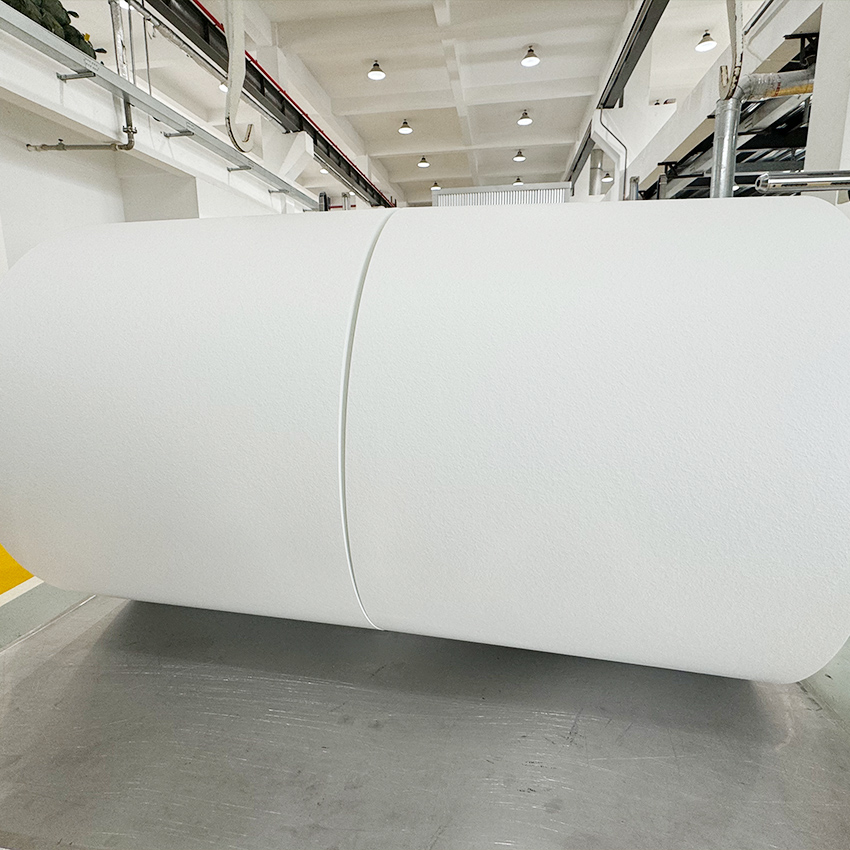
Solving the problem of cyclic fatigue requires a fundamentally different material architecture. Side-side laminated hydraulic filter media utilizes a highly engineered "sandwich" construction. This physical composition directly addresses the weaknesses of single-layer designs. It combines distinct materials to achieve both high efficiency and robust durability.
We can break down this physical composition into two main categories:
The Core: The center consists of high-efficiency glass fiber oil media. Manufacturers typically use meltblown or wet-laid production techniques. This dense core is strictly responsible for capturing sub-micron particulate. It dictates the absolute micron rating of the final filter.
The Support Layers: Outer layers consist of durable polyester scrim filter media. These spunbond meshes are permanently bonded to both the upstream and downstream sides of the fragile glass core. They provide essential structural rigidity.
This composite architecture features a specific mechanism of action. The upstream support layer faces the incoming fluid flow. It disperses the intense physical impact of fluid surges. This dispersion prevents localized tearing of the glass core during cold starts. Simultaneously, the downstream layer performs a crucial backup role. It physically restrains the core material. This prevents pleat collapse under high differential pressure. It also acts as an absolute barrier against fiber shedding. If any glass fibers break, the downstream scrim catches them before they enter the system.
The final outcome of this design is highly predictable. The composite structure translates directly into consistent hydraulic system protection. Equipment remains safe regardless of extreme operational pressure spikes. The filtration efficiency stays constant from installation until the end of the element's service life.
Selecting the right media requires rigorous performance auditing. You cannot evaluate advanced composite media based purely on static, steady-state testing. Steady flow does not replicate real-world hydraulic machinery. You must require data based on cyclic flow conditions. ISO 16889 Multipass testing provides a much more accurate representation of dynamic field performance.
Evaluation Metric | Static Testing (Limited Value) | Dynamic Testing (ISO 16889) |
|---|---|---|
Flow Conditions | Constant, steady flow rates. | Variable, pulsating cyclic flow. |
Particle Capture | Shows artificially high retention. | Reveals particle release during surges. |
Fatigue Assessment | Cannot measure structural fatigue. | Tests media durability under stress. |
Beta ratio stability is another critical evaluation dimension. Beta ratios measure the particle capture efficiency at a specific micron size. High-quality laminated filter media should maintain a high Beta rating (e.g., βx(c) ≥ 1000) throughout its entire lifespan. Substandard media will show a sharp drop in Beta efficiency as differential pressure increases near the terminal point. The media flexes, pores open, and captured dirt pushes right through.
Differential pressure (ΔP) management presents an engineering tradeoff. Adding thick support layers naturally increases the initial pressure drop across the filter. You must evaluate how the manufacturer optimizes this physical construction. The best suppliers engineer the scrim weave carefully. They maximize physical support while maintaining excellent fluid permeability. This keeps the initial ΔP low without sacrificing strength.
Finally, consider Dirt Holding Capacity (DHC) versus envelope size. Lamination adds physical thickness to the media sheet. Thicker media means you can fit fewer total pleats into a standard filter cartridge. Fewer pleats reduce the total available surface area. You must assess this balance. The improved stability and longer lifespan of composite media usually offset the slight reduction in surface area.
Deploying composite media involves several implementation realities. You must navigate chemical compatibility nuances carefully. Hydraulic systems use widely varied fluids. Mineral oils are standard, but many systems utilize synthetic esters or water-glycol fluids. The lamination adhesives and the polyester scrim must resist chemical breakdown. If the adhesive dissolves in water-glycol, the layers will separate immediately.
Cold start vulnerabilities demand special attention. When equipment starts in freezing temperatures, hydraulic oil becomes incredibly thick. This high-viscosity fluid behaves almost like a solid. It impacts the filter pleats with massive force. You must evaluate the media's burst strength during these events. The collapse pressure rating (tested via ISO 2941) ensures the filter element will not crush inward during a harsh winter startup.
Delamination represents a severe operational risk. This is the most common failure mode in sub-par manufacturing. Thermal stress from hot oil or chemical stress from aggressive additives attacks cheap adhesives. The structural layers separate from the glass core. Once delaminated, the media loses all rigidity. The filter becomes completely ineffective. Contaminants bypass the pleats entirely.
Best Practice: Always request fluid compatibility charts from the media manufacturer specifically detailing performance with synthetic esters.
Best Practice: Specify media with a collapse pressure rating that exceeds your system's maximum cold-start bypass valve setting.
Common Mistake: Purchasing composite media based on dry-state tensile strength alone, ignoring high-temperature adhesive degradation.
Common Mistake: Failing to account for the added media thickness when designing the inner support tube of the filter cartridge.
Choosing a media supplier requires strict shortlisting logic. You need a reliable manufacturing partner, not just a commodity vendor. Start by auditing their manufacturing tolerances. Look for verifiable ISO 9001 compliance. Demand proof of documented in-house testing capabilities. A qualified supplier must perform their own ISO 16889 Multipass and ISO 2941 Collapse/Burst testing. Relying on third-party labs for every batch is inefficient and risky.
Customization capabilities separate industry leaders from standard distributors. OEM applications often require highly specific filtration targets. Can the supplier adjust the weight (measured in GSM) of the core glass fiber? Can they alter the rigidity of the polyester scrim to fit a proprietary cartridge design? The ability to tweak these specific variables ensures optimal integration into your existing hydraulic hardware.
Transparency in testing assumptions is non-negotiable. Many suppliers rely on generalized marketing metrics. They boast about massive Dirt Holding Capacity without context. Trust suppliers who provide full test condition data. They should openly publish the fluid viscosity, test temperature, and exact flow rate used to generate their DHC and Beta ratio claims. Transparent data allows your engineering team to accurately predict field performance.
Transitioning to side-side laminated structures provides a vital insurance policy for critical hydraulic circuits. Relying on single-layer cellulose or unreinforced microglass invites catastrophic system failure in high-pulsation environments. The composite sandwich architecture prevents media migration, resists pleat collapse, and guarantees consistent fluid cleanliness under heavy dynamic stress.
Engineering and procurement teams must take immediate action. We advise auditing your current failure rates associated with single-layer media. Identify systems suffering from frequent bypass conditions or premature pump wear. Request dynamic multipass testing data from potential composite media suppliers to compare actual performance metrics.
Do not wait for a critical pump failure to upgrade your filtration strategy. Reach out to a qualified manufacturer today. Request physical material samples and comprehensive technical data sheets. Consult with an application engineer to discuss custom roll-goods specifications tailored exactly to your equipment's hydraulic demands.
A: Yes, slightly. The added thickness of the upstream and downstream support layers creates minor flow resistance. However, premium manufacturers engineer these scrims to maintain high porosity. This makes the initial ΔP increase negligible compared to the massive gains in structural stability and overall filter lifespan.
A: Single-sided media usually features a support layer only on the downstream side. This prevents outward pleat collapse under pressure. Side-side lamination adds an upstream layer as well. This fully protects the fragile core from direct fluid impact and entirely prevents dangerous downstream fiber migration.
A: Systems dealing with highly variable flow rates require robust lamination. If your equipment experiences frequent cycling, heavy mechanical vibration, or extreme differential pressures, standard media will fail. Mobile construction equipment, heavy industrial presses, and cold-weather hydraulic systems should always default to side-side composite structures.
