
English


T: +86-572-6200777
Mr. Xin: +86-17357227212
Mr. Xin: +86-17357227212
Mr.Li: +86-13706256441
Building 31, Tianneng Chain Innovation Industrial Park, Meishan Town, Changxing County, Huzhou City, Zhejiang Province

Views: 0 Author: Site Editor Publish Time: 2026-06-24 Origin: Site


Hydraulic oil often looks perfectly clean to the naked eye. This visual deception masks a microscopic warzone beneath the fluid surface. Human vision only detects particles down to roughly 40 microns. Meanwhile, much smaller debris actively destroys your system from the inside. A common misconception in hydraulic oil filtration assumes smaller pores always yield better results. In reality, choosing between 10-micron and 30-micron media demands serious thought. You must carefully balance fluid cleanliness against flow resistance.
Our goal is to equip maintenance and procurement engineers with an evidence-based evaluation framework. We will help you assess micron filter paper effectively. You must factor in system pressure, fluid viscosity, and internal component tolerances. Precision protection matters greatly, but fluid starvation destroys pumps rapidly. By understanding exactly where each micron rating excels, you can build a resilient hydraulic circuit.
The Deadly Zone: Component wear in hydraulic systems typically occurs from particles in the 5–25 micron range, making accurate particle filtration critical.
Placement is Everything: 10-micron filters excel on the pressure/return side for precision protection; 30-micron filters are often necessary on the suction side to prevent pump cavitation.
Material Matters: The performance gap between standard cellulose and engineered glass fiber significantly impacts dirt-holding capacity and pressure drops.
Look Beyond the Label: A filter's "micron rating" is unreliable without verifying whether it is Nominal or Absolute, and checking its Beta Ratio.
Modern hydraulic components rely on incredibly tight internal clearances to maintain pressure and efficiency. You must understand the crucial difference between a clearance and a tolerance. A clearance is the physical gap between two moving metal surfaces. Tolerance refers to the allowable deviation in manufacturing those parts. When assessing filtration needs, clearance dictates your target.
Consider a high-performance servo valve. It might feature a dynamic clearance of exactly 10 microns. If a 5-micron particle enters this gap, it usually passes right through. It acts like a small marble rolling safely down a wide hallway. It causes no immediate harm. However, imagine a 12-micron particle entering that same 10-micron gap. It cannot pass freely. It wedges forcefully between the moving metal surfaces. This creates severe scoring, abrasive wear, and eventually catastrophic component failure.
Industry data shows the most fatal contaminants to hydraulic pumps and valves fall exactly within the 5 to 25 micron bracket. These microscopic particles act as a relentless lapping compound. They continuously grind away at your internal surfaces during operation. This grinding degrades system efficiency over time. It increases internal leakage. We must prioritize removing contaminants in this specific size range to preserve system longevity.
You cannot manage what you cannot measure. The industry relies on the ISO 4406 standard to frame this business problem objectively. Fluid cleanliness must be a measurable target, not a subjective feeling based on oil color. ISO 4406 assigns a three-part code (e.g., 18/16/13) to represent particle concentrations.
Here is how the standard breaks down fluid contamination levels:
ISO Code Segment | Target Particle Size | What It Represents |
|---|---|---|
First Number (e.g., 18) | > 4 microns | Indicates silting potential and total particulate load. |
Second Number (e.g., 16) | > 6 microns | Indicates the concentration of abrasive wear particles. |
Third Number (e.g., 13) | > 14 microns | Indicates large debris that causes immediate catastrophic failure. |
By tracking your ISO 4406 targets, you remove guesswork. You deploy filtration strategies based on hard data.
When extreme fluid cleanliness is non-negotiable, engineers turn to finer filtration media. A 10-micron element provides exceptional defense for sensitive equipment. However, applying it incorrectly can cripple your circuit.
You should deploy 10-micron filters primarily on pressure lines and return lines. They serve as the ultimate bodyguard for high-precision components. Proportional valves, servo controls, and high-pressure piston pumps demand this level of purification. The primary strength of a 10-micron element lies in its capture efficiency. It effectively traps the most damaging wear particles within the critical danger zone. It helps systems consistently achieve stringent ISO 4406 targets, extending component lifespans significantly.
Despite their superior capture rates, finer filters introduce distinct operational risks. You must view them through a skeptical lens before installation.
Rapid Clogging: If your upstream filtration is poor, a 10-micron element will plug rapidly. It absorbs the entire contamination load at once.
Filter Bypass Events: Once the element clogs, differential pressure rises. This forces the bypass valve open. Contaminated oil then floods your pristine circuit unfiltered.
Elevated Pressure Drop (ΔP): Tighter pores naturally resist fluid flow. This forces the hydraulic system to work harder, generating unwanted heat and wasting energy.
To mitigate these risks, upgrading the media material is highly recommended. Standard cellulose paper swells when exposed to trace moisture. This swelling chokes off the tiny pores, rapidly escalating pressure drop. Instead, specify 10 micron glass fiber filter paper for these precision applications. Engineered glass fiber maintains a rigid structural integrity. It resists collapsing under high pressure spikes. Furthermore, its uniform fiber matrix offers a lower natural pressure drop compared to cellulose. This allows for superior protection without overworking your system.
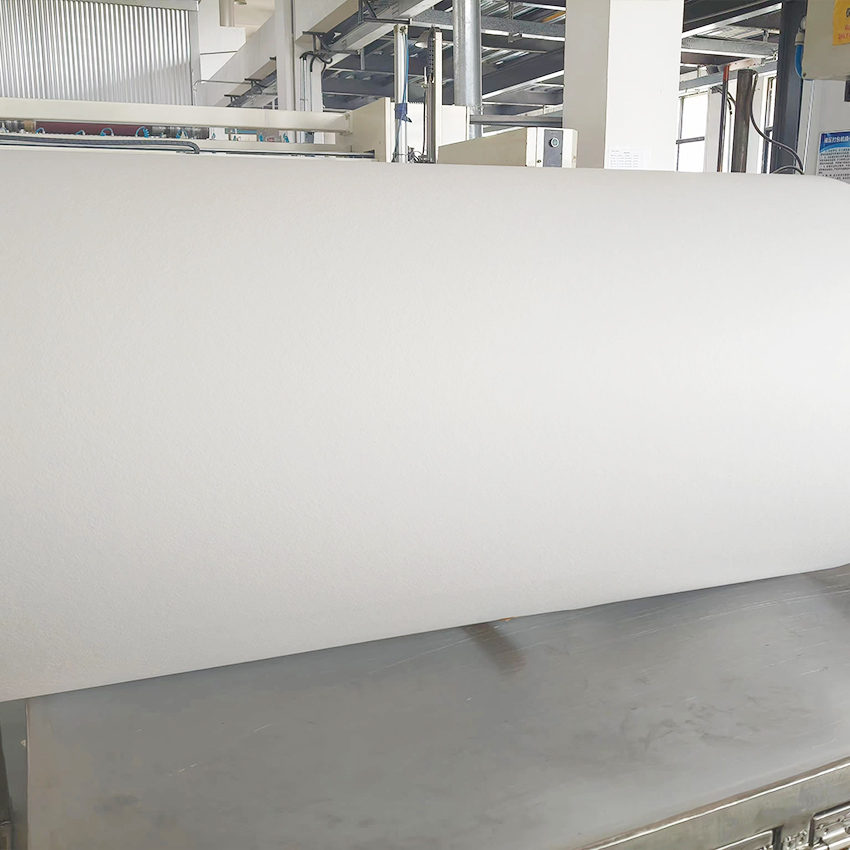
Not every location in a hydraulic circuit requires surgical-level fluid cleanliness. In certain zones, maintaining unrestricted fluid flow is far more critical than trapping microscopic dust. This is where 30-micron elements shine.
You will typically find 30-micron filters installed as suction strainers, on inlet lines, or within coarse return lines. Their primary strength is balancing essential particle capture with minimal flow restriction. They excel at catching large, catastrophic debris. Weld slag, initial manufacturing contamination, and broken seal fragments pose massive threats. A 30-micron element intercepts these large hazards easily while letting the oil flow freely.
Many novice technicians make a fatal error here. They blindly drop the micron rating on a suction line to "clean the oil faster." This increases fluid resistance dramatically. During cold starts, oil viscosity is naturally high. The fluid is thick and sluggish. If a fine filter restricts the suction inlet, the pump starves for oil.
This restriction causes pump cavitation. As the pump tries to draw oil through a restrictive filter, it creates a vacuum. This low pressure boils the oil, forming vapor bubbles. When these bubbles reach the high-pressure side of the pump, they implode violently. The implosions strip metal directly from the pump's internal surfaces. Cavitation failure is rapid and far more catastrophic than mild particulate wear.
To guarantee optimal flow dynamics, utilizing 30 micron glass fiber filter paper is an excellent engineering choice. It ensures maximum dirt-holding capacity. Because glass fiber features a high void volume (more open space between fibers), it does not sacrifice critical flow rates. High-volume pumps can draw fluid effortlessly, even during challenging cold-start conditions.
Buyers frequently fall into a dangerous evaluation trap. They trust basic labels without understanding the testing methodology behind them. A simple "10-micron" stamp on a box means virtually nothing without technical context.
You must clarify the difference between rating types before selecting your media.
Nominal Rating: This is often just an arbitrary average. A nominal 10-micron filter might catch roughly 50% to 95% of particles that size. It is highly unreliable due to inconsistent testing variables. Furthermore, it suffers from a "blocking action." As particles build up on the media, they artificially restrict the pore size. The filter appears more efficient over time, but its flow rate plummets.
Absolute Rating: This refers to the diameter of the largest spherical glass particle that can pass through the media under strict laboratory conditions. It offers a much higher standard of reliability. However, real-world contaminants are rarely perfect spheres. Long, sliver-like particles can sometimes slip through an absolute-rated pore.
To truly evaluate industrial oil filter media, you must demand ISO multi-pass test data. This introduces the Beta Ratio. The multi-pass test continuously injects standard test dust upstream while measuring particle counts both upstream and downstream.
Here is how you read a Beta Ratio:
The symbol (β) represents the ratio.
The subscript number indicates the target particle size (e.g., β10 means 10 microns).
The final number represents the ratio of upstream particles to downstream particles.
For example, a Beta Ratio of β10 = 200 means that for every 200 particles of 10-micron size hitting the filter, only 1 gets through. This translates to an efficiency of 99.5%. This is the only mathematically sound way to compare filter media performance across different manufacturers.
Selecting the correct media requires a systematic approach. Do not guess. Use this scannable decision matrix to align your filtration strategy with system requirements.
Evaluation Criteria | Actionable Guideline | Recommended Specification |
|---|---|---|
Circuit Location | Identify where the filter sits. Suction sides demand flow. Pressure sides demand purity. | Suction = Lean towards 30-micron. |
Fluid Viscosity & Temp | Thicker oils or frequent cold environments increase flow resistance exponentially. | For high viscosity, use higher micron ratings or specify oversized filter housings to minimize pressure drop. |
Component Sensitivity | Review the schematic. Check for precision controls versus robust mechanical parts. | Servo valves = Target 10-micron absolute (β10≥200). |
Media Longevity | Evaluate the environmental stress on the filter element. Moisture and pressure spikes degrade inferior materials. | Cellulose requires frequent change-outs. Glass fiber maintains integrity longer and resists high-pressure collapses. |
By following these steps, you eliminate the emotional guesswork from your maintenance routines. You protect delicate components while preserving necessary pump flow.
There is no universal "better" option when choosing between 10-micron and 30-micron media. The right choice depends entirely on its location and purpose within your circuit. A 10-micron element secures component longevity by catching the most abrasive microscopic wear debris. Conversely, a 30-micron element secures pump flow dynamics, preventing disastrous cavitation on the suction side. The most resilient hydraulic systems cascade both strategies effectively.
Your next step is clear. Audit your current ISO cleanliness codes. Pull a fluid sample and analyze your actual baseline. Then, contact your engineering or supplier team to calculate the exact Beta Ratio and pressure drop requirements for your specific hydraulic circuit. Proactive evaluation prevents catastrophic downtime.
A: We strongly advise against this without a rigorous engineering review. Dropping the micron rating on a suction line severely restricts inlet flow. This restriction starves the pump of fluid, especially during cold starts. It frequently leads to severe pump cavitation, which destroys internal components far faster than mild particulate wear ever could.
A: The primary difference lies in structural integrity and dirt-holding capacity. Glass fiber features a rigid, uniform matrix that can be manufactured with strict absolute ratings. It withstands high moisture and pressure spikes. Standard cellulose paper swells when exposed to water, which unpredictably chokes pore sizes and triggers rapid pressure drops.
A: Visual inspection is completely useless for assessing 10-micron performance, as human eyes cannot see particles smaller than 40 microns. You must rely on regular fluid sampling. Send oil samples to a lab and track your fluid against ISO 4406 cleanliness codes to verify the filter's actual efficiency over time.


