
English


T: +86-572-6200777
Mr. Xin: +86-17357227212
Mr. Xin: +86-17357227212
Mr.Li: +86-13706256441
Building 31, Tianneng Chain Innovation Industrial Park, Meishan Town, Changxing County, Huzhou City, Zhejiang Province

Views: 0 Author: Site Editor Publish Time: 2026-06-17 Origin: Site


Specifying the right air filtration media involves much more than simply chasing the highest particle capture percentage. It requires a delicate engineering balance. You must weigh filtration efficiency against system pressure drop. We rely heavily on glass fiber filter paper as the industry standard. It provides a highly reliable structural matrix. This material ensures consistent particle interception across diverse environments.
However, upgrading to H14 does not automatically mean a performance upgrade. Blindly selecting the highest grade often backfires. It can cause severe system bypass leakage. It also reduces clean air delivery rates (CADR) and wastes fan energy. Our goal here is clear. We provide a no-nonsense, engineering-focused framework. You will learn how to choose between H11, H13, and H14 media. We base these recommendations entirely on operational realities rather than exaggerated marketing claims.
Efficiency is a System Metric: High-grade media like H14 can cause severe pressure drops; if the system housing isn't perfectly sealed, bypass leakage will drag overall efficiency below H11 levels.
The "Overkill" Trap: For residential and standard commercial applications, H11 or H12 provides a better balance of airflow and purification than H13 or H14.
H13 as the Gold Standard: H13 offers the optimal convergence of 99.95% efficiency and manageable airflow resistance for most medical and high-end commercial applications.
Material Realities: High-quality glass fiber filter paper dictates the longevity and reliability of the filter; prioritizing structural integrity and moisture resistance over raw grade numbers lowers Total Cost of Ownership (TCO).
To make informed choices, you must first understand the baseline testing standards. The European EN 1822 standard strictly governs HEPA filter media grades. It classifies media based on their performance at the Most Penetrating Particle Size (MPPS). This specific size typically falls between 0.1 and 0.3 microns. Engineers consider this the hardest particle size to trap.
We classify these grades based on their minimum guaranteed capture rate at the MPPS. Below is a breakdown of the three most common grades used in robust filtration systems.
Filter Grade | Common Designation | MPPS Efficiency | Primary Characteristics |
|---|---|---|---|
H11 | EPA Grade (Sub-HEPA) | ≥ 95% | Offers excellent airflow. Maintains very low pressure resistance. |
H13 | True HEPA (Medical Grade) | ≥ 99.95% | The globally recognized benchmark. Balances high efficiency and manageable airflow. |
H14 | Medical / Cleanroom Grade | ≥ 99.995% | Features a highly dense fiber matrix. Designed exclusively for zero-tolerance environments. |
Many people misunderstand the 0.3-micron metric. You might assume 0.3 microns is the smallest particle these filters can catch. This is completely false. It is simply the most difficult size to capture. The physical mechanics change for particles smaller than 0.1 microns, such as tiny viruses.
These ultra-fine particles do not fly straight through the air. They bounce erratically off gas molecules. We call this phenomenon Brownian motion. This erratic bouncing forces the tiny particles into the glass fiber matrix. They hit a fiber and stick permanently. Therefore, a filter actually catches 0.05-micron particles much easier than 0.3-micron particles. Understanding this physics principle prevents you from over-specifying filter grades out of fear.
You cannot cheat physics when designing air purifiers or HVAC systems. Achieving higher air filtration efficiency requires a fundamental trade-off. This trade-off centers directly on airflow resistance.
Glass fiber media achieves higher capture rates through physical density. When you upgrade to higher grades, manufacturers must weave a denser web of glass fibers. A tighter fiber matrix catches more microscopic pollutants. However, it also acts as a physical wall against the air stream. The system experiences a massive spike in static pressure. The fan must work substantially harder to push the same volume of air through the pleats.
This density directly impacts your system's output. If you upgrade a machine from H13 to H14 without changing the motor, airflow decreases dramatically. You will process a much smaller volume of air per minute. This reduces your Clean Air Delivery Rate (CADR). It also lowers your Air Changes per Hour (ACH). In a typical room, cycling the air five times an hour through an H13 filter removes far more total particles than cycling it only twice through an H14 filter.
High resistance creates a secondary danger known as bypass leakage. Air behaves like water. It always takes the path of least resistance. When a dense H14 filter blocks the air, pressure builds up inside the housing. The air actively seeks any microscopic gap around the filter frame to escape.
Frame Seals: If the gasket is slightly compressed or uneven, air pushes past it.
Housing Integrity: Cheap plastic housings often flex under high static pressure, creating new leaks.
Efficiency Collapse: Just a 1% leak around the edges bypasses the filter media entirely.
This bypass acts like the shortest plank in a wood barrel. It dictates your true maximum capacity. Because of these micro-leaks, a supposed H14 system's actual real-world efficiency can plummet below 85%.
We must evaluate filtration at the system level. A single highly rated filter sheet means nothing if the box leaks. In practical engineering, a perfectly sealed unit using H11 glass fiber media often outperforms a poorly sealed H14 unit. The H11 system allows high airflow. It sweeps the room continuously. It maintains negative pressure easily without stressing the seals. Therefore, it delivers vastly superior real-world particulate reduction for the occupants.
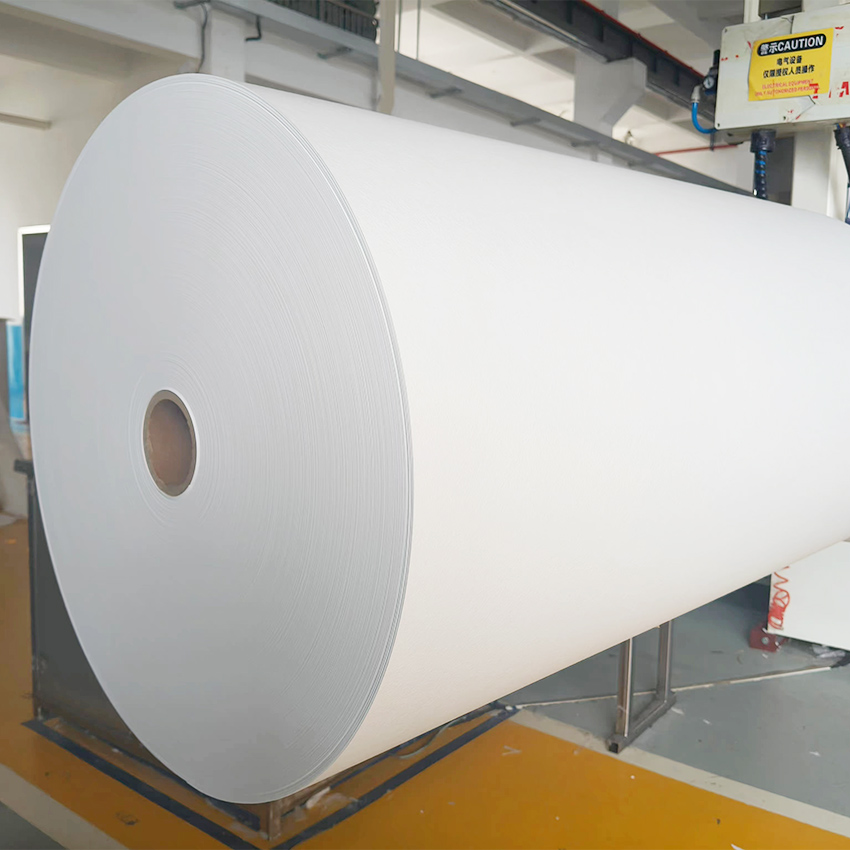
Selecting the correct grade depends heavily on your specific environment. Do not default to the highest number. You must align the filter's physical capabilities with the environmental risk level.
H11 media operates in the "Sub-HEPA" or EPA category. It delivers excellent results for everyday environments. You should specify this grade when high air volume matters more than single-pass perfection.
Residential Air Purifiers: Homeowners need maximum CADR to remove pet dander, dust, and pollen quickly. H11 keeps fan noise low. It allows users to run the purifier continuously without annoyance.
General HVAC Systems: Older commercial buildings have limited fan motor capacity. They cannot handle high static pressure. H11 retrofits nicely into these existing systems without causing motor burnout.
Pre-Filtration Stages: Large industrial setups sometimes use H11 as a heavy-duty pre-filter to protect ultra-expensive downstream cleanroom filters.
H13 represents the true industry gold standard. It captures 99.95% of MPPS. It strikes the perfect balance between clinical-grade purification and manageable airflow resistance.
Medical Facilities: Hospitals, general surgical rooms, and dental clinics rely on H13. It intercepts dangerous pathogens effectively without requiring massive, noisy industrial fans.
High-End Commercial Purifiers: Premium office purifiers use this grade. It serves as the "sweet spot" for balancing noise, energy efficiency, and reliable virus interception.
Infection Control Wards: Environments requiring strict airborne infection control use H13 heavily. Engineers often pair these filters with enclosed UVC light systems to trap and neutralize biological threats.
You should reserve H14 strictly for zero-tolerance professional environments. The infrastructure must support intense pressure drops. The housing must feature flawless, tested sealing mechanisms.
ISO Class 5 Cleanrooms: High-level cleanrooms demand near-perfect single-pass filtration to meet ISO certifications.
Microchip Manufacturing: Semiconductor fabrication facilities cannot tolerate even a single speck of dust. A tiny particle can ruin an entire silicon wafer.
Biosafety Laboratories: BSL-3 and BSL-4 labs handle lethal airborne pathogens. Single-pass filtration failure is completely unacceptable here. They utilize H14 to ensure nothing escapes the containment zone.
Buying the media is complex. You must look beyond the assigned EN 1822 efficiency number. The actual manufacturing quality determines whether the filter survives real-world operation.
Glass fibers are inherently fragile. You must assess the tensile strength and pleatability of the raw media. Manufacturers fold the paper into tight pleats to increase surface area. If you purchase low-quality H13 filter paper, the media will behave rigidly. Brittle media cracks right at the pleat fold. A microscopic crack causes instant failure. It allows untreated air to stream straight through the damaged fold. We recommend testing the media for flexibility and tensile consistency before committing to bulk procurement.
The manufacturing process uses specific chemical binders. These binders hold the random web of glass fibers together. You must deeply evaluate these binder formulations. Standard binders degrade quickly in harsh conditions. If you install the filter in a facility with high ambient humidity, the moisture softens the binder. The fiber web eventually collapses. The same applies to chemical off-gassing. Pharmaceutical labs often expose filters to harsh cleaning vapors. You must ensure your H14 filter paper utilizes advanced, moisture-resistant acrylic binders to maintain its structural matrix under duress.
A great filter medium requires a great frame seal. You must ensure your chosen media grade aligns perfectly with the manufacturer's frame capabilities. High-resistance grades create immense backpressure.
Polyurethane Potting: Most standard commercial filters use liquid polyurethane to seal the pleated paper into the rigid frame. You must ensure the potting compound penetrates the media deeply enough to prevent micro-leaks.
Gel Seals: For H14 applications, fluid gel seals offer superior performance. The gel adapts to tiny imperfections in the housing track. It prevents the bypass risks discussed earlier.
Media Thickness: Verify the media thickness matches your automated pleating machinery. Incompatible thickness leads to uneven spacing, which causes uneven airflow and premature localized clogging.
Buyers frequently make dangerous assumptions. They assume all media passing a lab test will perform well in the field. Do not ignore the operating environment. Do not ignore the pleating machinery constraints. Always request technical data sheets showing tensile strength and binder composition alongside the standard filtration efficiency reports.
Selecting the right air filtration media demands a careful, systems-based approach. You must abandon the assumption that a higher grade always equals better air quality. We strongly advise against defaulting to H14 for standard commercial or residential uses. Instead, match the media directly to your system's fan capacity, structural sealing limits, and the actual environmental risk level. For most applications, H11 or H13 delivers a vastly superior balance of clean air delivery and noise reduction.
Furthermore, never underestimate manufacturing nuances. The physical quality of the glass fiber filter paper dictates the outcome. Its thickness consistency, advanced binder quality, and robust pleatability remain just as critical as its rated efficiency. A cracked H14 filter performs worse than an intact H11 filter.
Your next step is practical action. We highly recommend auditing your existing HVAC or purifier fan curves. Calculate your absolute static pressure limits. Do this before attempting to upgrade your systems from H11 to H13, or from H13 to H14. Ensuring mechanical compatibility first will save you from catastrophic airflow reductions and hidden bypass leaks.
A: Yes, in practical terms. "True HEPA" is a standard defined by the US DOE. It mandates capturing 99.97% of particles at 0.3 microns. H13 is the European EN 1822 equivalent. It requires capturing 99.95% at the Most Penetrating Particle Size (MPPS). They offer virtually identical real-world performance for high-end air purification.
A: No. Washing destroys the fragile glass fiber web instantly. Water washes away the vital chemical binders holding the fibers together. It also forces the tiny fibers to clump up. This renders the filter completely useless. You must replace them once they reach their pressure limit.
A: Neither filter kills viruses; they strictly trap them. While H14 traps a fraction of a percent more per single pass, an H13 system allows much higher airflow. This filters the room's air more frequently. Multiple rapid air changes usually result in a lower overall viral load.
A: These are deceptive marketing terms with absolutely no regulatory backing. They often use cheap synthetic media rather than true glass fiber filter paper. Their performance usually tops out between 85% and 99% efficiency. They suffer from unpredictable consistency and offer zero guarantees for critical applications.


