
English


T: +86-572-6200777
Mr. Xin: +86-17357227212
Mr. Xin: +86-17357227212
Mr.Li: +86-13706256441
Building 31, Tianneng Chain Innovation Industrial Park, Meishan Town, Changxing County, Huzhou City, Zhejiang Province

Views: 0 Author: Site Editor Publish Time: 2026-06-01 Origin: Site


Upgrading cleanroom filtration often defaults to a dangerous "higher is better" mentality. Facility managers frequently assume maximum filtration yields a safer environment. However, over-specifying filter media can inadvertently cripple HVAC efficiency and severely inflate operational demands. While both filter types rely on fundamental physical principles like interception, diffusion, and impaction to capture microscopic particles, their internal structures differ wildly. The microscopic density of the paper directly dictates your system's overall airflow resistance. Pushing massive air volumes through an overly dense matrix overworks blowers, generates excess heat, and dramatically lowers essential air change rates. This guide comprehensively breaks down the critical engineering trade-offs between HEPA and ULPA filter media. You will discover vital system implications, explore recent material evolutions, and learn exactly how to select the precise specification required for your specific ISO class. We aim to help you achieve full compliance without needlessly over-engineering your sensitive production facility.
Efficiency vs. Escapability: Out of 1 million airborne particles, standard HEPA media allows roughly 10 to pass, while ULPA media restricts this to just 1.
The Operational Multiplier: Upgrading to ULPA media reduces airflow by 20–50%, requiring additional Fan Filter Units (FFUs) and increasing HVAC cooling loads to combat motor heat.
Material Evolution: Traditional glass fiber media is standard, but ePTFE membranes are replacing them in high-end applications to solve pressure drop and chemical degradation issues.
Compliance Baseline: HEPA (H14) is sufficient for most ISO 5–8 environments (Pharma/Medical), whereas ULPA (U15+) is strictly necessary for ISO 1–4 (Semiconductor/Microelectronics).
To accurately specify a cleanroom environment, you must first understand how these materials capture contaminants. People often visualize filters as microscopic sieves. In reality, they are "absolute filters" operating as deep-pleated interception matrices. They force air through a chaotic maze of fibers. Particles collide with these fibers through three primary mechanics: direct interception, inertial impaction, and Brownian diffusion.
Industry-standard HEPA filter paper forms the backbone of modern cleanrooms. It reliably captures between 99.97% and 99.995% of airborne particles. This measurement specifically targets the Most Penetrating Particle Size (MPPS), which typically hovers around 0.3 µm. To put this scale into perspective, a 0.3 µm particle is roughly 300 times thinner than a single strand of human hair.
When aligning with standard industry classifications, facilities heavily rely on H14 filter paper. Under European standard EN 1822, an H14 rating guarantees a 99.995% minimum overall efficiency. It strikes a remarkable balance between stringent particle retention and manageable airflow resistance.
Ultra-Low Penetration Air (ULPA) media takes this filtration matrix to its extreme physical limit. Standard ULPA filter paper captures between 99.9995% and 99.9999% of contaminants. More importantly, it shifts the testing threshold down to particles as small as 0.12 µm.
For elite micro-environments, engineers specify U15 filter paper or higher. While this efficiency seems superior on paper, the vastly increased fiber density demands significantly more force to push air through the media.
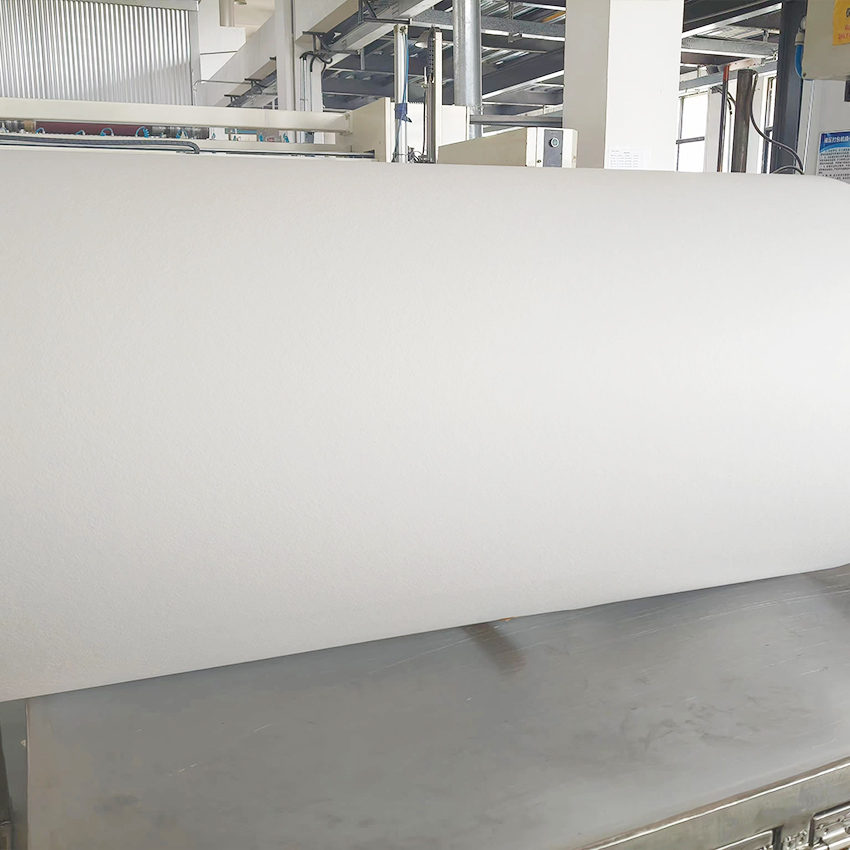
Think of ULPA media as a high-performance race car engine. A racing engine delivers unmatched track performance. However, it demands massive energy consumption, continuous fine-tuning, and robust structural support. In contrast, standard HEPA acts as a highly reliable, efficient commercial engine. It runs smoothly with minimal external demands.
The core challenge of ULPA media lies in its dense fiber matrix. This tight packing drastically increases airflow resistance. When airflow meets heavy resistance, a severe pressure drop occurs across the filter face.
This reduced airflow directly impacts a critical cleanroom metric: Air Changes per Hour (ACH). If your blowers cannot push enough volume through the dense media, the room's ACH drops. A compromised ACH limits the room's ability to flush out generated contaminants.
Choosing an ultra-dense media triggers a massive cascade effect across your entire facility infrastructure.
Infrastructure Demands: To maintain the required ACH with dense media, you must install up to 30% more ceiling Fan Filter Units (FFUs). This requires heavier ceiling grids and more physical space.
Energy & Thermal Load: More blowers inevitably mean higher electricity consumption. Furthermore, these additional motors generate substantial ambient heat. Your secondary HVAC cooling must work harder to offset this FFU motor heat.
Acoustic Discomfort: Running dozens of extra blowers at high speeds drastically increases ambient noise levels in the workspace.
Standard HEPA filters offer excellent longevity, typically lasting 8 to 10 years in well-maintained environments. Conversely, denser ULPA filters clog much faster. They usually require replacement every 7 to 8 years. You can only extend this lifespan if the manufacturer intentionally over-engineers the unit by massively increasing the internal pleated media area.
The materials forming the filtration matrix are evolving rapidly. Engineers now face a distinct choice between traditional fibrous media and advanced membrane technologies.
For decades, traditional glass fiber media has served as the undisputed industry standard. It is incredibly reliable and cost-effective. However, it relies heavily on "viscous flow" dynamics. Air drags along the relatively thick glass fibers, generating high friction and severe pressure drops.
Glass fibers also carry specific risk factors. They are vulnerable to boron outgassing. In microelectronics and semiconductor manufacturing, boron contamination causes critical wafer failures. Furthermore, traditional glass paper is physically fragile and prone to accidental tearing during installation.
Expanded Polytetrafluoroethylene (ePTFE) and eFRM membranes represent a modern alternative for ultra-clean environments. They solve many inherited flaws of legacy materials.
Slip Flow Mechanics: The fibers in an ePTFE membrane are ultra-fine. They are so small they approach the mean free path of air molecules. This triggers a phenomenon called "slip flow," which bypasses traditional friction. It reduces pressure drops by up to 50%.
Mechanical Resilience: The tensile strength of membrane technology vastly outperforms brittle glass fibers. It easily survives rough handling during transport and installation.
Chemical Resilience: Modern biopharma facilities aggressively use Vaporized Hydrogen Peroxide (VHP) for sterilization. Traditional materials degrade under VHP, but PTFE remains highly resistant and stable over time.
High-efficiency media requires rigorous certification before installation. The testing methods reveal exactly why specifying ultra-low penetration media creates downstream operational bottlenecks.
Certifying typical cleanroom media is a streamlined process. Standard testing utilizes thermal or cold DOP/PAO (Polyalphaolefin) aerosols. Technicians deploy traditional photometers to read the penetration rates rapidly. This method is incredibly fast, highly reliable, and universally standardized for everyday validation.
Testing media at the 0.12 µm threshold is notoriously difficult. Traditional photometers completely fail at this microscopic level. Instead, technicians must utilize highly sensitive Laser Spectrometers.
Unfortunately, Laser Spectrometers suffer from exceptionally slower sampling rates. Technicians must slowly scan the entire filter face to guarantee zero pinhole leaks. This drastically increases factory quality control time. Consequently, it significantly elevates end-user certification expenses during annual facility audits.
Selecting the correct cleanroom filter media requires balancing environmental safety with facility capabilities. Procurement managers and facility engineers should rely on distinct use-case parameters rather than pursuing maximum efficiency blindly.
Target ISO Class | Recommended Media | Primary Industries | Engineering Verdict |
|---|---|---|---|
ISO 5 – ISO 8 | HEPA (H13 - H14) | Pharma, Medical Devices, Food & Bev | Optimal balance of energy use, airflow, and reliable compliance. |
ISO 1 – ISO 4 | ULPA (U15+) | Semiconductor Fabs, Aerospace, Nanotech | Zero-tolerance environment justifies the immense infrastructure burden. |
If you manage pharmaceutical manufacturing, sterile compounding, food and beverage processing, or medical device packaging, HEPA is strictly what you need. H14 represents the optimal baseline. It delivers rock-solid regulatory compliance, excellent energy efficiency, and operational stability. Over-upgrading here yields no measurable product safety benefits.
Certain industries operate with absolute zero tolerance for microscopic defects. Semiconductor fabrication plants, nanotechnology research labs, and sensitive aerospace assembly lines require a pristine atmosphere. A single 0.12 µm particle can destroy a microchip. In these specific cases, the stringent necessity entirely justifies the intense structural design and elevated energy demands.
Regardless of your final media choice, you must implement strong system engineering. Expensive terminal filters should never handle large dust particles. You must install robust MERV 8 and MERV 14 pre-filters upstream. These pre-filters catch larger debris before it reaches your ceiling grids. Excellent pre-filtration is the absolute key to protecting your terminal investments and maximizing their operational lifespan.
Upgrading to ULPA media is never an automatic upgrade to your facility's operational success. It remains a highly specific engineering choice loaded with heavy operational implications. The restrictive nature of extreme filtration density forces blowers to work harder, demanding robust infrastructure modifications.
Before purchasing replacement media, take distinct action. First, audit your current ISO requirements to ensure you actually need sub-0.3 µm capture rates. Second, accurately calculate your existing HVAC capacity to see if it can handle additional static pressure without compromising your room's ACH. Finally, if you require extreme cleanliness but face power limitations, consult closely with your manufacturer regarding advanced ePTFE alternatives. Embracing smart engineering over sheer specification numbers ensures a stable, compliant, and highly efficient cleanroom.
A: Generally, no. Because the media features a significantly denser fiber matrix, it restricts airflow and clogs faster. On average, it lasts about 7 to 8 years compared to the typical 10-year lifespan of standard HEPA options. You can only extend this lifespan by utilizing highly aggressive upstream pre-filtration.
A: Rarely. The increased pressure drop of denser media usually exceeds the static pressure capabilities of standard HEPA blowers. Dropping a denser filter into an existing unit will dramatically reduce your overall air volume, directly compromising the room's required Air Changes per Hour (ACH).
A: While traditional glass fiber is very common, advanced ePTFE or eFRM membranes are highly recommended for VHP environments. Unlike glass, these advanced synthetic membranes do not chemically degrade, shed particles, or become brittle after enduring repeated vaporized hydrogen peroxide exposure.


