
English


T: +86-572-6200777
Mr. Xin: +86-17357227212
Mr. Xin: +86-17357227212
Mr.Li: +86-13706256441
Building 31, Tianneng Chain Innovation Industrial Park, Meishan Town, Changxing County, Huzhou City, Zhejiang Province

Views: 0 Author: Site Editor Publish Time: 2026-06-04 Origin: Site


Achieving 99.995% filtration efficiency at the MPPS (0.3μm) presents a classic engineering conflict. You typically face a severe increase in system pressure drop just to capture these microscopic particles. This bottleneck strains fan motors and dramatically increases operational power requirements. By specifying the right H14 glass fiber filter paper, you can bypass this conflict entirely. Choosing optimal media cuts HVAC energy consumption and extends your filter lifecycle. It also prevents costly media fractures during complex mini-pleat manufacturing processes.
This guide outlines the exact physical metrics and rigorous compliance standards you need to evaluate. We will also dive into the daily manufacturing realities. Procurement and engineering teams will learn how to confidently shortlist high-yield, reliable materials. You will discover how structural evaluations separate true performance media from basic marketing claims.
Efficiency vs. Energy: True low-resistance media relies on a low "solid phase ratio" rather than compromised fiber density, cutting HVAC power consumption without risking penetration.
Yield Matters: High tensile strength (MD/CD) and consistent formulation prevent micro-tears during the pleating process, lowering production scrap rates.
Application Specificity: Standard H14 is insufficient for extreme environments; microelectronics require low-boron fibers, while industrial settings demand specific flame retardancy (e.g., ASME AG-1 compliance).
Verifiable Performance: Legitimate suppliers validate claims against ISO 29463 / EN 1822 under strict flow-rate testing, avoiding vague "high efficiency" claims.
Marketing brochures frequently promise low pressure drop. Engineers must look past these claims to evaluate the underlying material physics. True low resistance HEPA media achieves its performance through precise structural engineering.
You can evaluate how suppliers achieve low pressure drop by checking their solid phase ratio. Inferior media often achieves low resistance simply by reducing fiber density. This shortcut drastically increases the risk of particle penetration. Superior media uses an optimized solid phase ratio instead. Suppliers maintain a specific grammage, usually between 70 and 78 g/m². They simultaneously increase the structural thickness of the paper. This creates larger internal voids for airflow. Air passes through these voids easily while microfibers continue to intercept particles. You get a lower pressure drop without sacrificing filtration integrity.
Modern HEPA media blends different materials to survive high airflow. Check if your media incorporates non-alkali chopped fiberglass. These chopped fibers act as a rigid internal skeleton. Microscopic borosilicate fibers do the actual filtering, but they are fragile. The skeleton prevents this delicate microporous structure from collapsing under high air velocity. A strong skeleton maintains the Quality Factor (QF) over long operational cycles. Without it, the media compresses, resistance spikes, and filter efficiency drops.
Wet-laid manufacturing quality dictates the overall uniformity of the sheet. Poor formation creates dense spots and thin spots. Airflow always takes the path of least resistance. It rushes through the thin areas, creating localized high-velocity zones. These zones blind prematurely with dust. Dense zones remain unused. Assess formation quality by holding samples to a strong light. Superior wet-laid media shows a consistent, even cloudiness. Uniform air distribution across the entire surface maximizes filter lifespan.
Best Practice: Always request cross-sectional thickness measurements alongside standard grammage data to verify the solid phase ratio.
Common Mistake: Buying media strictly based on the lowest initial pressure drop without verifying fiber skeleton integrity.
Engineers must demand precise data points on a Technical Data Sheet (TDS). Vague efficiency ratings provide no real protection. You must scrutinize the mechanical properties to ensure the glass fiber filter paper survives both assembly and operation.
Establish a strict baseline tolerance for pressure drop. You cannot compare initial resistance without knowing the test parameters. Always evaluate Pascals (Pa) at a specific face velocity, such as 5.3 cm/s. If a supplier tests at a slower velocity, the pressure drop artificially appears lower. Define your nominal airflows clearly before requesting TDS documents.
Media must survive transport and aggressive continuous folding. Mini-pleat machines exert tremendous physical stress on raw materials. You must evaluate both Machine Direction (MD) and Cross Direction (CD) tensile strength. Lower tensile strength directly correlates to tip-penetration failures. Weak media tears microscopic holes right at the fold line during filter assembly. High MD/CD ratings keep your factory scrap rates low.
Tensile strength measures pulling resistance, but stiffness measures bending resistance. Media must hold sharp pleats without fracturing the microscopic boron-silicate fibers inside. Look for specific flexural rigidity ratings. High stiffness supports self-supporting V-bank designs. It also prevents pleat collapse in deep-pleat industrial setups. Floppy media requires excessive glue separators, increasing material costs.
Organic materials absorb moisture from the air. This swelling increases airflow resistance and invites biological growth. Ensure your media utilizes nonhygroscopic glass fibers. They must remain chemically inert. Water repellency protects the filter during brief humidity spikes. It prevents sudden pressure drop surges in damp operating environments.
Specification Category | Target Metric / Standard Indicator | Manufacturing Impact |
|---|---|---|
Grammage | 70 - 78 g/m² | Balances sufficient fiber mass with acceptable weight. |
Thickness | 0.35 - 0.40 mm | Determines the internal void volume (Solid Phase Ratio). |
Tensile Strength (MD) | > 12.0 N/15mm | Prevents snapping during high-speed machine unrolling. |
Stiffness (Gurley) | > 1000 mg | Maintains pleat geometry without collapsing. |
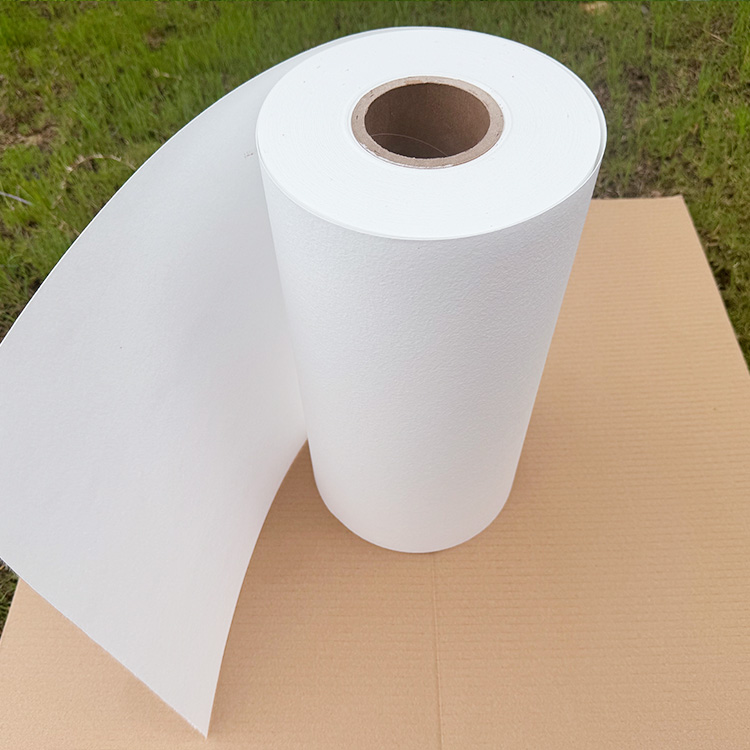
Standard H14 materials perform well in commercial buildings. However, niche industries dictate specific material science solutions. Cleanroom filtration requires distinct chemical properties based on the exact manufacturing environment.
Silicon wafer production requires absolute chemical purity. Standard fiberglass releases airborne molecular contamination (AMC). Boron outgassing specifically degrades wafer yields and ruins electrical properties. You must specify "low-boron" glass microfiber for Class 10 or Class 1 cleanrooms. This prevents costly contamination events during semiconductor fabrication.
Pharmaceutical labs rely on frequent, aggressive decontamination cycles. Facilities often use vaporized hydrogen peroxide (VHP) to sterilize rooms. You must demand shed-free, sterilizable media. The media needs proven chemical inertness. Standard binders might degrade under continuous chemical exposure. High-quality media withstands VHP saturation without losing structural integrity or shedding fibers into sterile zones.
Boiler exhausts and welding fume extractors destroy standard filters instantly. Verify high thermal thresholds for these environments. Industrial media must maintain integrity between 370°C and 500°C. You also need resistance to acid and alkali degradation. Corrosive gas streams require specialized binders and pure borosilicate blends to survive long operational cycles.
Industry Segment | Critical Media Requirement | Primary Risk of Incorrect Media |
|---|---|---|
Microelectronics | Low-boron microfiber | Wafer yield degradation (AMC). |
Pharmaceuticals | Chemical inertness (VHP) | Binder degradation and fiber shedding. |
Heavy Industrial | Thermal endurance (up to 500°C) | Combustion or sudden media collapse. |
Procurement teams often look at raw material pricing. They miss the implementation realities. Buying inferior high efficiency filter paper introduces severe manufacturing risks. You must evaluate what goes wrong between buying the roll and installing the finished filter.
Glass fiber is inherently brittle. Choosing lower-cost media usually means sacrificing flexural rigidity. Brittle media fractures at the pleat tips inside your folding machines. These micro-tears are invisible to the naked eye. They only show up during final factory leak tests. A high tear rate wastes expensive media, adhesive, and assembly labor. Buying stronger media heavily reduces your production scrap rate.
Manufacturers use acrylic or synthetic resin binders in the wet-laid process. Binders hold the glass fibers together. Cheap media uses excess binder to compensate for poor fiber structure. These low-grade binders lead to unacceptable outgassing. They release volatile organic compounds (VOCs) into highly controlled environments. Scrutinize the binder formulation. Cleanrooms cannot tolerate airborne chemical off-gassing.
Structural integrity depends on proper logistics. Improper roll packaging destroys media before it reaches your assembly floor. Forklifts and careless handling cause edge-crushing. Poor moisture barriers allow the paper to absorb ambient humidity during shipping. This alters the stiffness profile. Discuss packaging protocols with your supplier. Demand robust edge protection and thick moisture-proof wrapping for all bulk shipments.
Best Practice: Conduct a trial run with a sample roll to calculate machine tear rates before signing bulk contracts.
Common Mistake: Ignoring VOC outgassing data on the TDS, leading to failed cleanroom certification tests.
You cannot make a safe procurement decision without a solid compliance framework. Global standards provide an objective way to compare suppliers. Authentic vendors welcome rigorous testing documentation.
Demand transparent, independent test results. H14 media must show ≥99.995% efficiency at the Most Penetrating Particle Size (MPPS). Reject suppliers offering nominal 0.3μm DOP retention data only. The MPPS is often smaller than 0.3μm, depending on the airflow. ISO 29463 and EN 1822 require strict MPPS validation. Only accept certificates that explicitly reference these rigorous global standards.
Nuclear facilities and highly hazardous applications require distinct compliance. Verify compliance with ASME AG-1 standards for these sectors. This standard dictates continuous high-temperature pressure resistance. It tests how the media handles extreme stress without catastrophic failure. Standard HVAC media will never pass ASME AG-1 flame and pressure thresholds.
A TDS means nothing without testing context. Reject any claims that omit the specific flow rate. You must know the exact face velocity used. You also need to know the test aerosol (like PAO or DEHS) used to calculate efficiency. If a supplier hides the testing conditions, they are likely manipulating the pressure drop data. Transparent vendors list every variable used to achieve their advertised numbers.
Securing reliable H14 filter media requires a highly methodical approach. You must source materials based on a holistic evaluation. Analyze the solid phase ratio, verify tensile strength, and match chemical properties to your exact application. Do not let initial pricing distract you from manufacturing yields. High scrap rates and failed leak tests erase bulk material savings quickly.
Your procurement action plan should prioritize verifiable data. Request comprehensive TDS documents detailing flow rates and MPPS efficiency. Next, acquire sample rolls. Run in-house pleating trials to test flexural rigidity on your specific machines. Finally, conduct independent penetration testing before committing to large raw material orders. This structured approach guarantees superior filtration performance and stable production lines.
A: Failures primarily stem from poor flexural rigidity and low tensile strength. Inferior media utilizes inadequate binder formulations or lacks a robust fiber skeleton. When the pleating machine creases the paper, these weak structures snap. This causes microscopic fractures at the fold line, leading to failed factory leak tests.
A: A lower initial pressure drop requires less force to push air through the filter. This reduces the workload on fan motors. As the media clogs more slowly over time, the system avoids sudden energy spikes. This extended time-to-clogging directly translates to lower power consumption and a reduced carbon footprint.
A: Standard fiberglass contains boron. In highly controlled microelectronics environments, this boron outgasses into the air. Airborne molecular contamination (AMC) settles on silicon wafers, altering their electrical properties and degrading production yields. Class 10 and Class 1 cleanrooms strictly require specialized low-boron micro-glass fibers to prevent this.
A: Standard binders degrade under extreme heat, causing media collapse. However, specialized glass fiber media utilizes advanced binders and pure borosilicate blends. These specific industrial configurations maintain their structural integrity up to 370°C, and sometimes up to 500°C. They are essential for high-temperature exhaust filtration and specific analytical testing.


